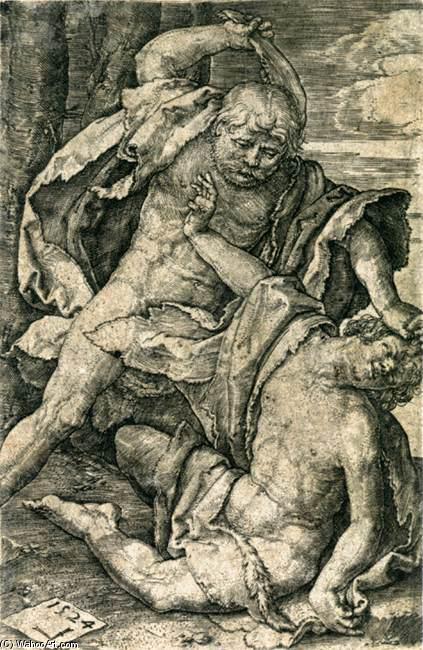
Lucas van Leyden’s 'Cain Killing Abel' (1524) is a dramatic Mannerist engraving showcasing intense violence & human struggle. Detailed, monochromatic lines capture a pivotal biblical scene with powerful symbolism. A captivating piece for art collecto
Discover Lucas van Leyden: Dutch painter & printmaker known for genre scenes, landscapes, & pioneering engraving. Explore his innovative style & legacy at ArtsDot.com!
Explore The Metropolitan Museum of Art: 5,000 years of art from around the world! Discover masterpieces, ancient artifacts & immersive exhibitions – a global art destination awaits.
A Dramatic Encounter: Lucas van Leyden’s Cain Killing Abel
Lucas van Leyden's "Cain Killing Abel," created in 1524, stands as a testament to the Mannerist artistic movement—a period characterized by intellectual rigor and an unsettling fascination with human psychology. This engraving captures a visceral moment from biblical lore, depicting the brutal slaying of Abel by his brother Cain, rendered with meticulous detail and imbued with a palpable sense of tension. More than just a depiction of violence, it’s a profound exploration of primal instincts and moral consequence.
### Artistic Style and Technique: Mannerist Precision
The engraving exemplifies the hallmarks of Mannerism—a stylistic rebellion against the idealized beauty championed by Renaissance artists. Figures are elongated, distorted, and positioned in unnatural poses, prioritizing expressive gesture over anatomical accuracy. Van Leyden’s masterful use of etching technique contributes significantly to this dramatic effect. Fine lines meticulously etched into the copper plate create a textured surface that faithfully reproduces the image with remarkable clarity. The artist skillfully employs shading—primarily hatching—to sculpt form and convey depth, emphasizing the musculature of Cain's body as he strikes Abel. This deliberate manipulation of perspective and anatomy underscores Mannerist’s preoccupation with psychological realism rather than idealized representation.
### Biblical Narrative and Symbolic Representation
The engraving draws directly from Genesis 4:7-12, recounting the biblical tale of Cain murdering Abel after God rebuked Cain for killing Abel's sacrificial lamb. Beyond its narrative basis, “Cain Killing Abel” operates on multiple symbolic levels. The confrontation between brothers represents a fundamental conflict—the struggle between good and evil, order and chaos. Cain’s forceful blow symbolizes aggression and dominance, while Abel’s prone posture embodies vulnerability and innocence. The stark contrast between the two figures amplifies the horror of the act and underscores its moral gravity. Furthermore, the darkened background contributes to the overall atmosphere of unease and foreshadows the tragic outcome.
### Historical Context: Renaissance Anxiety
Created during a period marked by religious upheaval—the Protestant Reformation—"Cain Killing Abel" reflects the anxieties of its time. Mannerist art emerged as a reaction against humanist ideals prevalent in Florence and Rome, favoring instead an introspective gaze into human emotion and moral dilemmas. Artists like Van Leyden sought to grapple with existential questions about humanity’s place in the cosmos and explored themes of suffering and redemption—subjects often deemed unsuitable for Renaissance patronage. The engraving's unsettling portrayal of violence aligns perfectly with this broader cultural preoccupation with darkness, transgression, and the darker side of human nature.
### Emotional Impact: A Portrait of Brutality and Reflection
The engraving’s impact on viewers is undeniably disturbing. Van Leyden doesn’t shy away from depicting brutality—the gruesome details of Abel's wounds are rendered with unflinching realism. However, beneath the surface of violence lies a deeper contemplation of moral responsibility. The image compels us to confront uncomfortable truths about human behavior and the consequences of unchecked passion. It serves as a powerful reminder that even seemingly insignificant actions can have devastating repercussions. “Cain Killing Abel” remains an enduring masterpiece—a chilling depiction of primal conflict and a profound meditation on the complexities of human morality, continuing to resonate with audiences centuries after its creation.