A Vision of Divine Reckoning
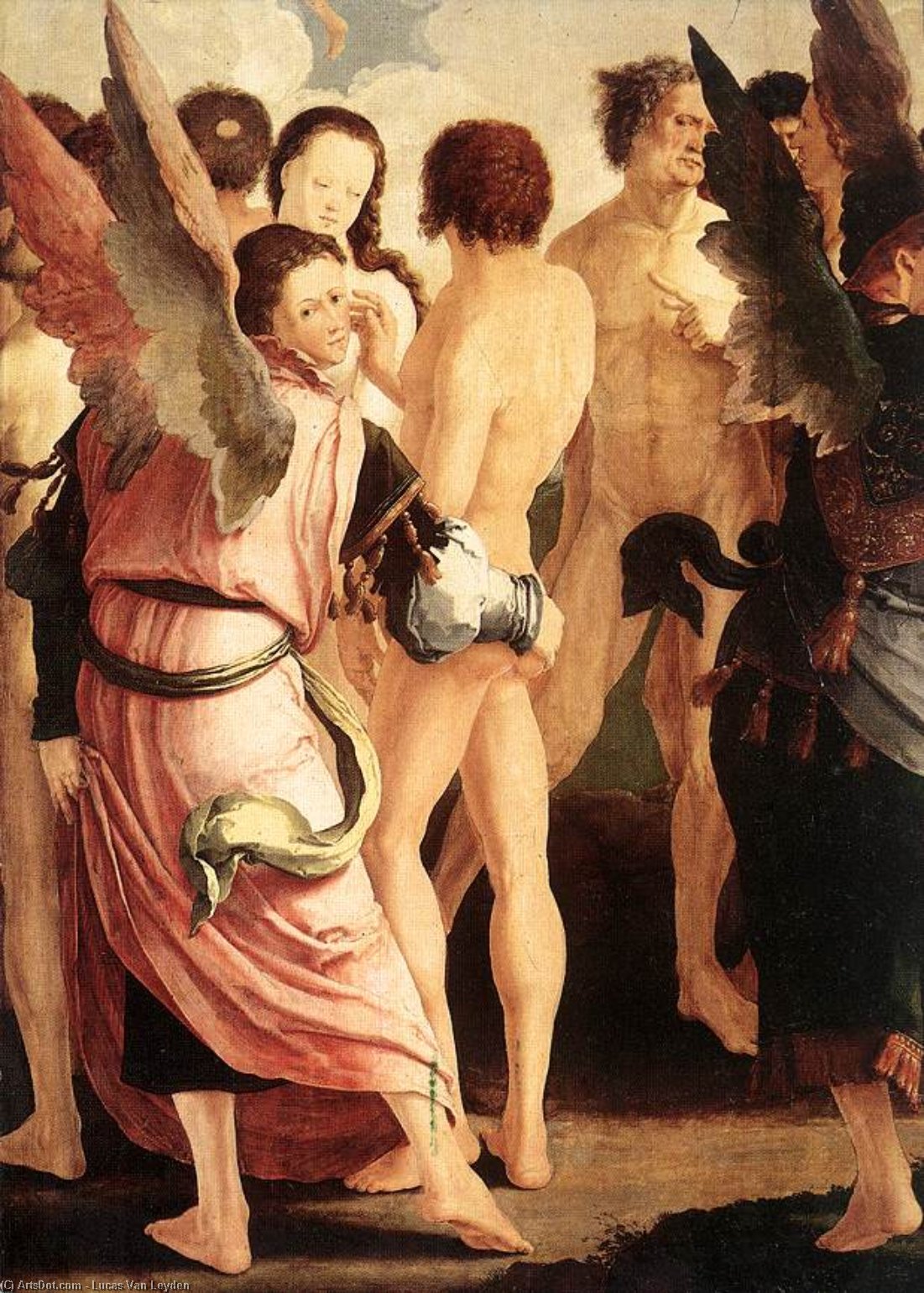
In the grand tapestry of the Northern Renaissance, few works command the viewer's attention with such profound spiritual gravity as Lucas van Leyden’s The Last Judgment. Created in 1527, this masterpiece serves as a breathtaking window into the late medieval psyche, where the boundaries between the earthly and the divine are rendered with startling clarity. The painting is not merely a depiction of a biblical event; it is a complex, swirling narrative of salvation and damnation. As the eye wanders across the panel, one encounters a meticulously orchestrated chaos, where the central figure of Christ acts as the axis for an entire universe in flux. This detail of the work invites us into a moment of eternal consequence, capturing the very essence of the Apocalypse through a lens of exquisite craftsmanship.
The composition is a masterclass in Renaissance storytelling, utilizing a tripartite structure to guide the soul through its journey. In the foreground, a celestial assembly of angels and cherubs provides a sense of rhythmic grace; dressed in soft pink robes, these figures hold scrolls and musical instruments, their presence suggesting the harmonious music of the spheres. Yet, this serenity is juxtaposed against the profound weight of the human drama unfolding in the background. The artist skillfully employs light and shadow to create a palpable sense of three-dimensionality, pulling the viewer into a space where the air feels thick with the smoke of hellfire and the radiance of heaven. It is a visual symphony that balances the delicate beauty of the angelic realm with the harrowing reality of human judgment.
Mastery of Technique and Northern Detail
What truly distinguishes this work is the unparalleled technical virtuosity of Lucas van Leyden. As an artist who was as much a master printmaker as he was a painter, his ability to render intricate textures is nothing short of extraordinary. The use of oil on panel allows for a luminous depth, where every fold of fabric, every glint of light on a golden instrument, and every subtle expression on a saint's face is captured with microscopic precision. This level of detail is characteristic of the Northern Renaissance tradition, where the physical world was often used as a mirror to reflect spiritual truths. The interplay of color—from the tender hues of the foreground figures to the more somber, dramatic tones of the distant crowds—creates a dynamic movement that keeps the viewer perpetually engaged.
For the discerning collector or interior designer, a high-quality reproduction of this work offers more than just decoration; it provides a focal point of immense intellectual and emotional depth. The painting’s scale and complexity make it an ideal centerpiece for spaces that demand a sense of history and grandeur. Whether placed in a private library, a sophisticated study, or a curated gallery space, the Last Judgment serves as a conversation piece that transcends time. It invites contemplation on the themes of justice, mortality, and the enduring power of faith, making it an invaluable addition to any collection dedicated to the profound legacies of European art history.