Bologna
1555
1619
Italian
1588
282 x 188 cm
Pinacoteca Davia Bargellini
Pinacoteca Nazionale di Bologna, Italy
Oil on Canvas
Baroque
Bolognese Baroque
Religious Painting
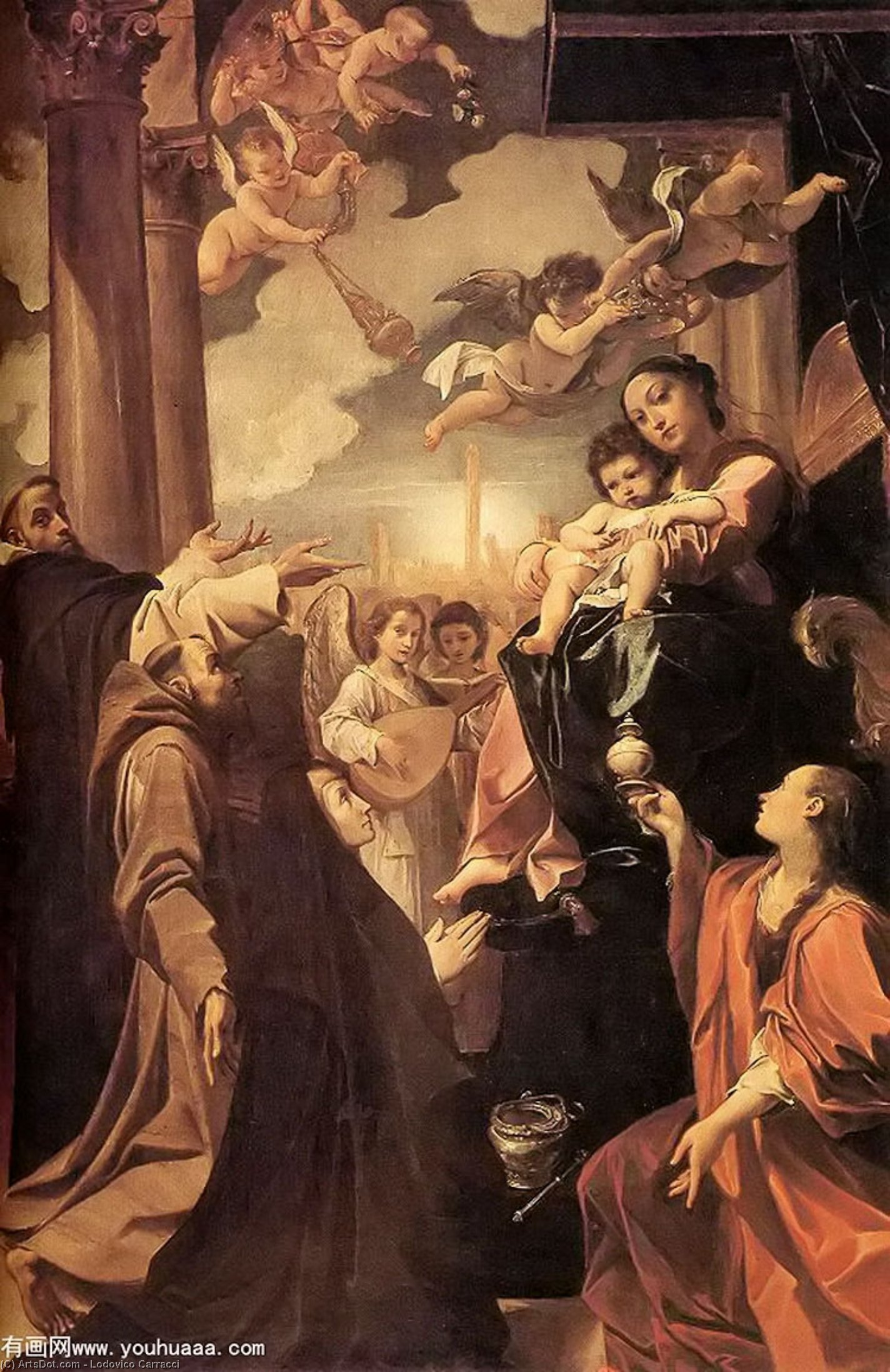
Admire Ludovico Carracci's masterpiece, 'Bargellini Madonna,' depicting Mary and Jesus amidst angelic figures and saints—a cornerstone of Bolognese Baroque artistry housed in Pinacoteca Davia Bargellini.
Ludovico Carracci (1555-1619) was a pivotal Italian Baroque painter known for emotive religious scenes, broad gestures & dramatic chiaroscuro. Founder of the Bolognese School, he revitalized Italian art with spiritual depth and influenced artists lik
Experience the soul of Emilian art at Bologna's Pinacoteca Nazionale, where masterpieces by Raphael and the Carracci family await your discovery within a historic Jesuit sanctuary that invites you to explore Italy's legacy.
Ludovico Carracci’s Bargellini Madonna: A Symphony of Faith and Florentine Baroque
The Bargellini Madonna, completed in 1588 by Ludovico Carracci, stands as an emblem of the High Renaissance's triumphant embrace of Baroque aesthetics—a testament to Bolognese artistic prowess and a poignant reflection on piety within its time. Held proudly at Pinacoteca Davia Bargellini in Bologna, Italy, this monumental canvas transcends mere depiction; it’s an immersive experience into a meticulously crafted visual narrative that continues to resonate with viewers centuries later.
A Masterpiece Born from Familial Patronage
Commissioned by the Bargellini family—particularly Cecilia Bargellini Boncompagni, a woman deeply connected to Pope Gregory XIII—the painting embodies the spirit of its patrons’ devotion and aspiration for spiritual renewal. The Bargellini Madonna wasn't simply intended as decoration; it served as a powerful symbol of faith within the Carmelite convent “delle convertite,” where Cecilia resided, representing hope and redemption for women who had abandoned worldly pursuits. This familial connection profoundly influenced Carracci’s artistic vision, grounding his work in humanist ideals while simultaneously elevating it to sublime grandeur.
Technical Brilliance: Carracci's Baroque Virtuosity
Carracci’s mastery is immediately apparent upon observation. Employing oil paint on canvas—a technique favored by the Bolognese School—he achieved unparalleled luminosity and depth through masterful chiaroscuro, a dramatic interplay of light and shadow that dominates the composition. The artist skillfully utilized pyramidal structures to create stability and grandeur, mirroring the architectural principles prevalent in Florentine Baroque palaces. Detailed brushstrokes reveal an astonishing level of precision, capturing textures with remarkable realism – from the velvety folds of Mary’s robe to the luminous glow emanating from Jesus' face. Carracci’s meticulous attention to detail underscores his commitment to conveying not just visual information but also emotional resonance.
Symbolism and Narrative Depth: Layers of Meaning
Beyond its technical prowess, the Bargellini Madonna is rich in symbolic significance. The central figures—Mary and Jesus—represent divine grace and maternal compassion, embodying universal themes of faith and redemption. The angels flanking Mary convey celestial benevolence, reinforcing the sanctity of the scene. Cecilia Bargellini’s portrait within the composition serves as a poignant reminder of the convent's mission – offering solace and spiritual transformation to women seeking repentance. Furthermore, Carracci incorporated heraldic elements—a dragon emblem representing the Bargellini family—adding an element of aristocratic prestige and familial pride. The inclusion of instruments like lute and incense symbolizes musical harmony and divine worship, elevating the painting beyond a simple depiction of religious iconography.
Emotional Impact: A Vision of Heavenly Beauty
The overall effect is breathtaking – a sublime vision of heavenly beauty that captivates the viewer’s gaze. Carracci's masterful use of color—primarily warm hues—creates an atmosphere of serenity and reverence, inviting contemplation on themes of faith, compassion, and divine grace. The painting’s grandeur speaks to the enduring power of art to inspire awe and elevate the human spirit. It remains a cornerstone of Bolognese Baroque artistry and continues to fascinate audiences worldwide with its exquisite craftsmanship and profound spiritual message.