A Silent Symphony: Unveiling Beethoven’s ‘Deafness Letter’
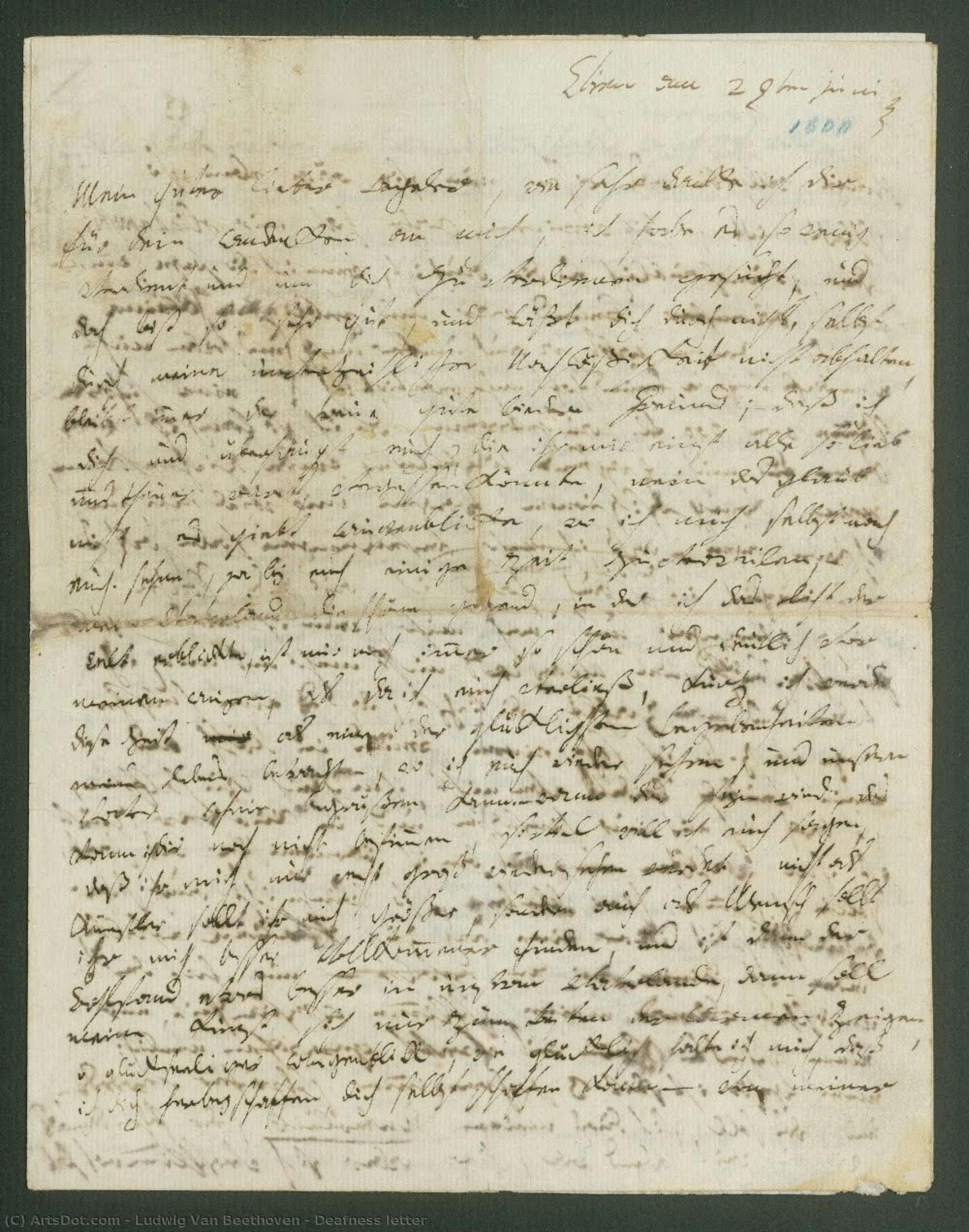
Within the hushed confines of art history lies a fragment of profound intimacy – Ludwig van Beethoven's “Deafness Letter,” a handwritten document that transcends mere correspondence and becomes a poignant window into the soul of one of music’s greatest minds. This remarkable piece, meticulously reproduced here, isn’t simply an image; it’s a tangible connection to a man grappling with a devastating affliction while simultaneously pushing the boundaries of musical expression. The aged parchment, bearing the unmistakable marks of Beethoven's hand – a slightly erratic script revealing both urgency and deep thought – immediately evokes a sense of history and vulnerability. The muted beige and brown tones speak of time’s passage, mirroring the composer’s own declining hearing, creating an atmosphere of quiet contemplation.
The photograph itself is a study in detail, capturing every crease, stain, and imperfection of the original letter. The texture of the paper is remarkably rendered, inviting the viewer to almost feel the weight of the document in their hands. Lines are formed entirely by the script, showcasing the deliberate strokes of a man wrestling with his limitations. The composition is dominated by text, creating a sense of claustrophobia that reflects the internal struggle Beethoven undoubtedly faced. It’s a testament to the photographer's skill that such raw emotion can be conveyed through a seemingly simple image – a close-up portrait of words.
A Historical Echo: Context and Crisis
Beethoven penned this letter in 1801, during a period of intense personal and professional turmoil. He was already experiencing significant hearing loss, a condition that steadily worsened throughout his life. The letter, addressed to his brothers Carl and Johann, reveals not just the physical symptoms of his illness but also the profound emotional impact it had on him – a sense of isolation, frustration, and a desperate yearning for understanding. It’s widely believed this letter was written in response to a critical review of his opera *Fidelio*, which he felt unfairly dismissed its innovative qualities. The Heiligenstadt Testament, as it became known, is a deeply personal confession, offering an unprecedented glimpse into the mind of a genius confronting his own mortality and artistic anxieties.
This period in Beethoven’s life was marked by significant shifts in his musical style. He began to explore new forms of expression, moving away from traditional structures and embracing bolder harmonies and rhythms. The letter reflects this internal transformation – a willingness to challenge conventions and push the boundaries of what was considered acceptable music. It's a crucial document for understanding not only Beethoven’s personal struggles but also the evolution of his artistic vision.
The Language of Loss: Symbolism and Artistic Intent
The very act of writing, in this instance, carries immense symbolic weight. The letter represents a desperate attempt to communicate – to bridge the gap between his inner world and the external reality of criticism and misunderstanding. The dense script, almost frantic in its execution, suggests a man struggling to articulate his feelings, battling against the encroaching silence that threatened to consume him. The muted colors further amplify this sense of loss, mirroring the fading sounds he experienced daily.
Furthermore, the letter’s format – a handwritten fragment rather than a formal treatise – underscores its intensely personal nature. It's not an attempt at intellectual justification but a raw outpouring of emotion. The deliberate choice to write by hand emphasizes the immediacy and authenticity of Beethoven’s experience, making it all the more poignant and relatable.
A Timeless Masterpiece: Reproduction and Legacy
This meticulously reproduced artwork offers a unique opportunity to connect with one of history's most iconic figures. The high-quality print captures the texture and detail of the original letter with remarkable accuracy, allowing viewers to appreciate the nuances of Beethoven’s handwriting and the aged parchment. It’s an ideal piece for collectors seeking a tangible connection to the past or for interior designers looking to add a touch of historical gravitas to their spaces.
More than just a beautiful image, this reproduction serves as a reminder of the human cost of genius – the sacrifices and struggles that often accompany extraordinary creativity. It’s a testament to Beethoven's enduring legacy, a silent symphony echoing through the centuries, inviting us to contemplate the complexities of art, life, and the profound beauty found within vulnerability.