A Meditation on Sorrow: The Enduring Power of Mater Dolorosa
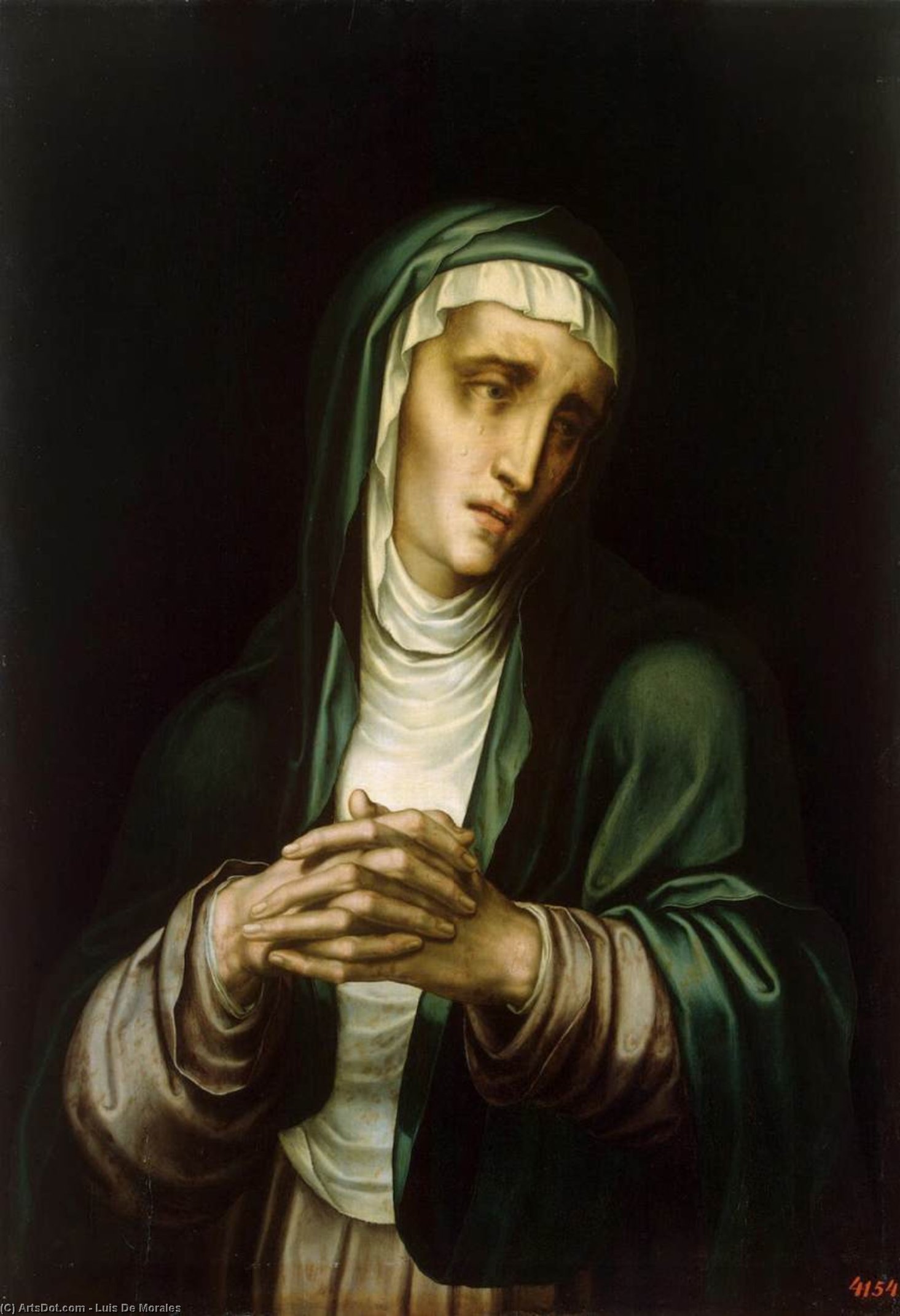
To stand before Luis De Morales's Mater Dolorosa is to enter a sacred space, one steeped in profound contemplation and quiet grief. This masterpiece, painted in the 1570s, transcends mere portraiture; it is a devotional echo, capturing the very essence of sorrowful devotion. The Virgin Mary, depicted here with an almost unbearable tenderness, serves as humanity's ultimate symbol of empathetic suffering. Her posture—hands clasped in prayer, gaze cast downward—invites the viewer not merely to observe, but to participate in her silent meditation. It is a work that speaks directly to the soul, demanding reverence and introspection from all who encounter its solemn beauty.
Mastery in Shadow and Light: Technique and Style
Morales’s technical brilliance is immediately apparent upon viewing this panel painting. He employed the dramatic interplay of chiaroscuro with breathtaking skill, allowing light to sculpt the contours of Mary's face while plunging the background into deep, velvety shadow. This contrast does more than simply illuminate; it heightens the emotional drama, drawing the eye inexorably toward her countenance and the delicate gesture of her clasped hands. His handling of oil on panel allows for a level of precision that speaks to his meticulous craftsmanship, echoing the refined realism characteristic of the Spanish Renaissance. The subtle modeling of the drapery in her dark green robe, juxtaposed with the luminous white undergarment, showcases an attention to detail that elevates the piece from religious artifact to supreme artistic achievement.
Symbolism and Spiritual Depth
The iconography at the heart of Mater Dolorosa is rich with meaning. The title itself, "Sorrowful Mother," anchors the painting in Christian tradition, positioning Mary as the archetype of suffering grace. Every element contributes to this narrative weight: the headscarf framing her face suggests modesty and piety; the subdued color palette reinforces a mood of solemnity. For the art lover or collector, understanding these layers transforms appreciation into communion. The work is not just beautiful; it is deeply meaningful, serving as a visual sermon on endurance, faith, and the quiet dignity found within profound sorrow.
Bringing History Home: Owning a Piece of Devotion
For those who wish to incorporate such historical gravitas into their own living spaces or private collections, reproductions of this seminal work offer an unparalleled opportunity. By owning a hand-painted rendition of the Mater Dolorosa, one does more than decorate; one curates an atmosphere of contemplation. The ability to possess a piece that echoes the spiritual fervor and technical mastery of 16th-century Spain allows modern admirers to connect directly with the devotional power that captivated audiences in the Hermitage centuries ago. It remains a timeless testament to art's capacity to evoke the deepest human emotions.