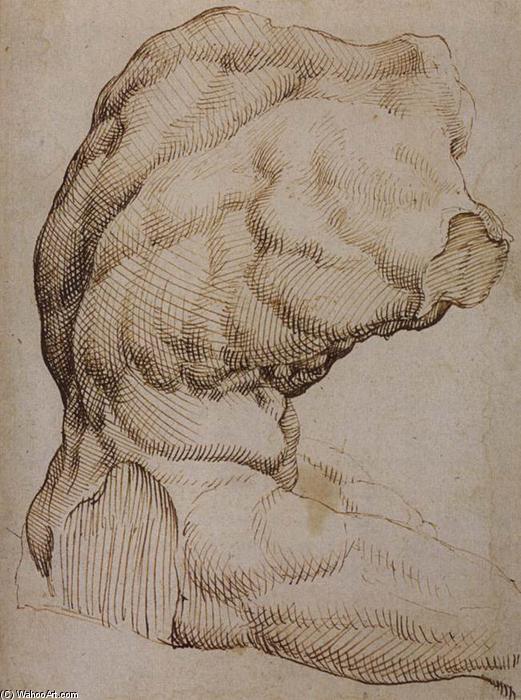
The Belvedere Torso: A Study in Classical Idealism
Maerten van Heemskerck’s “The Belvedere Torso,” completed in 1532, stands as a testament to the burgeoning humanist spirit of the Renaissance and its fascination with idealized representations of the human form. Executed during a period marked by intellectual ferment—fueled by rediscovery of classical texts and sculpture—the painting transcends mere anatomical accuracy; it embodies an aspiration for beauty rooted in ancient Greek philosophy.
Subject Matter & Composition: The artwork depicts a torso, meticulously rendered in monochrome chalk on paper. Unlike the vibrant palettes favored by many contemporaries, Heemskerck opted for a stark contrast of light and shadow, prioritizing clarity of form over decorative embellishment. The pose—a figure seated with his back turned—is deliberately ambiguous, inviting contemplation about inner thoughts and emotions rather than presenting an overtly heroic or triumphant image.
Style & Technique: Heemskerck’s style aligns closely with Mannerism, a movement that reacted against the harmonious balance of High Renaissance art. However, unlike its predecessors, Mannerism deliberately distorted proportions and perspectives to convey psychological intensity. Here, subtle manipulations of musculature—particularly in the torso—suggest a profound awareness of anatomical detail without sacrificing artistic elegance. The artist’s masterful use of hatching creates a textured surface that enhances the sculptural quality of the depiction.
Historical Context: Created during Charles V's reign, “The Belvedere Torso” reflects the Habsburg monarch’s patronage of the arts and his desire to elevate humanist ideals within European culture. The Belvedere Palace itself—a symbol of imperial grandeur—served as a focal point for artistic innovation and scholarly debate. Heemskerck’s drawing was produced in response to the revival of interest in classical sculpture, specifically Michelangelo's David, which had captivated artists and intellectuals alike.
Symbolism & Emotional Impact: Beyond its technical prowess, “The Belvedere Torso” carries symbolic weight. The seated posture conveys stillness and introspection—a deliberate antithesis to the dynamism characteristic of earlier artistic styles. The torso’s musculature symbolizes strength and resilience, yet it is rendered with a delicate sensitivity that underscores the artist's humanist conviction in the inherent dignity of human existence. Viewing this artwork evokes a profound appreciation for classical beauty and invites viewers to contemplate themes of contemplation, vulnerability, and inner harmony.
Further Research: For more information on Maerten van Heemskerck and “The Belvedere Torso,” consult resources such as Wikipedia (Wikipedia) and ArtsDot (ArtsDot).