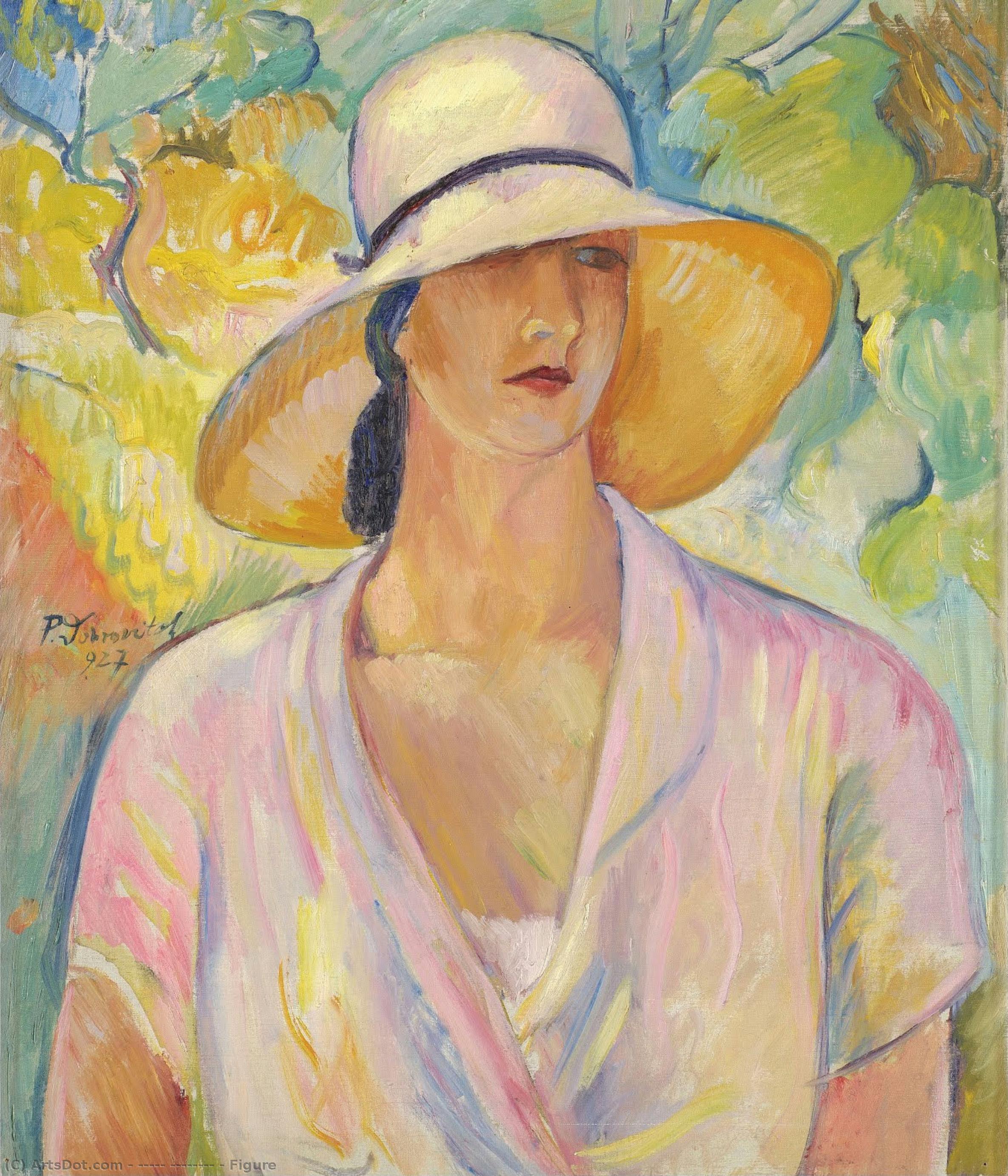
A Glimpse into Intimate Self-Reflection
This captivating portrait, executed in 1927 during the artist's sojourn in France, draws the viewer into a deeply personal and complex psychological space. The subject matter centers on the artist’s wife, Olga Dobrović, whom he regarded as his singular artistic achievement—his "own masterpiece." Yet, to view this work is to look beyond a mere likeness; it becomes an intricate study of self-perception refracted through another's gaze. The very act of painting her transforms the portrait into something akin to an indirect self-portrait, a double reflection where the boundaries between observer and observed blur with exquisite intimacy.
Symbolism and the Artist’s Persona
The relationship documented here is richly layered, suggesting that Olga Dobrović served as a multifaceted symbol for the artist himself. She is simultaneously presented as his wife, his lover, and the mother of his child. This confluence of roles suggests an identity inextricably linked to Vorobyov's own artistic standing and social aspirations. The painting thus participates in a long-standing tradition within art history: the veneration of the artist’s muse. Through this celebrated motif, the artist not only immortalizes his companion but also solidifies his own place within the grand narrative of artistic legitimacy, echoing the echoes of past masters.
Compositional Elements and Atmosphere
The visual evidence presented in the photograph—the woman standing elegantly clad in white, holding an open umbrella while gazing directly out—grounds this psychological depth in a tangible moment. The inclusion of two delicate birds fluttering in the background adds a subtle layer of natural symbolism, perhaps suggesting freedom or fleeting moments of grace against the stillness of the central figure. The open umbrella itself contributes to a sense of dimension and narrative pause. It is a composition that arrests time, capturing a breath held between contemplation and direct address.
Technique and Emotional Resonance
While the artist’s biography speaks of his 19th-century Russian roots, this piece from 1927 showcases an adaptation of technique to capture modern psychological nuance. The execution demands a delicate balance: the technical mastery required for rendering fine detail—the folds of white fabric, the sheen on the umbrella—must serve the emotional core. The overall effect is one of profound stillness, inviting the collector or admirer to pause before the canvas and contemplate the weight of admiration, possession, and self-definition that permeates every brushstroke.