A Glimpse into Andalusian Soul
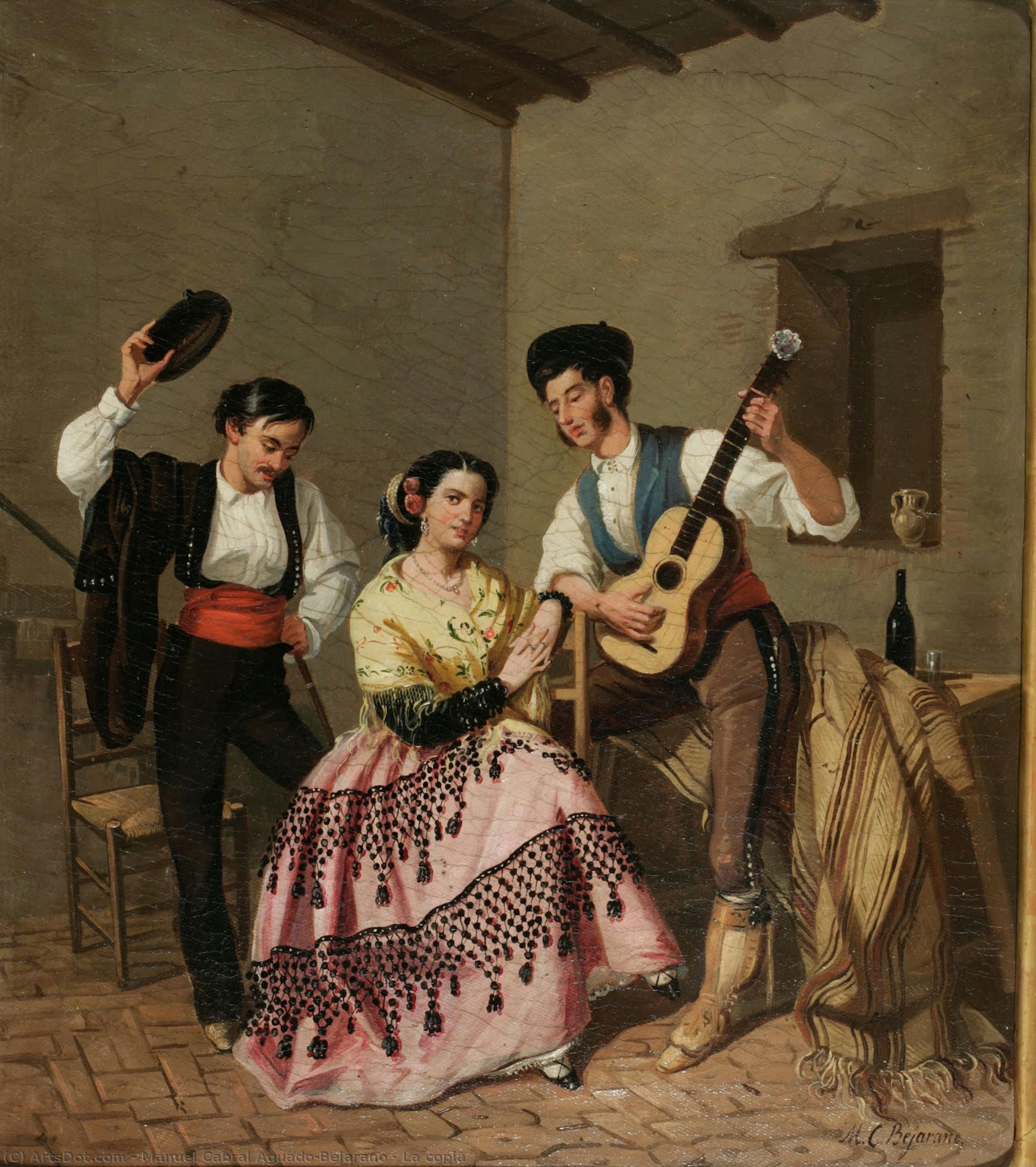
In the warm, amber-hued atmosphere of a nineteenth-century Spanish tavern, Manuel Cabral Aguado-Bejarano captures a moment of profound cultural intimacy in his masterpiece, La copla. This evocative painting serves as a window into the heart of Andalusia, transporting the viewer to an era where music and poetry were the lifeblood of social connection. The scene unfolds with a quiet, rhythmic grace, centered around a woman whose contemplative posture—hands clasped, eyes perhaps lost in the melody—anchors the composition. Beside her, the presence of a guitarist suggests the unfolding of a copla, that traditional Spanish poetic genre that weaves tales of love, longing, and daily struggle. The painting is not merely a depiction of a gathering; it is a sensory experience, where one can almost hear the strumming of strings and the low murmur of conversation amidst the clinking of bottles.
The artistry of Aguado-Bejarano lies in his masterful command of the Costumbrismo style. Through delicate brushwork and a rich, earthy palette, he documents the customs and archetypes of his homeland with both precision and romanticism. The artist utilizes light to create a sense of depth and warmth, casting soft shadows that dance across the tavern walls and illuminate the textures of traditional fabrics. Every detail, from the way the light catches the glass on the table to the expressive folds of the characters' attire, contributes to a narrative of authenticity. For the discerning collector or interior designer, this piece offers more than just visual beauty; it provides a sense of historical weight and cultural richness that can anchor a room with timeless elegance.
The Art of Tradition and Social Reflection
Beyond its aesthetic charm, La copla carries a deeper layer of social significance. Created in 1890, the work belongs to a period when foreign intellectuals and travelers were captivated by the "exotic" allure of Spain. Aguado-Bejarano, a native of Seville, skillfully navigated this demand by creating works that satisfied the bourgeois appetite for the picturesque while maintaining a documentary-like focus on the common people. The painting subtly incorporates elements of social criticism and stereotypes of the era, presenting the tavern as a democratic space where the rhythms of folk life intersect with the broader currents of Spanish identity. It is a celebration of the "authentic" Spain—a world of tradition that felt increasingly precious as the modern age approached.
For those looking to incorporate fine art into a contemporary living space, this reproduction offers an unparalleled opportunity to invite history and emotion into the home. The intimate scale of the original work makes it an ideal focal point for a study, a library, or a sophisticated dining area, where its themes of companionship and cultural heritage can resonate deeply with guests. Owning a piece that captures such a poignant moment in art history allows for a continuous dialogue between the past and the present, making La copla a profound addition to any curated collection of European masters.