A Vision in Blue and Green: The Soul of Bella
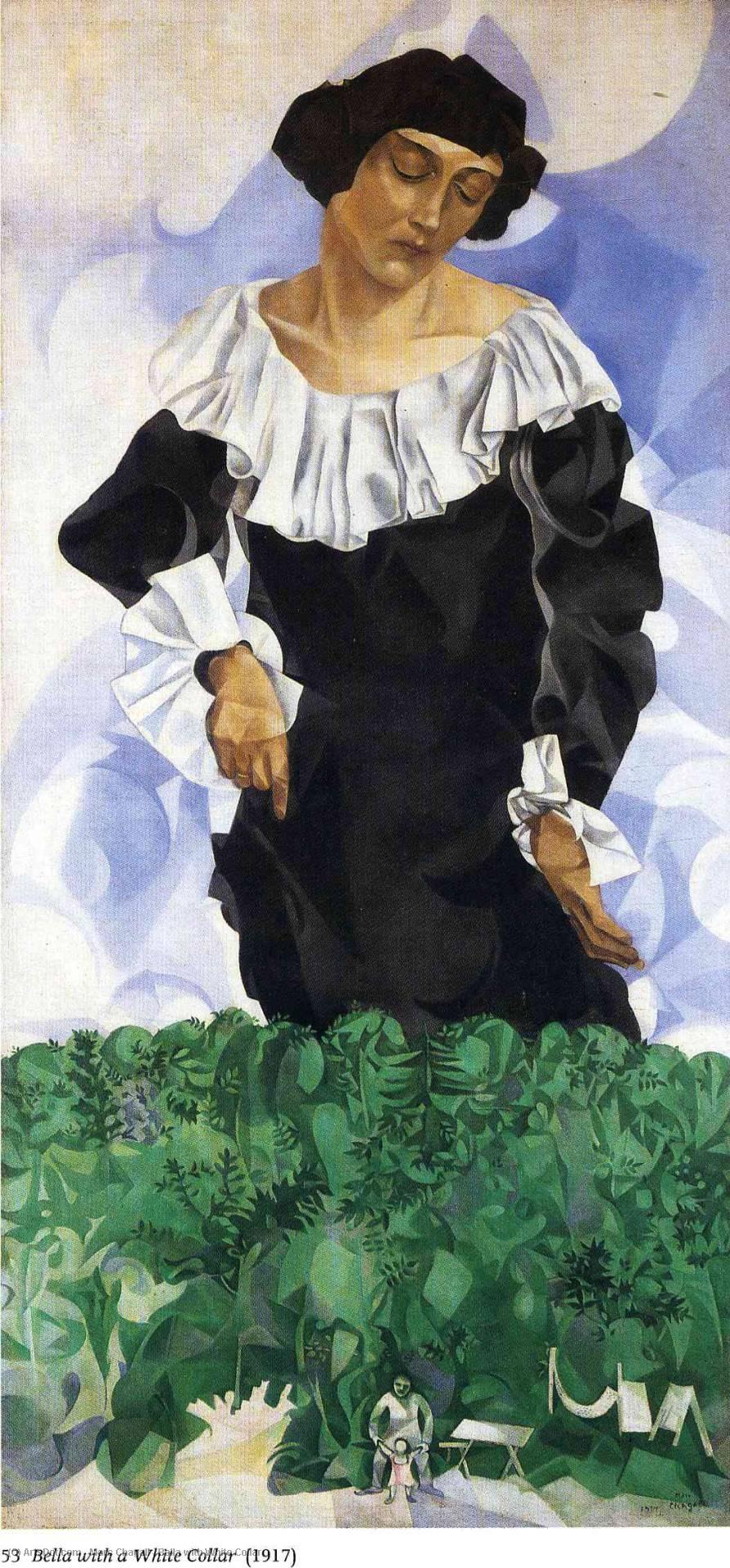
In the quiet intensity of 1917, amidst the global upheaval of World War I, Marc Chagall captured a moment of profound intimacy that would become a cornerstone of modern art. Bella with White Collar is far more than a mere portrait; it is a window into a dreamscape where reality and memory intertwining. The painting presents a woman—the artist's beloved Bella Rosenfeld—gazing downward, her posture a delicate balance of contemplation and vulnerability. Set against a backdrop of verdant, rolling fields and an expansive, serene azure sky, the composition invites the viewer to step away from the chaos of the external world and into a sanctuary of personal reflection. For the discerning collector or interior designer, this piece offers a rare sense of tranquility, acting as a focal point that commands attention through its emotional depth rather than sheer scale.
The technical mastery on display in this work reveals Chagall’s unique position within the early 20th-century avant-garde. While the influence of Cubism is palpable in the fractured planes of color and the structured arrangement of the landscape, Chagall famously resisted the rigid dogmas of the movement. Instead, he utilized a sophisticated palette of deep blues, lush greens, and warm ochres to create an illusionistic depth that feels both grounded and ethereal. The application of paint is notably tactile; thick impasto brushstrokes lend a physical presence to the canvas, making the texture of Bella's white collar and the movement of the fields feel almost touchable. This interplay of precise observation and imaginative embellishment ensures that the painting remains dynamic, catching the light differently depending on its placement within a room.
Symbolism and the Language of Dreams
To gaze upon this masterpiece is to decode a tapestry of deeply personal and cultural symbols. Chagall, rooted in his Jewish heritage and the folklore of his Belarusian childhood, infused every element with meaning. The downward gaze of the subject suggests an introspective sorrow, perhaps mirroring the artist's own anxieties during the Great War. Yet, this melancholy is countered by the presence of figures ascending into the sky—a recurring Chagallian motif representing spiritual liberation, aspiration, and the triumph of hope over despair. The fertile fields beneath Bella serve as a symbol of renewal and the regenerative power of nature, suggesting that even in times of profound loss, life persists and transforms.
For those looking to integrate fine art into a curated living space, Bella with White Collar provides an unparalleled emotional resonance. It is a piece that speaks of love, resilience, and the enduring beauty of the human spirit. Whether displayed in a sunlit studio or a sophisticated contemporary lounge, a high-quality reproduction of this work brings with it the poetic weight of history and the whimsical magic of a dream. It does not merely decorate a wall; it transforms an environment into a space of storytelling and profound aesthetic contemplation.