A Dreamscape of Biblical Drama
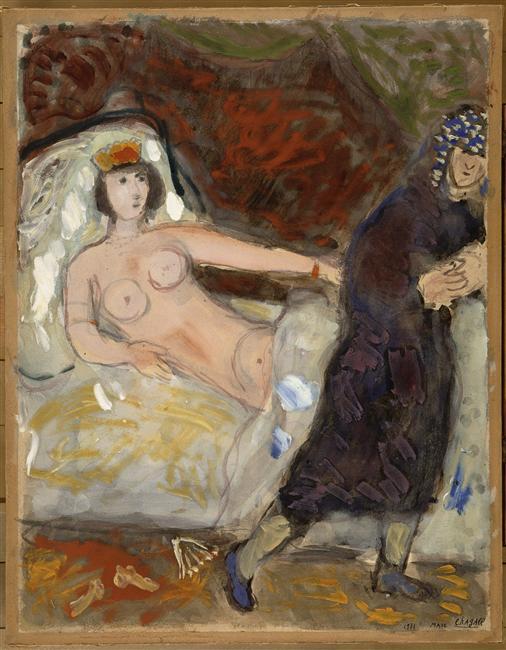
In the luminous masterpiece "Joseph and Potiphar's Wife," Marc Chagall invites us into a realm where the boundaries between historical narrative and feverish dream dissolve. Painted in 1931, this canvas serves as a profound window into the artist's psyche, capturing a pivotal moment from the Hebrew Bible with an unparalleled emotional intensity. The scene depicts the dramatic encounter between Joseph, a young man caught in the tides of fate, and the wife of Potiphar, whose pursuit of him creates a tension that vibrates through the very pigment of the work. Chagall does not merely illustrate a story; he orchestrates a symphony of color and movement that transcends the literal, transforming a moment of earthly temptation into a cosmic dance of light and shadow.
The composition is characterized by a sense of weightless motion, a hallmark of Chagall’s unique visual language. As the eye wanders across the canvas, it encounters figures that seem to float within a fragmented, multi-layered space. This lack of traditional perspective allows the viewer to experience the scene not as an observer of a static event, but as a participant in a swirling, spiritual whirlwind. The presence of secondary figures and floating elements suggests a world where the terrestrial and the divine are inextricably linked, mirroring the artist's own lifelong preoccupation with the intersection of Jewish folklore and personal memory.
The Poetics of Naïve Art and Color
To understand the technical brilliance of this work, one must look toward Chagall’s embrace of Primitivism and Naïve Art. Moving away from the rigid constraints of academic realism, Chagall utilized simplified forms and exaggerated proportions to prioritize emotional truth over anatomical accuracy. His brushwork, while controlled, possesses a rhythmic vitality that breathes life into the characters. The palette is nothing short of extraordinary; vibrant, saturated hues clash and harmonize in ways that evoke the vividness of childhood recollections and the surreal clarity of dreams.
For the discerning collector or interior designer, this painting offers a masterclass in how color can dictate the mood of a space. The brilliant blues, deep reds, and ethereal yellows do not merely decorate the surface; they create an atmosphere of profound psychological depth. This technique allows the artwork to function as a focal point that commands attention, offering a sense of warmth and intellectual stimulation. The flattened perspective and bold outlines provide a modern aesthetic appeal that integrates seamlessly into both contemporary and classical environments, making it a timeless choice for those seeking art that speaks to the soul.
Symbolism and the Eternal Narrative
Beyond its striking visual surface, "Joseph and Potiphar's Wife" is rich with symbolic layers that reward deep contemplation. The flying figures, a recurring motif in Chagall’s oeuvre, act as metaphors for spiritual transcendence and the soaring nature of human aspiration amidst earthly struggle. Every element—from the way the light hits the drapery of the characters to the whimsical placement of background figures—contributes to a narrative of longing, temptation, and the enduring power of faith. The painting captures the essence of the Chagallesque universe: a place where the heavy weight of history is constantly being lifted by the lightness of imagination.
Owning a reproduction of such a significant work means bringing a piece of art history into one's personal sanctuary. It is an invitation to reflect on the complexities of human nature and the beauty found in the most turbulent of stories. Whether placed in a quiet study or a grand living hall, this painting serves as a testament to the enduring power of the human spirit to find light within the shadows of drama and conflict.