A Window Into Childhood Dreams: Exploring Marc Chagall’s Portrait of Sister Maryasinka
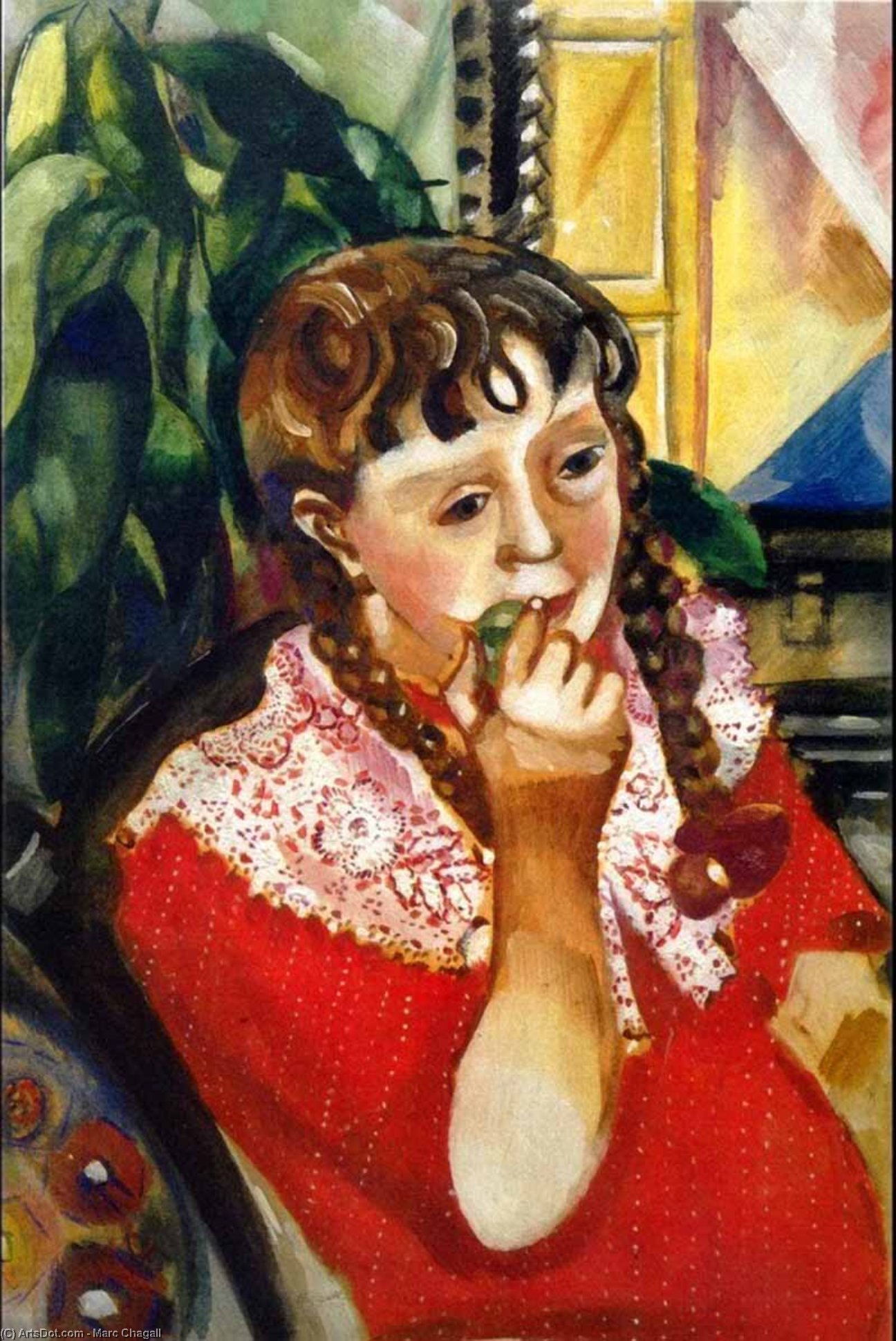
The painting “Portrait of Sister Maryasinka,” created in 1914 by the celebrated Belarusian-born artist Marc Chagall, transcends mere representation; it's an immersive experience into a realm where memory dances with fantasy. More than just capturing a young girl’s likeness, Chagall meticulously constructs a tableau that speaks volumes about Jewish folklore, spiritual contemplation, and the enduring beauty of simple moments. This piece exemplifies Chagall’s signature style—a blend of Cubism and Surrealism—resulting in an artwork that feels simultaneously grounded in observation and liberated by imagination.
- Subject Matter: At its core lies a portrait of Sister Maryasinka, a young girl whose serene gaze holds the quiet contemplation characteristic of Chagall’s oeuvre. Her posture exudes innocence and vulnerability, inviting viewers to consider themes of childhood purity and spiritual yearning.
- Style & Technique: Chagall's technique is instantly recognizable—characterized by flattened perspectives, distorted figures, and vibrant color palettes. He employs a loose brushstroke style that prioritizes expressive gesture over precise realism, creating an atmosphere of dreamlike fluidity. The artist utilizes bold hues – predominantly reds and blues – to convey emotion and heighten the visual impact.
Historical Context: Vitebsk’s Influence on Chagall’s Vision
Painted during a period marked by significant social upheaval—the burgeoning Russian Revolution—Chagall's artistic output reflects both personal introspection and engagement with broader cultural currents. Vitebsk, Chagall’s hometown, served as an incubator for his creative spirit. The town’s multicultural landscape – juxtaposing Orthodox churches and Jewish marketplaces – profoundly shaped his aesthetic sensibilities. This duality is palpable in “Portrait of Sister Maryasinka,” where elements of both traditions subtly intertwine to enrich the narrative.
- Symbolism: Recurring motifs within the painting contribute to its layered symbolism. The window serves as a portal to another world, representing introspection and spiritual awareness. The potted plant symbolizes growth and resilience—a visual echo of Vitebsk’s fertile soil and Chagall's own unwavering belief in artistic renewal.
- Emotional Impact: “Portrait of Sister Maryasinka” evokes a profound sense of nostalgia and wonder. Chagall skillfully captures the fleeting beauty of childhood experience, prompting viewers to contemplate themes of innocence, faith, and the transformative power of imagination. The painting’s luminous colors and dreamlike distortions inspire contemplation and invite us to reconnect with our own inner landscapes.
Decorative Considerations: Bringing Chagall's Dreamscape Home
For interior designers seeking inspiration, “Portrait of Sister Maryasinka” offers a captivating aesthetic proposition. Its bold color palette—particularly reds and blues—can be incorporated into living spaces to create warmth and vibrancy. The painting’s stylized depiction of nature lends itself beautifully to botanical prints or floral arrangements. Furthermore, Chagall's expressive brushstrokes convey movement and dynamism, adding visual interest to any room.
- Reproductions: ArtsDot offers exceptional reproductions of “Portrait of Sister Maryasinka,” meticulously crafted to faithfully capture the original artwork’s luminosity and textural nuances. These high-quality prints are ideal for enhancing interior décor or gifting to art enthusiasts who appreciate Chagall's visionary artistry.