A Dream of the Circus: Unveiling Chagall’s Enchanting World
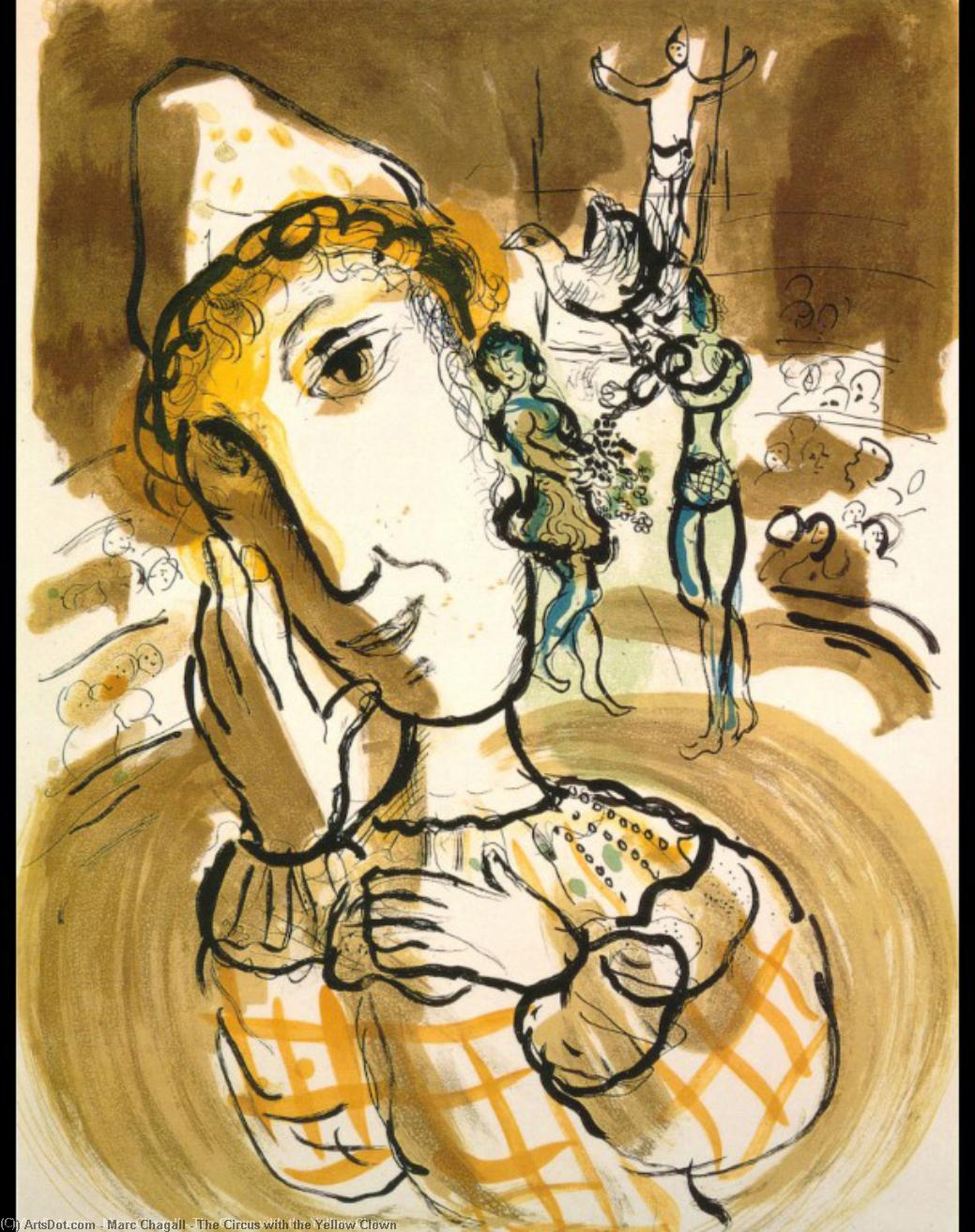
Marc Chagall's *The Circus with the Yellow Clown* (1967) is more than just a depiction of a performance; it’s an invitation into a realm where reality and fantasy intertwine. This vibrant lithograph encapsulates the artist’s signature style – a captivating blend of memory, folklore, and deeply personal symbolism. It's a piece that resonates with both childlike wonder and sophisticated artistic sensibility.
Artistic Style & The Naïve Tradition
Chagall stands as a pivotal figure in early modernism, yet his work often defies easy categorization. While he experimented with Cubism and Symbolism, *The Circus with the Yellow Clown* firmly places him within the tradition of Naïve Art (also known as Primitivism). This movement, characterized by its apparent simplicity and directness, often features flattened perspectives, bold colors, and a deliberate rejection of academic artistic conventions. However, in Chagall’s hands, this “naiveté” is profoundly sophisticated – a conscious choice to access deeper emotional truths and universal themes.
He wasn't simply imitating a childlike style; he was channeling a primal, intuitive way of seeing the world.
Decoding the Composition & Imagery
The scene unfolds with a dynamic energy typical of Chagall’s circus depictions. A central female figure, her face partially obscured by her hands, commands attention. She isn't merely *watching* the circus; she seems absorbed into its very essence, perhaps representing the viewer themselves. Surrounding her are fragmented figures – acrobats, musicians, and other performers – rendered with elongated forms and a dreamlike quality. The titular yellow clown, though not dominating the composition, serves as a focal point, embodying both joy and melancholy—a recurring duality in Chagall’s work.
The use of floating elements and illogical spatial relationships creates a sense of weightlessness and unreality.
Chagall's Life & Artistic Journey
Born Moishe Shagal in Belarus in 1887, Marc Chagall experienced a life shaped by cultural displacement and artistic innovation. His early exposure to the vibrant traditions of his Jewish community profoundly influenced his visual language. He later embraced the Parisian avant-garde, absorbing influences from Cubism and Fauvism, but always retained a uniquely personal style rooted in memory and emotion. Throughout his prolific career, Chagall worked across various mediums – painting, stained glass, ceramics, stage design – consistently exploring themes of love, loss, faith, and belonging.
Symbolism & Emotional Resonance
Chagall’s art is rich with symbolism, often drawing from Jewish folklore, personal experiences, and universal archetypes. The circus itself can be interpreted as a metaphor for life – a chaotic yet captivating spectacle filled with both joy and sorrow. The yellow clown, a traditional figure of amusement, also carries undertones of vulnerability and isolation.
The recurring motif of the female figure often represents love, memory, or the artist’s muse. Ultimately, *The Circus with the Yellow Clown* evokes a sense of nostalgia, longing, and the bittersweet beauty of fleeting moments.
Bringing Chagall's Vision Home
- Ideal for: Collectors of modern art, those seeking emotionally resonant pieces, and interior designers aiming to create spaces that inspire imagination.
- Stylistic Harmony: This lithograph complements a range of interiors – from contemporary minimalist settings to more eclectic and bohemian spaces. Its vibrant colors add a touch of whimsy and sophistication.
- Considerations for Display: Allow ample space around the artwork to appreciate its dynamic composition. Pair it with complementary colors and textures to enhance its visual impact.
This piece is not merely an image; it’s a portal into Chagall's extraordinary world—a testament to the power of art to transcend boundaries and touch the human spirit.