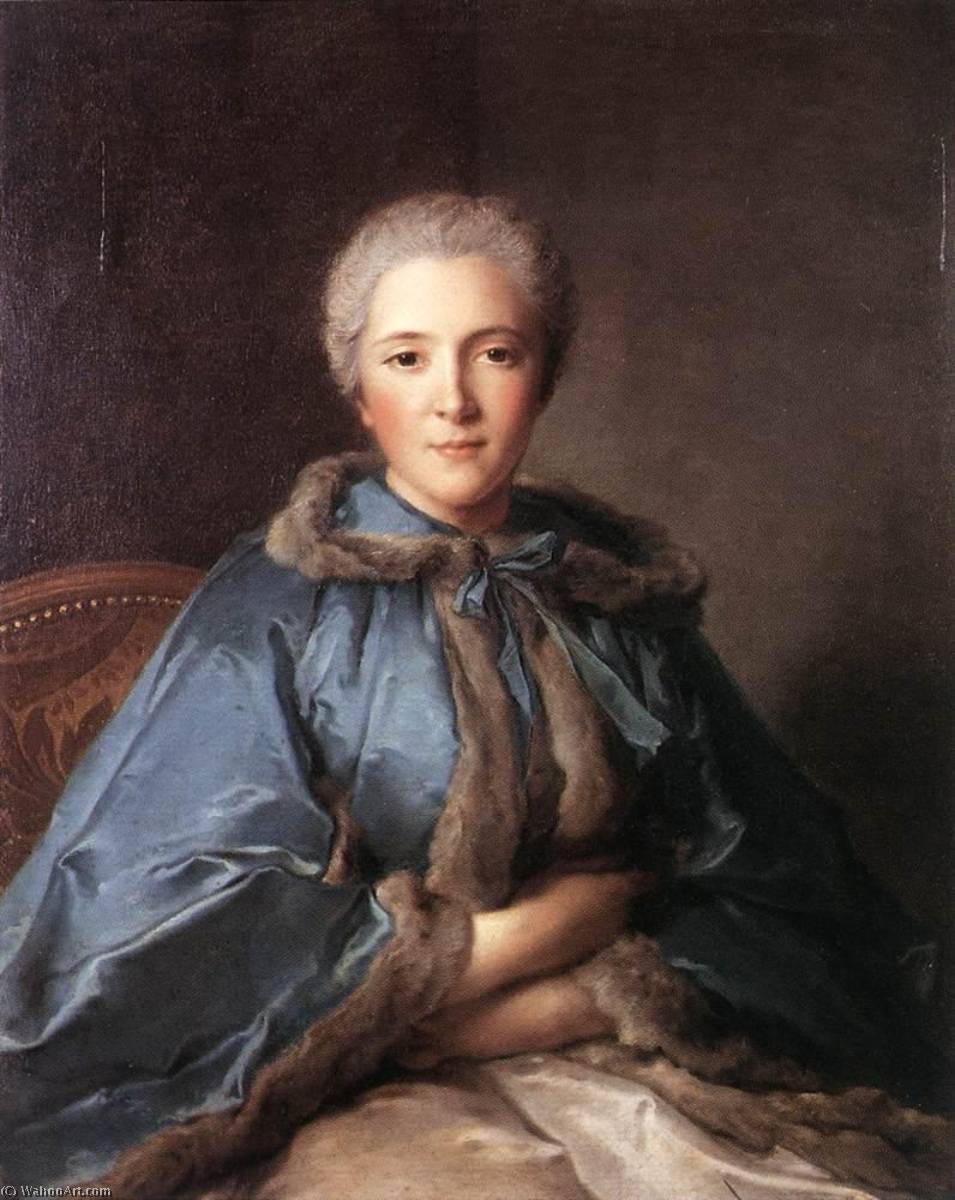
The Comtesse de Tillières: A Portrait of Grace Amidst Rococo Splendor
Jean-Marc Nattier’s “La Comtesse de Tillières,” completed in 1750, stands as a quintessential exemplar of the Rococo artistic movement—a style characterized by opulent ornamentation, pastel hues, and an emphasis on sensual beauty. More than just a likeness of Michelle-Julie-Françoise Bouchard d’Esparbès de Lussard d’Aubeterre de Jonzac, wife of Jacques Tannegui Le Veneur, marquis de Tillières, this painting embodies the aristocratic ideals of its time and offers a glimpse into the refined tastes of Louis XV’s court.
Nattier's masterful technique—primarily oil on canvas—allowed him to achieve remarkable detail while maintaining an ethereal quality. He employed soft brushstrokes and subtle glazing techniques, layering translucent washes of color to create luminous surfaces that capture the delicate contours of the sitter’s face and drapery. The artist skillfully utilized chiaroscuro – dramatic contrasts between light and shadow – to sculpt the figure's form and heighten its expressive power.
The painting’s setting—a richly decorated interior bathed in diffused sunlight—further reinforces its Rococo aesthetic. A pale pink wall serves as a backdrop for the Comtesse, who is seated gracefully on a sofa draped with luxurious fabrics. Around her neck rests a fur stole, symbolizing status and warmth, adding to the portrait's overall sense of elegance.
Beyond its visual beauty, “La Comtesse de Tillières” carries significant symbolic weight. The mythological allusion—specifically, Venus—references ideals of feminine virtue and grace, aligning with the prevailing artistic conventions of the era. Nattier’s depiction reflects a broader cultural preoccupation with portraying women as embodiments of idealized femininity – a theme prevalent throughout Rococo art.
This artwork continues to captivate audiences today due to its exquisite craftsmanship and timeless appeal. Its serene composition, luminous palette, and masterful rendering of form exemplify the pinnacle of Rococo portraiture, securing Nattier’s legacy as one of France's most celebrated artists.