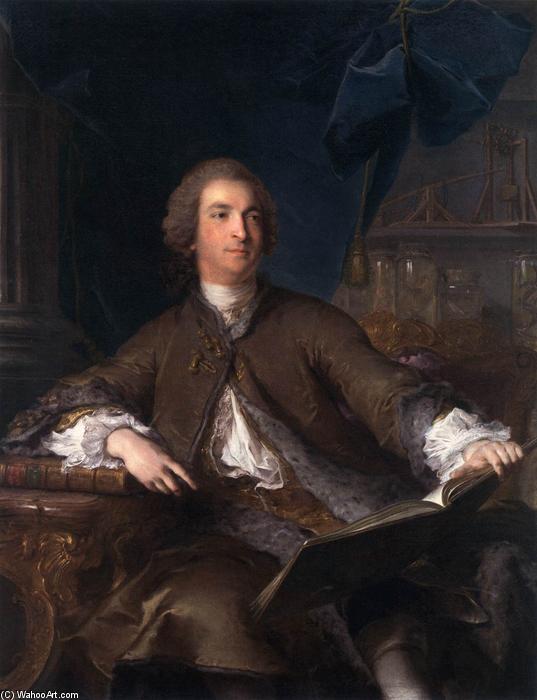
Experience Rococo elegance with Jean-Marc Nattier's 1745 portrait of Joseph Bonnier de la Mosson, capturing aristocratic refinement and intellectual grace; discover this masterpiece today.
Discover Jean-Marc Nattier (1685-1766), the French Rococo master of elegant portraits! Explore his mythological scenes & aristocratic depictions.
Explore the National Gallery of Art in Washington D.C.! Discover masterpieces from Renaissance to modern art, including works by Raphael, Van Gogh & more. Free admission!
A Portrait of Refinement: Jean-Marc Nattier’s Depiction of Joseph Bonnier de la Mosson
Jean-Marc Nattier's "Joseph Bonnier de la Mosson" stands as a quintessential emblem of Rococo elegance, capturing not merely likeness but also the spirit of aristocratic society in 18th century France. Painted in 1745, this portrait transcends mere representation; it’s an exquisitely crafted tableau designed to convey status and intellect through subtle visual cues—a testament to Nattier's mastery as a painter and his profound understanding of artistic convention.
Subject Matter and Composition
The painting portrays Joseph Bonnier de la Mosson, a prominent French diplomat and nobleman, seated comfortably against a backdrop of a serene blue curtain. The drapery is rendered with meticulous attention to detail—characteristic of Nattier’s style—creating a sense of depth and luxuriousness. De La Mosson holds an open book in his hands, suggesting erudition and engagement with intellectual pursuits. His gaze directs slightly upwards, conveying composure and self-assuredness. Scattered around him are several books, reinforcing the theme of learning and sophistication – elements deliberately chosen to elevate Bonnier’s social standing. The inclusion of a clock in the upper right corner serves as a visual reminder of time passing, subtly hinting at the importance of legacy and accomplishment within aristocratic circles.
Style and Technique: Embracing Rococo Ornamentation
Nattier's signature style epitomizes the Rococo aesthetic—a movement that prioritized grace, delicacy, and ornamentation over grandeur. The painting’s palette is muted yet luminous, dominated by warm browns complemented by cool blues and creams. Brushstrokes are soft and blended seamlessly, creating an illusion of velvety texture. Nattier skillfully employs chiaroscuro – the interplay of light and shadow – to sculpt Bonnier's form and imbue the scene with atmosphere. The drapery folds are rendered with painstaking accuracy, demonstrating Nattier’s meticulous technique and his dedication to capturing realistic detail while maintaining artistic harmony.
Historical Context: Reflecting Enlightenment Values
“Joseph Bonnier de la Mosson” was created during the reign of Louis XV, a period marked by intellectual ferment and aristocratic patronage. The Rococo style flourished amidst these cultural currents, reflecting an idealized vision of beauty and refinement—values deeply ingrained in the upper echelons of French society. Portraits like this served not only to commemorate individuals but also to solidify their social position and convey prestige through visual symbols. Nattier’s work exemplifies the Enlightenment's emphasis on reason and observation, skillfully blending artistic convention with psychological insight.
Symbolism: Beyond Appearance
The book held by Bonnier symbolizes knowledge, intellect, and moral virtue—qualities highly valued in aristocratic circles during the Rococo era. The blue curtain represents tranquility and serenity, mirroring Bonnier’s inner state of mind. Furthermore, the clock subtly underscores the passage of time and the importance of achieving lasting accomplishments – a poignant reminder that beauty and refinement must endure beyond mere fleeting moments.
Emotional Impact: Capturing Inner Dignity
Ultimately, “Joseph Bonnier de la Mosson” succeeds in conveying a profound sense of dignity and composure. Nattier’s masterful depiction captures not just Bonnier's physical appearance but also his inner character—a testament to the artist’s ability to translate psychological nuance into visual form. The painting invites contemplation on themes of intellect, status, and timeless beauty—inspiring viewers with its elegance and sophistication.