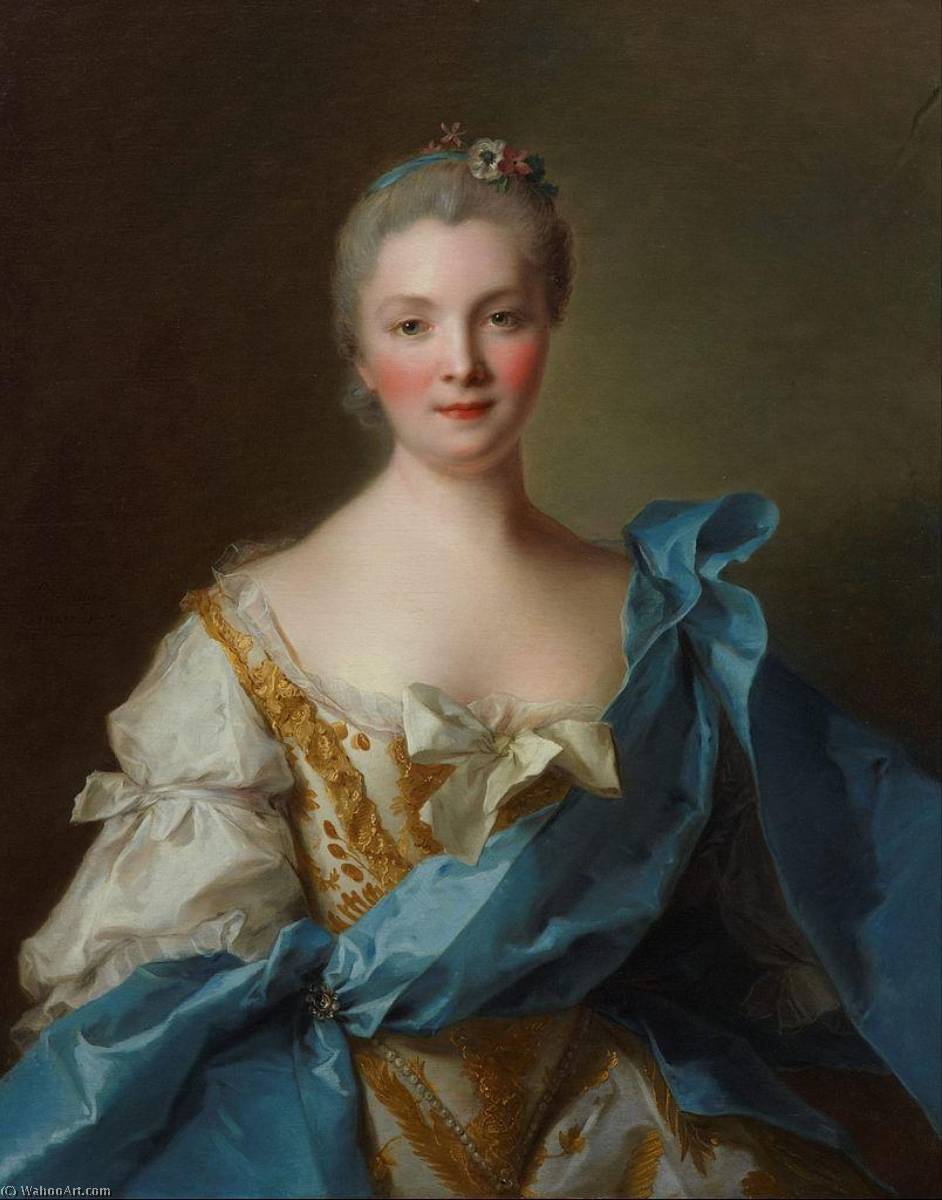
The painting
Madame de La Porte is a stunning example of 18th-century French portraiture, created by the renowned artist
Marc Nattier in 1754. This beautiful oil on canvas piece is now housed at the
Art Gallery of New South Wales in Australia.
A Masterpiece of Rococo Style
The
Madame de La Porte painting showcases Nattier's exceptional skill in capturing the essence of his subjects. The portrait features a young woman dressed in a elegant blue gown, adorned with a pink bow on her head and a gold necklace around her neck. Her gentle smile and soft gaze evoke a sense of serenity and refinement.
Rococo style is evident in the painting's delicate lines, intricate details, and pastel colors. Nattier's use of light and shadow creates a sense of depth and dimensionality, drawing the viewer's eye to the subject's face. The background of the painting features a subtle wall, which adds to the overall sense of intimacy and quiet contemplation.
Artistic Influences and Legacy
Marc Nattier was a prominent figure in the French art scene during the 18th century, known for his exquisite portraits of European royalty and nobility. His work was influenced by the
Romanticism Art Movement, which emphasized emotion, imagination, and individuality. Visit /art/list/?Filter=A@D3CR3F-The-Romanticism-Art-Movement to learn more about this fascinating art movement. Some notable works by Nattier include:
To explore more of Nattier's works and other famous artists, visit https://ArtsDot.com. The website offers a wide range of handmade oil painting reproductions, including
Marc Nattier's stunning portraits.
The
Madame de La Porte painting is a testament to Nattier's exceptional skill and artistry. Its beauty and elegance continue to captivate audiences, making it a timeless masterpiece of 18th-century French portraiture.