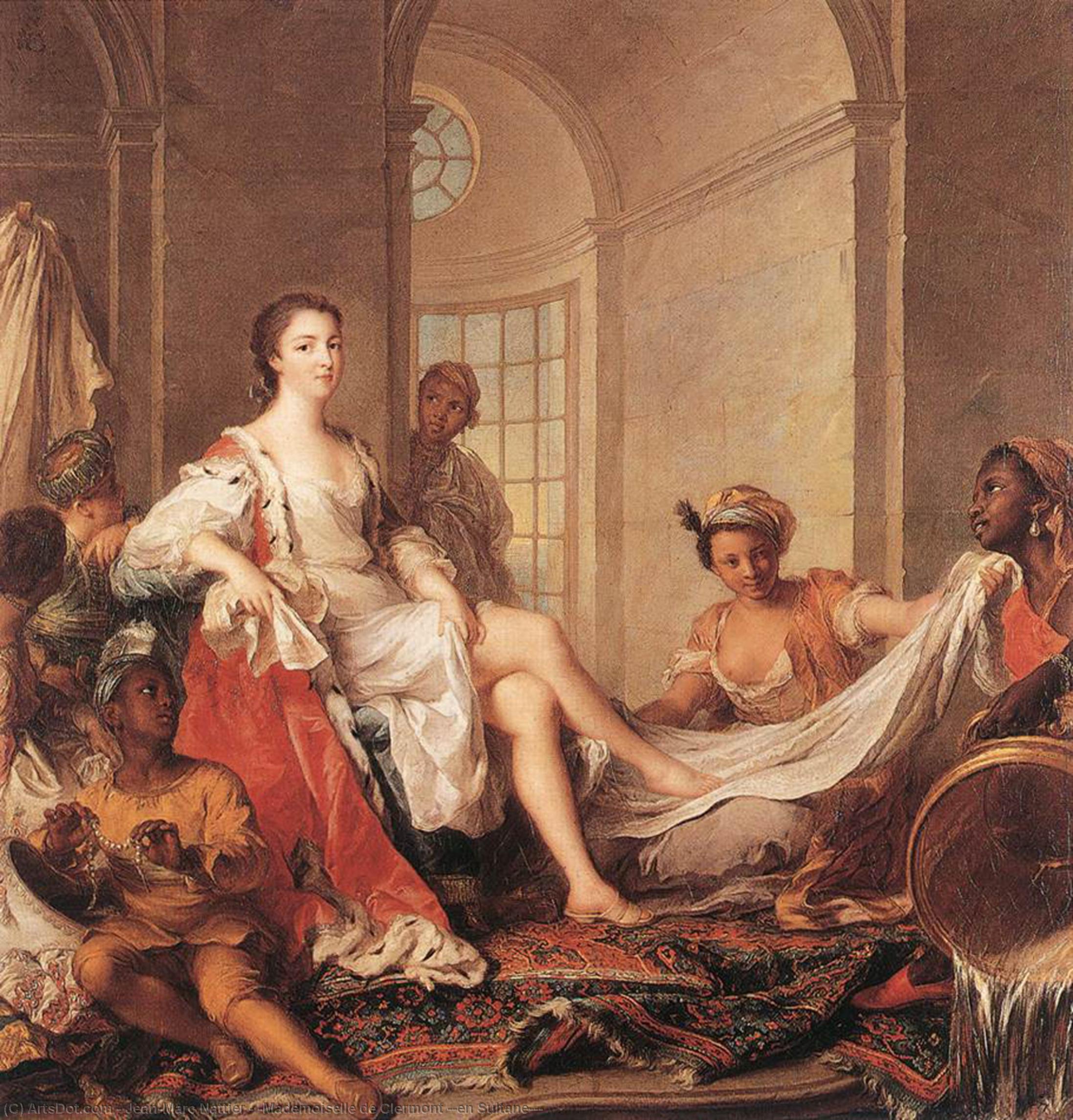
Jean-Marc Nattier’s opulent portrait captures Parisian elegance in 1733; the woman's serene composure contrasts beautifully with animated gestures amidst richly textured fabrics and a stately room, inviting you to explore this masterpiece.
Discover Jean-Marc Nattier (1685-1766), the French Rococo master of elegant portraits! Explore his mythological scenes & aristocratic depictions.
Discover exquisite French art & arms at the Wallace Collection! Explore Rococo masterpieces, Georgian grandeur, and a unique royal townhouse experience – free admission awaits!
A Portrait Steeped in Rococo Refinement: Exploring Jean-Marc Nattier’s ‘Mademoiselle de Clermont ’en Sultane’
The painting “Mademoiselle de Clermont ’en Sultane” by Jean-Marc Nattier stands as a quintessential emblem of the Rococo artistic movement, transporting viewers back to the opulent salons and aristocratic circles of 18th century France. Completed in 1733, this oil on canvas masterpiece—measuring precisely 109 x 105 cm—currently resides within the Wallace Collection’s hallowed halls in London, offering a rare glimpse into the artistic sensibilities of its time. More than just a depiction of a young woman receiving an honorific medallion, it embodies a complex tapestry of stylistic conventions and symbolic gestures that continue to fascinate art historians and collectors alike.
The Artistry of Nattier: Mastering Rococo Technique
Jean-Marc Nattier’s reputation rested upon his unparalleled ability to capture the fleeting beauty of human emotion through exquisitely rendered portraits. His technique—characterized by delicate brushstrokes, subtle tonal gradations, and a masterful command of chiaroscuro—was instrumental in achieving this goal. Unlike the heavier, more dramatic styles prevalent earlier in the century, Nattier favored a luminous palette and airy compositions that prioritized grace and elegance. He meticulously layered thin glazes of pigment onto the canvas, creating an illusion of depth and texture that mirrored the shimmering fabrics and opulent furnishings typical of Rococo interiors. The artist’s meticulous attention to detail—evident in the rendering of lace collars, satin gowns, and powdered wigs—served not merely as stylistic embellishment but also as a conduit for conveying social status and refinement.
A Window into Eighteenth Century Society: Contextual Significance
“Mademoiselle de Clermont ’en Sultane” is firmly rooted within the socio-cultural landscape of Louis XV’s reign. The painting portrays Marie Clémentine Adelaide FitzRoy, Duchess of Norfolk—a prominent figure in British aristocratic society—receiving a medallion commemorating her marriage to Augustus FitzRoy, Duke of Grafton. This scene encapsulates the prevailing ideals of the era: courtship rituals, familial honor, and the importance of social standing were paramount concerns. Nattier skillfully captured these nuances through his portrayal of posture, gesture, and facial expression, reflecting the formalized etiquette that governed aristocratic life. Furthermore, the inclusion of decorative elements—such as the richly patterned rug beneath the Duchess’s feet and the ornate chair—served to reinforce the grandeur and splendor associated with the noble class.
Symbolism Beyond Appearance: Layers of Meaning
Beyond its surface beauty lies a wealth of symbolic significance. The pose of Mademoiselle Clermont—seated gracefully on her bed, legs crossed—represents composure and dignity, mirroring the expected behavior of women within aristocratic circles. The red sash around her waist symbolizes passion and vitality, subtly contrasting with the serene expression on her face. Even the medallion itself carries symbolic weight, representing honor and recognition – a tangible emblem of marital happiness and social acceptance. Nattier’s masterful use of visual language elevates the portrait beyond mere likeness, transforming it into a statement about virtue, status, and the aspirations of the upper echelons of society.
Emotional Resonance: Capturing Transient Beauty
Ultimately, “Mademoiselle de Clermont ’en Sultane” succeeds in conveying a profound emotional resonance. The artist’s subtle portrayal of emotion—particularly the quiet contemplation evident in Mademoiselle Clermont's gaze—captures the fleeting beauty of human experience. It invites viewers to contemplate themes of love, honor, and social responsibility. This enduring appeal speaks to Nattier’s genius in capturing not just what was seen but also what was felt – a testament to his ability to transform pigment and canvas into an unforgettable visual narrative.