A Brushstroke of Elegance: The Life and Art of Jean-Marc Nattier
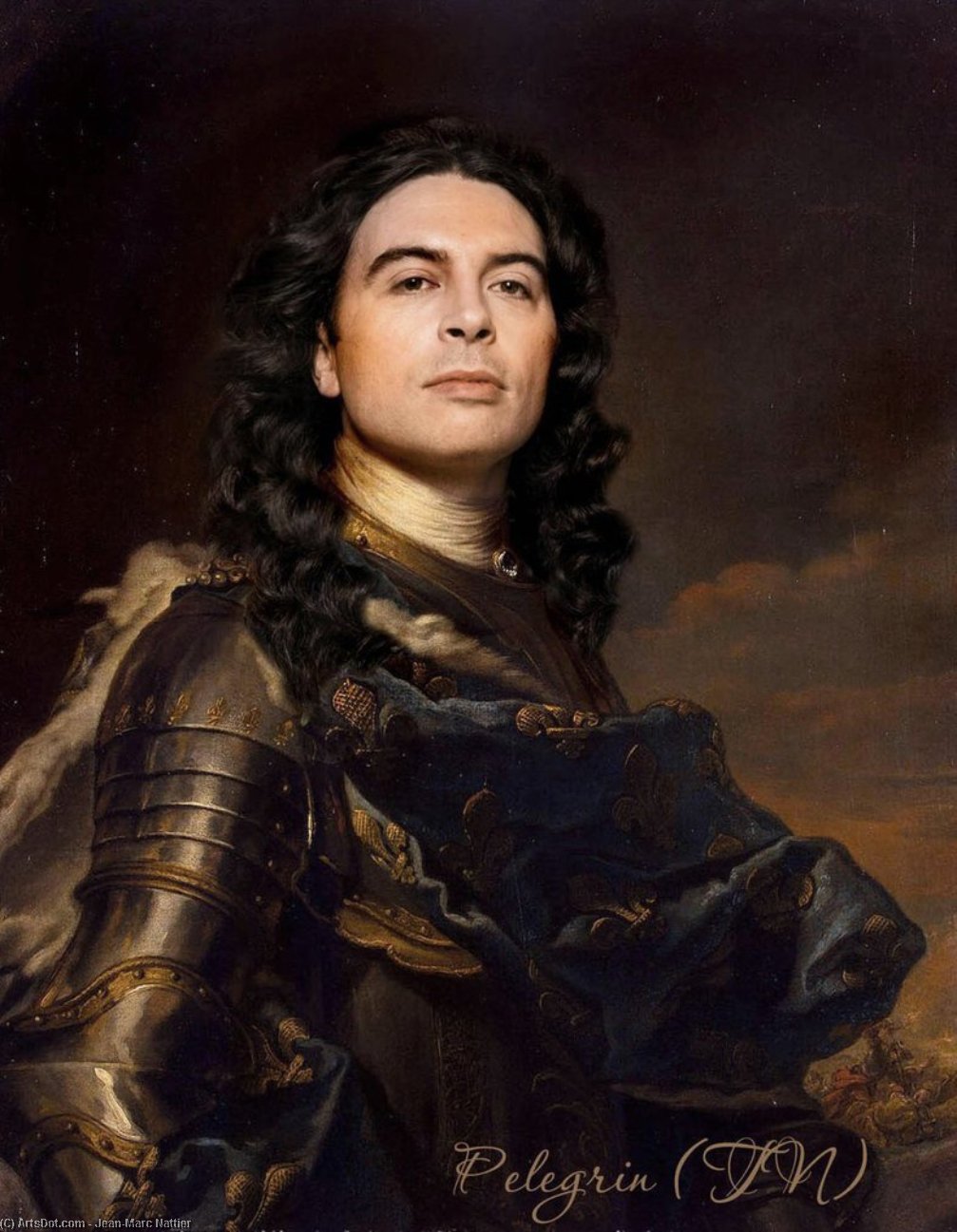
Jean-Marc Nattier’s “Portrait of Louis XV,” completed in 1745, stands as a quintessential emblem of Rococo artistry—a style characterized by opulent ornamentation, pastel hues, and an emphasis on graceful curves that epitomized the aristocratic tastes of Louis XV's reign. More than just a depiction of royalty, this painting delves into the psychological complexities of its subject, reflecting the prevailing fascination with portraying inner emotions alongside outward appearances.
Born in Paris in 1685, Nattier’s artistic journey began within a family deeply rooted in artistic heritage. His father, Marc Nattier, was already recognized as a respected portrait painter, instilling in Jean-Marc an early appreciation for capturing likenesses with meticulous detail. Crucially, young Nattier honed his skills by diligently studying the works of Rembrandt and Rubens at the Luxembourg Gallery—a formative experience that instilled him with a profound understanding of chiaroscuro and compositional balance.
Despite being offered the prestigious patronage of the French Academy in Rome – a common path for aspiring artists of the era – Nattier deliberately remained in Paris. He reasoned that independent artistic exploration would allow him to cultivate his distinctive style, prioritizing innovation over institutional conformity. This decision proved pivotal in shaping his oeuvre and establishing him as a singular voice within the Rococo movement.
Style and Technique: The Delicate Dance of Light and Color
Nattier’s technique was revolutionary for its time. He eschewed the dramatic contrasts favored by Caravaggio, opting instead for subtle gradations of light and color—a masterful application of sfumato that softened edges and created an ethereal atmosphere. This approach wasn't merely aesthetically pleasing; it served a psychological purpose, conveying a sense of serenity and refinement.
The painting’s palette is dominated by pastel shades – delicate pinks, blues, and greens – meticulously blended to achieve luminous effects. These colors were chosen not only for their visual beauty but also for their symbolic associations with nobility and grace. The artist skillfully utilized glazing techniques—thin layers of translucent paint applied over underlying tones—to enhance depth and luminosity, further elevating the artwork’s overall impact.
Historical Context: Versailles and the Pursuit of Beauty
"Portrait of Louis XV" emerged during a period of unparalleled grandeur in French history – the reign of Louis XV. Versailles served as the epicenter of aristocratic culture, where elaborate ceremonies and opulent décor were considered essential expressions of royal authority. Nattier’s commission reflects this societal preoccupation with beauty and refinement, capturing the king's dignified posture and gaze within a meticulously crafted setting.
The pose itself is deliberately restrained—Louis XV sits upright, his hands clasped calmly in his lap—a stylistic choice that underscores the importance of composure and dignity. The drapery surrounding him flows gracefully, mirroring the curvilinear forms characteristic of Rococo design and reinforcing the painting’s sense of elegance.
Symbolism: Beyond Appearance – An Exploration of Inner Reflection
Beyond its visual splendor, “Portrait of Louis XV” is laden with symbolic significance. The sword held by Louis XV represents power and authority, yet it's positioned subtly—almost nonchalantly—suggesting that true leadership resides not merely in wielding force but also in cultivating inner tranquility.
The cloudy sky serves as a backdrop, mirroring the contemplative mood of the portrait and hinting at the complexities of human emotion. Nattier’s masterful depiction captures not just Louis XV's physical likeness but also his psychological state—a testament to the artist’s ability to convey profound ideas through visual imagery.
Ultimately, “Portrait of Louis XV” transcends mere representation; it embodies the spirit of its era and remains a captivating exploration of beauty, grace, and inner reflection – an enduring masterpiece that continues to inspire admiration centuries later.