A Glimpse of Grace: Marie Leczinska in Nattier’s Masterpiece
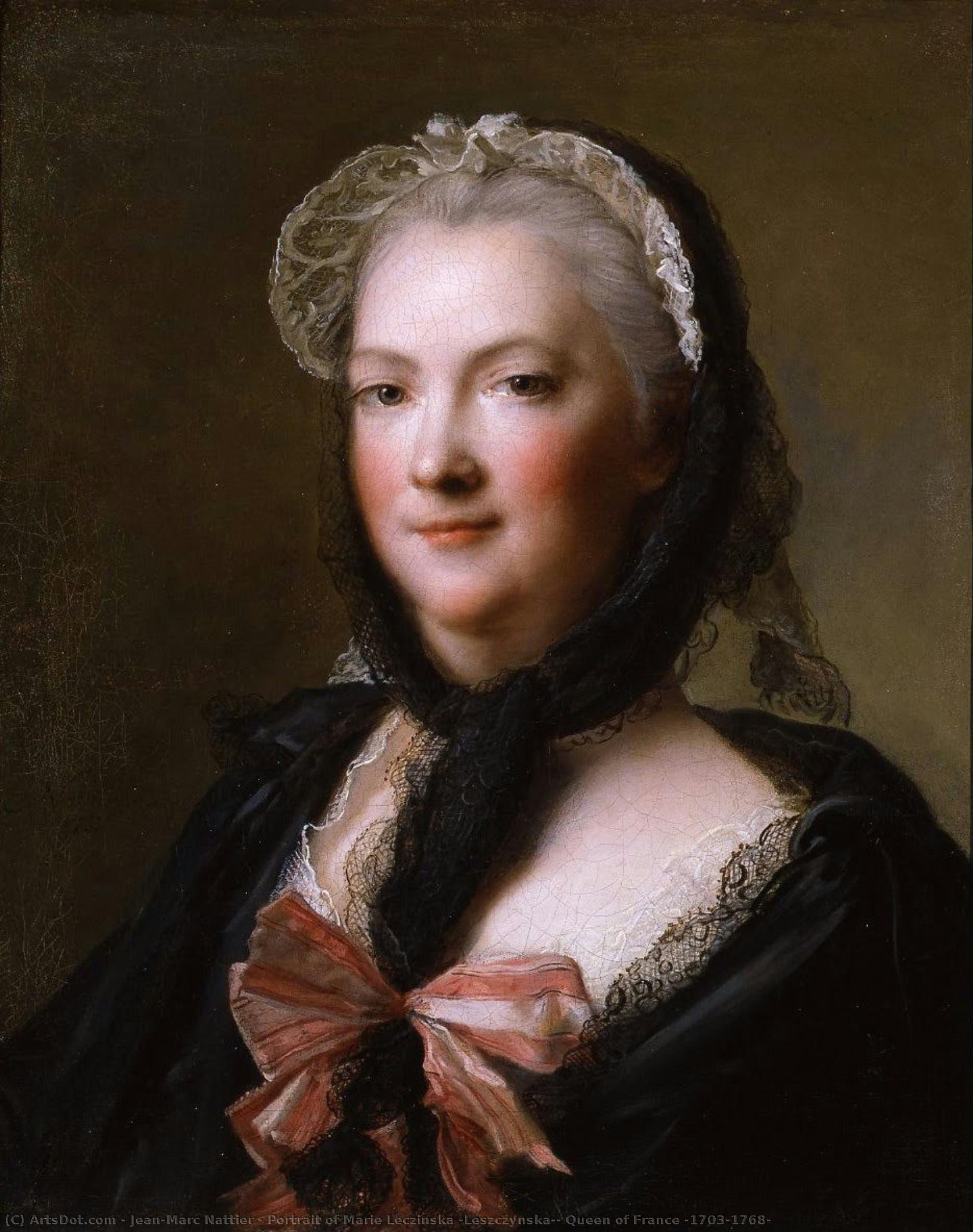
Jean-Marc Nattier's “Portrait of Marie Leczinska (Leszczynska), Queen of France” is more than a simple depiction of royalty; it’s a carefully constructed tableau vivant, a frozen moment brimming with understated elegance and the quiet dignity of a woman navigating the complexities of court life. Painted in 1753, during the height of Louis XV's reign, this portrait transcends its status as a royal commission to become a poignant study of femininity, power, and the subtle artistry of Rococo aesthetics.
Nattier, born into a family steeped in artistic tradition – his father a renowned portrait painter and mother a celebrated miniaturist – possessed an innate ability to capture not just likeness but also character. He eschewed the grand, theatrical poses favored by some of his contemporaries, instead opting for a remarkably intimate composition. The Queen is presented in a half-length format, seated before a richly draped background that subtly suggests a private salon—a space designed for contemplation and refined conversation. Her posture is relaxed yet regal, her gaze direct and engaging, inviting the viewer into an unspoken dialogue.
The Language of Rococo: Color, Texture, and Symbolism
Nattier’s signature style is immediately recognizable in this portrait through his masterful use of color and texture. The palette is restrained yet luminous—a harmonious blend of soft blues, creams, and subtle pinks that evoke a sense of serenity and sophistication. The delicate lace collar, rendered with meticulous detail, catches the light beautifully, adding a layer of tactile richness to the image. Notice, too, the ladder of red ribbon knots adorning her dress – a deliberate flourish that speaks to both wealth and status, while simultaneously hinting at the Queen’s role as a gracious hostess.
Beyond mere decoration, each element carries symbolic weight. The classical setting—a nod to Greco-Roman ideals—underscores Marie Leczinska's elevated position within French society. Her attire, though seemingly simple, is carefully chosen to convey both her Polish heritage and her role as Queen of France. The subtle suggestion of a mythological reference – perhaps alluding to Diana, the goddess of the hunt – elevates the portrait beyond a mere likeness, transforming it into an allegory of grace and power.
A Window into the Court: Context and Legacy
Marie Leczinska’s life was one of both privilege and quiet struggle. Born into Polish nobility, she married Louis XV in 1725, becoming Queen of France at a relatively young age. Despite her beauty and intelligence, she faced considerable challenges within the rigid confines of the French court—a world dominated by intrigue, fashion, and political maneuvering. Nattier’s portrait offers a rare glimpse into this complex world, capturing not just the Queen's outward appearance but also her inner strength and resilience.
The painting was created during a period of significant artistic innovation, as the Rococo style flourished in France. Nattier, along with artists like Boucher and Watteau, helped to define this distinctive aesthetic—characterized by its emphasis on elegance, grace, and playful ornamentation. “Portrait of Marie Leczinska” stands as a testament to Nattier’s skill and his ability to capture the essence of his subject within the framework of this influential artistic movement. Today, housed at The Frick Pittsburgh, it continues to captivate viewers with its timeless beauty and subtle emotional depth.
Bringing the Portrait Home: Reproduction Options
For those seeking a piece of this exquisite artwork for their own spaces, high-quality reproductions are available through ArtsDot.com and other reputable art reproduction services. Whether you choose an archival print on canvas or a meticulously hand-painted replica, you can bring the elegance and grace of Nattier’s masterpiece into your home—a lasting tribute to a remarkable woman and one of the most celebrated portraitists of 18th-century France.