A Paradoxical Vision: Reimagining the Everyday
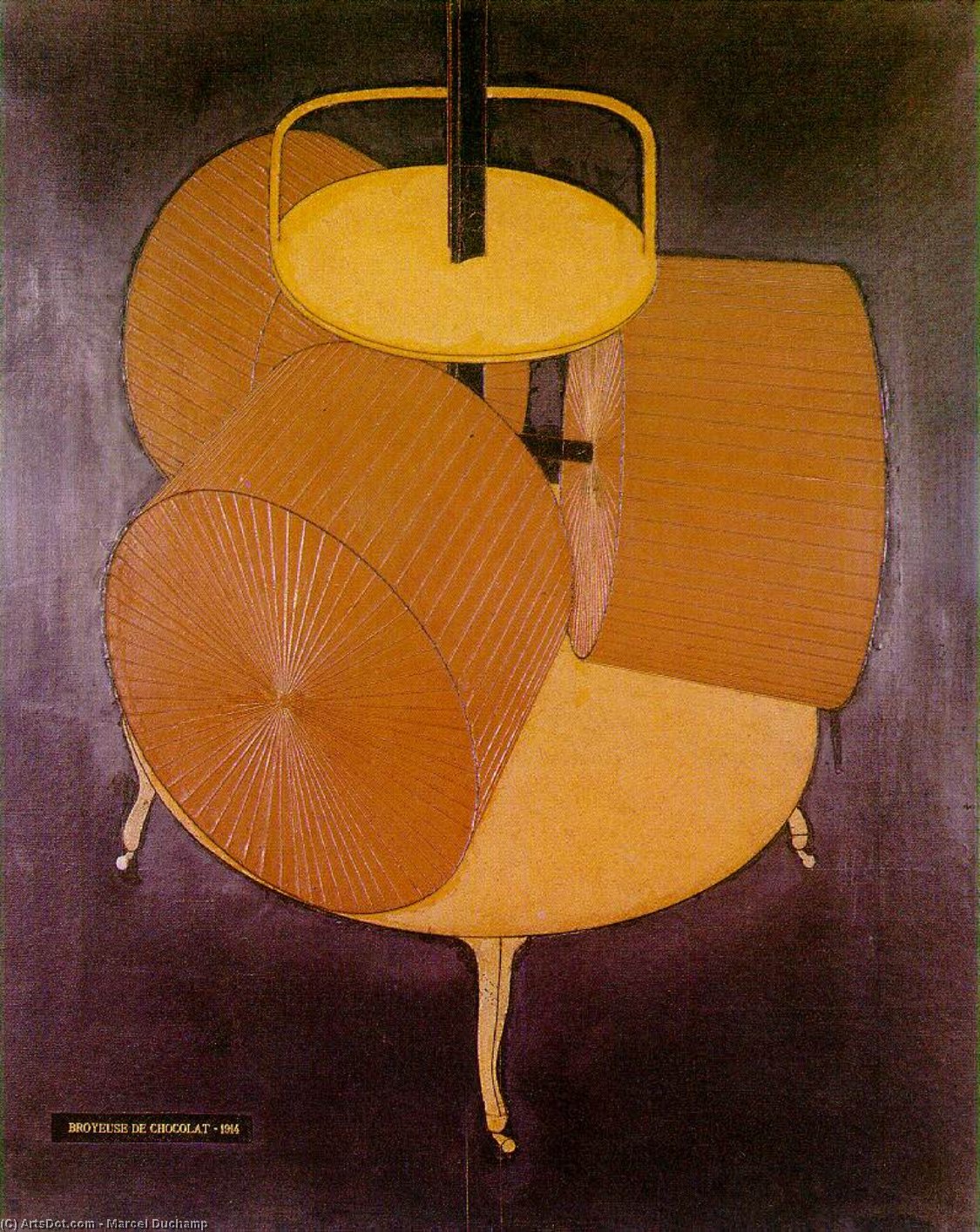
In the vast landscape of early twentieth-century modernism, few works possess the quiet, unsettling magnetism of Marcel Duchamp’s Chocolate Grinder No 2. Painted in 1914, this piece serves as a profound threshold between the structured geometric explorations of Cubism and the radical, intellectual provocations of Dadaism. At first glance, the viewer is presented with a scene that feels deceptively domestic: a yellow chair with a wooden frame, possessing a singular, circular design featuring a central hole. Yet, beneath this seemingly mundane depiction of furniture lies a deliberate disruption of reality. The painting does not merely capture an object; it captures a concept, inviting the observer to look through the physical form and into the void of artistic intention.
The composition is masterfully arranged to evoke a sense of surreal stillness. As the eye wanders across the canvas, one notices the presence of other chairs and a dining table, all sharing an unusual, circular geometry that mirrors the central motif of the primary subject. The inclusion of a figure seated at the table adds a layer of narrative ambiguity, suggesting a moment of quietude that is simultaneously interrupted by the strange, mechanical-like design of the objects. For the collector or interior designer, this work offers a sophisticated tension—a way to introduce a conversation piece into a space that challenges the boundaries between functional decor and high-concept fine art.
Technical Precision and the Language of Form
While Duchamp is often celebrated for his "readymades"—the act of selecting ordinary objects and declaring them art—Chocolate Grinder No 2 reveals a much more traditional, yet equally subversive, technical mastery. Utilizing oil paint to achieve a smooth, luminous surface finish, the artist employs a level of precision that recalls the meticulousness of the Post-Impressionists. The wooden textures of the chair are rendered with such care that one can almost feel the grain beneath the pigment, creating a tactile reality that grounds the more abstract elements of the composition.
The technique serves a dual purpose: it provides a sense of hyper-reality that makes the absurd design of the "grinder" even more jarring. By using the light and shadow characteristic of classical oil painting to define these strange, perforated shapes, Duchamp forces the viewer to confront the object as something tangible and present. This juxtaposition of calculated accuracy with conceptual disruption is where the true magic of the piece resides. It is a technical triumph that uses the tools of tradition to dismantle the very idea of traditional representation.
A Legacy of Intellectual Provocation
To understand the emotional weight of this painting, one must consider the historical turbulence of 1914. As Europe stood on the precipice of World War I, Duchamp was already beginning to reject the aesthetic dogmas that prioritized beauty and craftsmanship over intellectual inquiry. This work embodies the genesis of conceptual art, where the "idea" becomes the primary driver of the creative act. The circular hole in the chair is not merely a design choice; it is a symbolic aperture, a way for Duchamp to puncture the illusion of the canvas and invite the viewer to question what is real and what is constructed.
For those seeking to adorn a contemporary space with art that inspires deep thought, a high-quality reproduction of this masterpiece offers more than just visual appeal. It brings into a room a piece of history—a fragment of the revolutionary spirit that redefined the twentieth century. Whether placed in a minimalist gallery setting or as a focal point in a richly textured study, Chocolate Grinder No 2 remains an enduring symbol of the power of the imagination to transform the ordinary into the extraordinary.