Marco d’Oggiono's Enchanting Portrait of Pomona
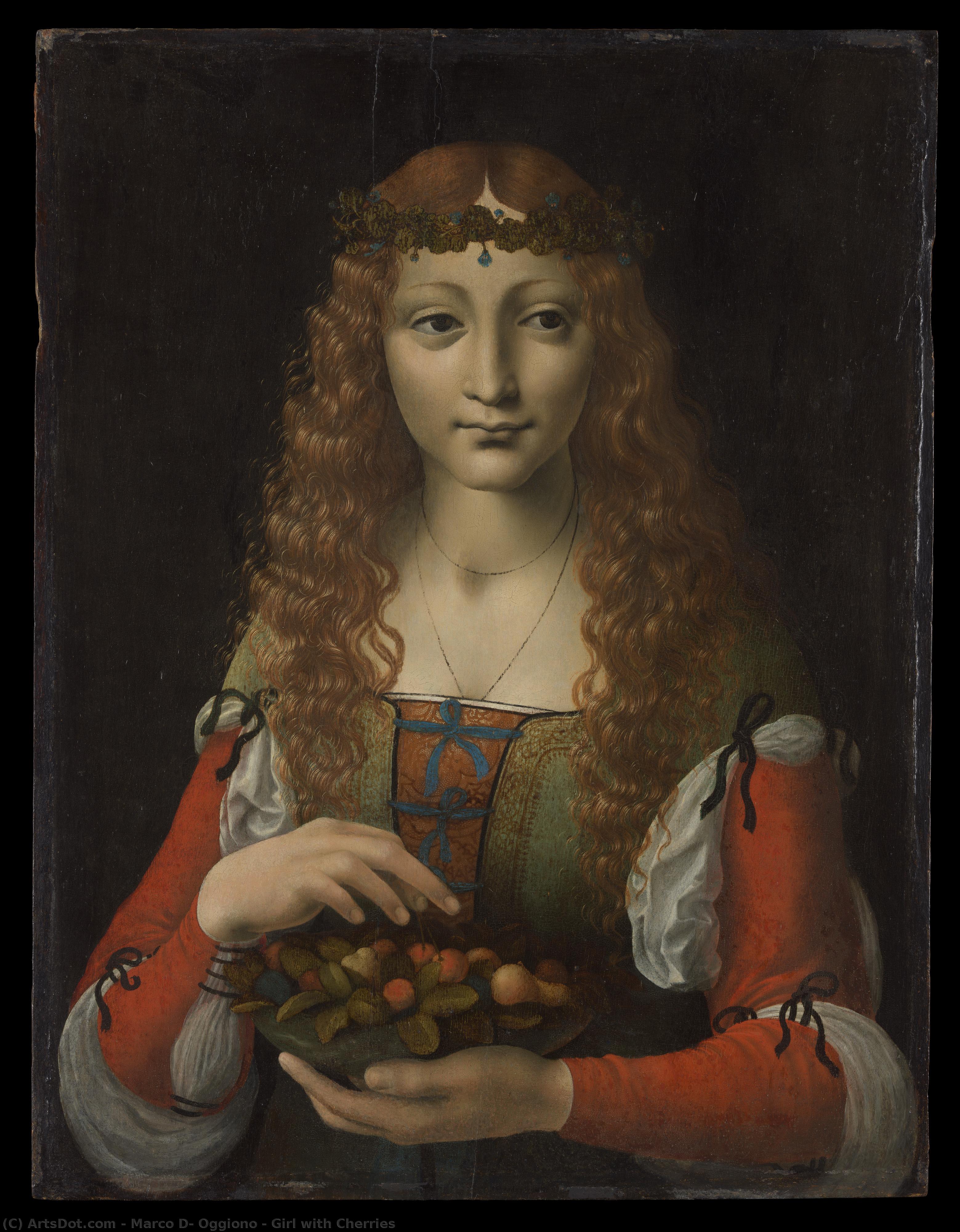
This exquisite painting by Marco d’Oggiono, attributed to Leonardo da Vinci’s workshop in Milan, transcends mere representation; it embodies the spirit of Renaissance allegory and invites contemplation on themes of marriage and intellectual pursuits. Executed around 1491-95, “Girl with Cherries,” as it was originally titled during its sale at Christie's London in 1838, exemplifies D’Oggiono’s masterful assimilation of Leonardo’s stylistic principles while forging his own distinctive artistic voice. The artwork itself is a portrait of a young woman adorned in opulent green attire and crowned with ivy—a deliberate choice reflecting the symbolism of marital fidelity—holding aloft a bowl brimming with cherries.
- Style: D’Oggiono's style aligns seamlessly with Leonardo’s approach, prioritizing meticulous detail and capturing subtle nuances of expression. He skillfully employs sfumato – Leonardo’s signature technique of blending colors to create soft transitions—to achieve a luminous effect that enhances the woman’s serene countenance.
- Technique: The painting utilizes oil on wood, a favored medium during the Renaissance period, allowing for rich pigmentation and durable surface finish. D’Oggiono demonstrates exceptional control over brushstrokes, layering colors with precision to build up texture and depth.
The historical context surrounding this artwork is inextricably linked to Milanese artistic circles under Leonardo da Vinci's patronage. During this era, artists sought inspiration from classical ideals and humanist philosophy, mirroring the broader intellectual currents of the time. D’Oggiono’s career began with painstaking reproductions after Leonardo’s paintings—a testament to his dedication to mastering his mentor’s style—before venturing into independent artistic exploration.
Symbolism: Beyond its immediate depiction, “Girl with Cherries” operates on multiple symbolic levels. Ivy represents marital faithfulness and stability, while the cherries symbolize abundance and prosperity – concepts central to Renaissance conceptions of marriage and fertility. The woman's inscrutable smile adds an element of mystery, prompting viewers to ponder her inner thoughts and emotions.
Emotional Impact: Viewing this painting evokes a sense of tranquility and refined beauty. D’Oggiono’s masterful rendering captures the essence of grace and dignity, transporting the observer to a moment of contemplative serenity. It serves as an enduring reminder of the artistic achievements of the Renaissance—a period characterized by intellectual curiosity and unparalleled creative brilliance.
- Further Research: Explore scholarly articles examining Leonardo da Vinci’s influence on Florentine painting and Milanese art history.
- Provenance: The artwork's journey from Leonardo’s workshop to its eventual acquisition by Henry G. Marquand offers valuable insights into the artistic tastes of the Victorian era.
The Met Museum’s comprehensive database provides invaluable resources for delving deeper into Marco d’Oggiono’s oeuvre and appreciating the enduring legacy of his artistic vision. Accessing high-quality reproductions ensures that this masterpiece continues to inspire generations of art lovers worldwide.