A Symphony of Light and Rebirth
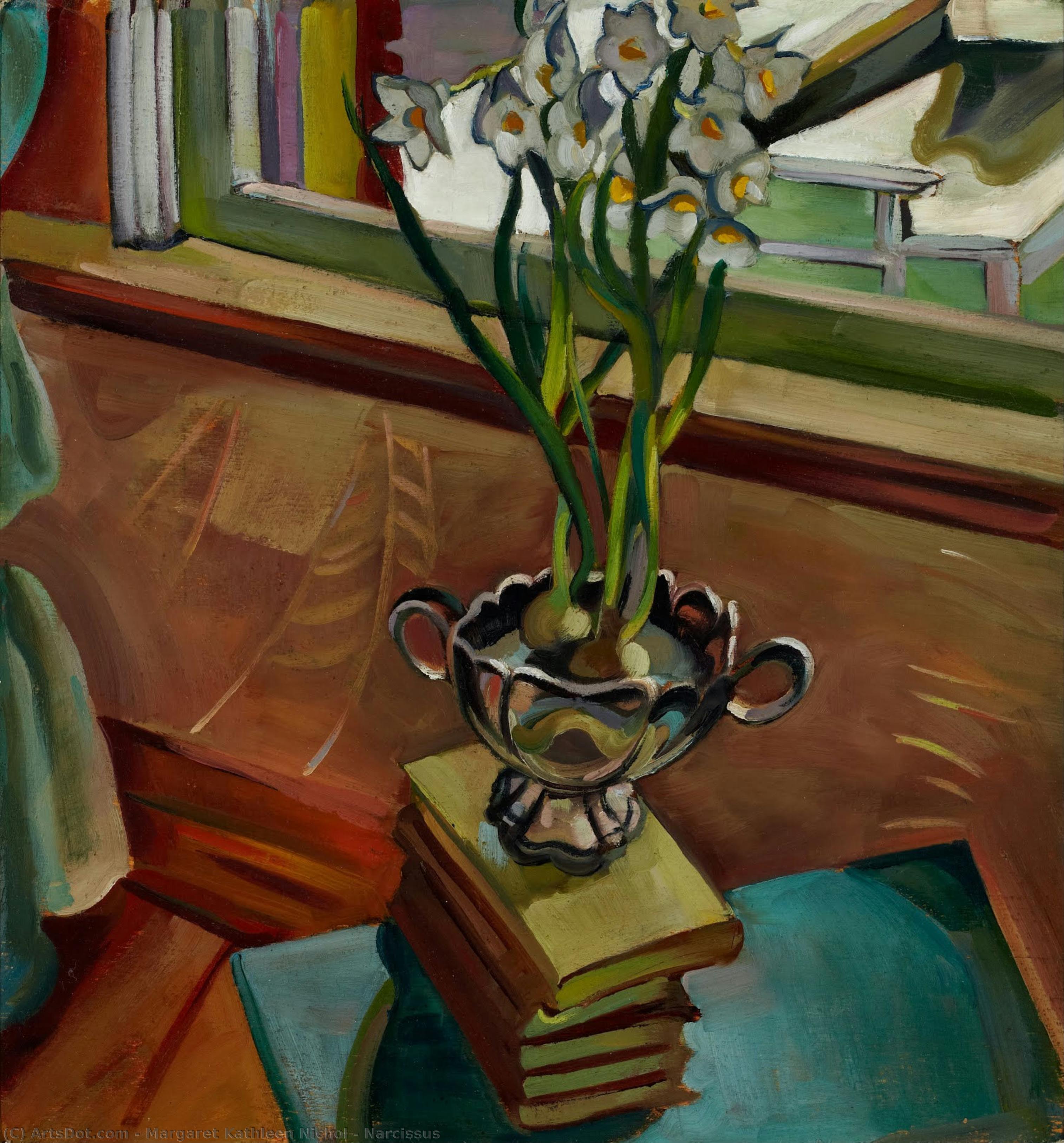
In the quiet corners of art history, few works capture the ephemeral beauty of a passing moment as tenderly as Margaret Kathleen Nichol’s Narcissus. Painted in 1931, this exquisite oil on canvas serves as a masterclass in Impressionistic serenity, inviting the viewer into a world where time seems to slow down. The composition centers upon a delicate arrangement of white daffodils, their petals luminous and bright, overflowing from a vase that rests amidst a thoughtful collection of books and draped fabrics. Through a window backdrop, soft light filters into the room, casting gentle shadows and illuminating the scene with an ethereal glow. It is a painting that does not merely depict a still life; it captures an atmosphere of profound peace, making it an ideal centerpiece for any space seeking to evoke tranquility and grace.
The technique employed by Nichol reveals a sophisticated command over texture and light. Eschewing rigid, photographic precision, the artist utilizes loose, expressive brushstrokes that lend the work a rhythmic, breathing quality. One can observe the rich interplay of impasto in the thicker applications of paint, which give the floral heads a tactile presence, contrasted against smoother, more blended transitions in the drapery and background. This painterly approach allows the light to dance across the surface, creating a sense of depth through atmospheric perspective. The color palette is a sophisticated balance of cool and warm; muted blues and greens dominate the shadows and foliage, while subtle hints of warm reds and oranges within the window frame and fabric provide a necessary warmth that prevents the scene from feeling cold.
Symbolism and the Modernist Spirit
Beyond its aesthetic charm, Narcissus is steeped in layers of symbolic meaning. The choice of daffodils is particularly poignant; as flowers that emerge in the spring, they have long been celebrated as emblems of rebirth, new beginnings, and the cyclical nature of life. When paired with the presence of books, the painting suggests a contemplative existence—a marriage between the natural world and the intellectual pursuit. This duality reflects the broader modernist movement of the early 20th century, where artists like Nichol sought to find beauty in the intersection of organic forms and human thought.
For the discerning collector or interior designer, this piece offers more than just visual appeal; it offers an emotional resonance. The painting’s ability to evoke a sense of quiet elegance makes it a versatile choice for high-end residential or professional environments. Whether placed in a sunlit reading nook or as a focal point in a minimalist gallery setting, a high-quality reproduction of this work brings with it the soft, restorative energy of a spring morning. It is an invitation to pause, to breathe, and to find beauty in the subtle, fleeting details of our surroundings.