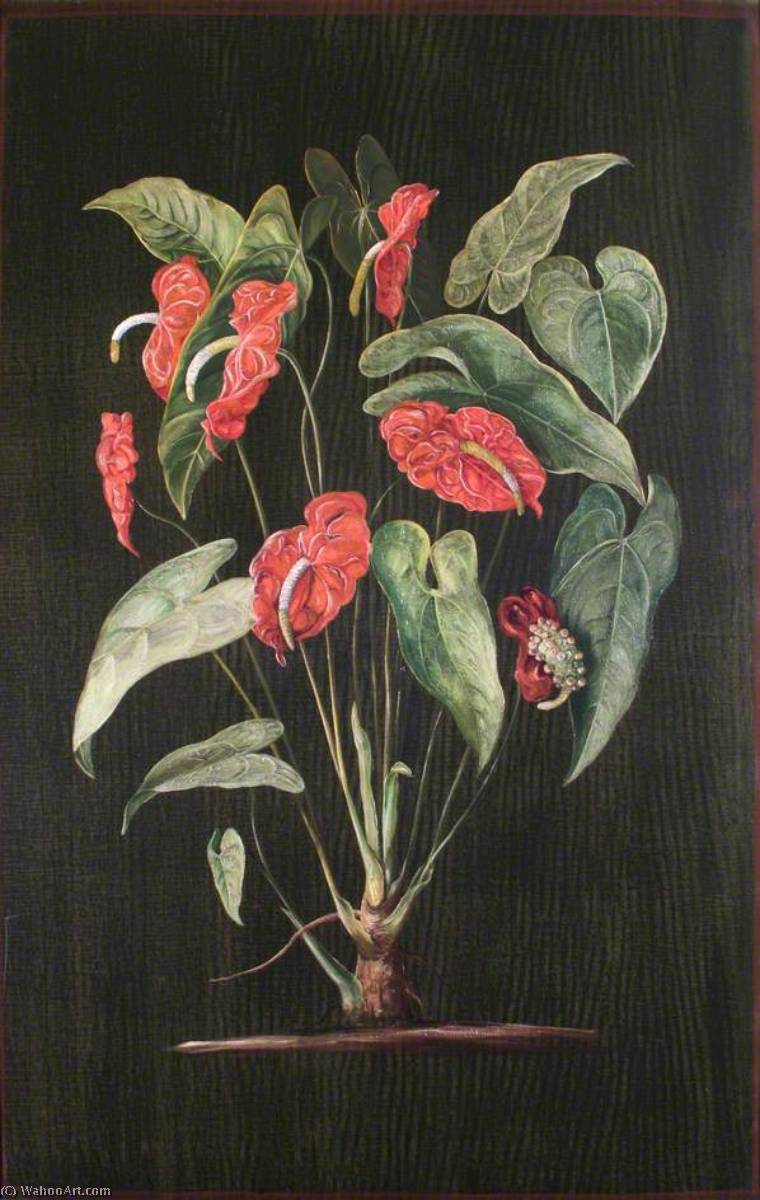
A Window Into the Amazon: Marianne North’s ‘A Colombian Aroid’
Marianne North's “A Colombian Aroid,” painted in 1880, isn’t merely a botanical illustration; it’s a vibrant portal into a world of exotic beauty and intrepid exploration. This exquisite watercolor, housed within the meticulously designed Marianne North Gallery at Kew Gardens, captures the arresting drama of an Anthurium plant – specifically, *Anthurium lancifolium*, commonly known as the Flamingo Flower – thriving amidst the dense foliage of Colombia. More than just a depiction of flora, it’s a testament to a Victorian woman's unwavering spirit and her dedication to documenting the natural world through artistic observation.
North, a remarkable figure in her own right, defied societal expectations by embarking on a decades-long journey across continents, driven by an insatiable curiosity and a profound love for botany. Her travels weren’t undertaken with the aim of simply collecting specimens; she sought to understand plants within their natural habitats, meticulously recording their forms, colors, and relationships with their environment. “A Colombian Aroid” embodies this approach – it's not a posed arrangement in a studio, but a snapshot of life captured in its wild glory.
The Language of Watercolor: Technique and Detail
The painting’s power lies largely in North’s masterful use of watercolor. The technique is deceptively simple yet incredibly sophisticated; she employs delicate washes to build up layers of color, creating a sense of luminosity and depth that belies the medium's inherent limitations. Notice how she captures the velvety texture of the leaves – not with sharp outlines, but through subtle variations in tone and saturation. The vibrant red hues of the flower blooms are particularly arresting, achieved through careful layering and blending, suggesting both their intensity and a fleeting, ephemeral beauty.
A keen eye for detail is evident throughout. The intricate veins of the leaves, the delicate patterns on the petals, even the subtle shadows cast by the surrounding foliage – all are rendered with remarkable precision. This level of accuracy wasn’t simply aesthetic; it reflected North's commitment to scientific observation and her desire to faithfully represent the plant as she perceived it. The flattened perspective, a common characteristic of botanical illustrations at the time, prioritizes clarity and detail over dramatic depth, allowing the viewer to fully appreciate the plant’s form and structure.
Symbolism and Victorian Adventure
“A Colombian Aroid” resonates with the spirit of the Victorian era – an age defined by both scientific advancement and a romantic fascination with the exotic. The journey undertaken to capture this single flower speaks volumes about North's adventurous spirit, challenging the conventional roles assigned to women during that period. The Anthurium itself carries symbolic weight; often associated with love, beauty, and rebirth, it represents fertility and vitality – qualities deeply valued in Victorian society.
Furthermore, the painting’s setting—the dense rainforest of Colombia—evokes a sense of mystery and untamed wilderness. It reflects North's fascination with exploring remote corners of the globe and documenting their unique flora. Her gallery at Kew served as both a showcase for her work and a testament to her dedication, transforming into a living museum dedicated to showcasing the beauty and diversity of the plant kingdom.
A Timeless Masterpiece: Reproduction and Legacy
Today, “A Colombian Aroid” stands as a poignant reminder of Marianne North’s extraordinary life and artistic legacy. Reproductions offer an accessible way to bring this captivating image into your home or office, allowing you to appreciate the intricate details and vibrant colors that define it. Whether displayed in a study, a living room, or a botanical garden, this painting continues to inspire awe and wonder – a testament to the enduring beauty of the natural world and the pioneering spirit of one remarkable woman.