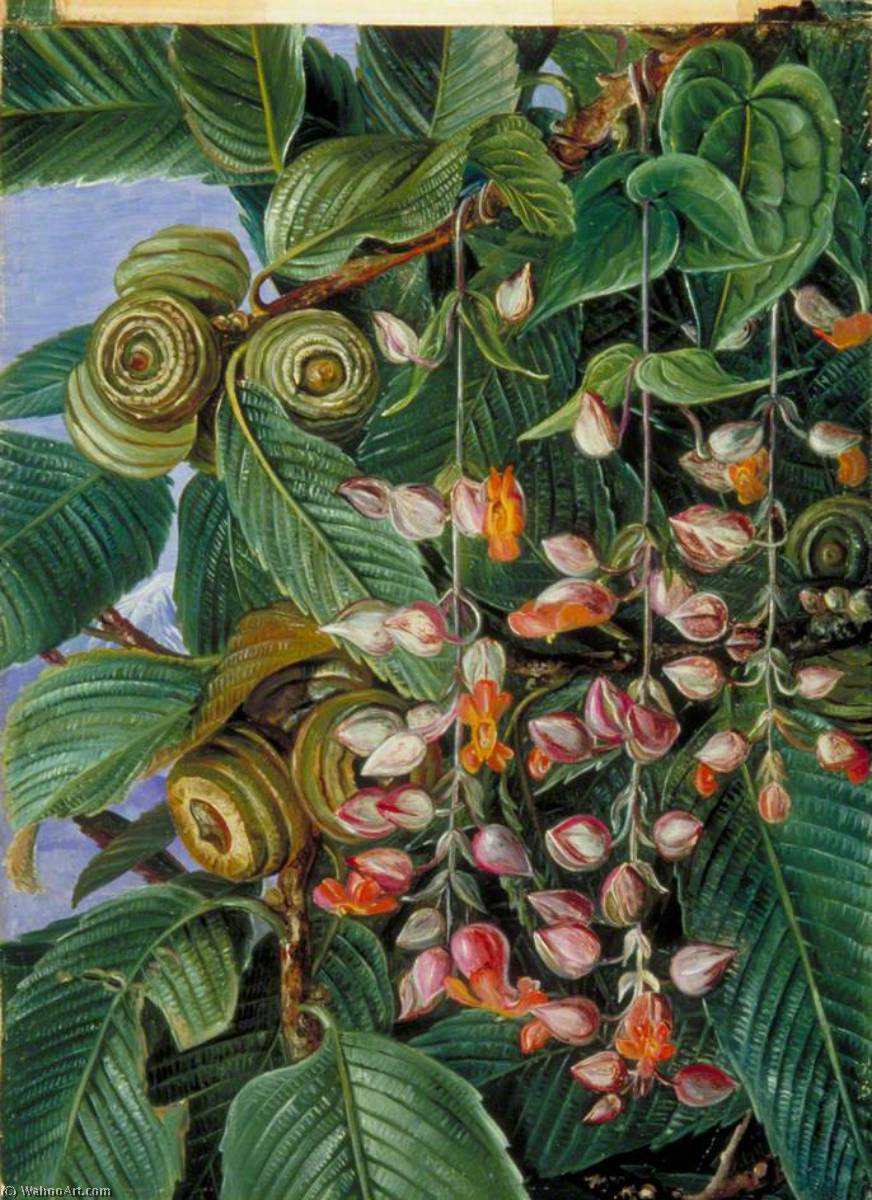
Marianne North’s ‘A Darjeeling Oak Festooned with a Climber,’ painted circa 1878, exemplifies Naturalism style. This captivating floral artwork depicts a lush oak tree adorned with climbing plants bearing vibrant blossoms—a testament to North's dedication to botanical observation and artistic expression.
A Celebration of Botanical Beauty: Marianne North’s “A Darjeeling Oak Festooned with a Climber”
Marianne North (1830–1890) wasn't merely an artist; she was a pioneer, charting unexplored territories both geographically and intellectually. Born into privilege in Hastings, England, her early life seemed destined for conventional pursuits – musical training – yet fate intervened, guiding her passion towards the captivating realm of botanical illustration. This transformative decision propelled her onto an extraordinary journey, one that defied societal expectations and cemented her legacy as a singular figure in Victorian art history. Her story resonates with resilience, independence, and an unwavering fascination for the natural world—a testament to a spirit unshackled by convention.
- Subject Matter: The painting depicts a magnificent oak tree adorned with climbing vines laden with vibrant blossoms. North meticulously captured the essence of Darjeeling’s flora, showcasing its delicate beauty and intricate ecosystem.
- Style: “A Darjeeling Oak Festooned with a Climber” exemplifies Naturalism, an artistic movement that championed realism and sought to portray nature without embellishment. Unlike Romantic painters who idealized landscapes, North prioritized accurate observation and scientific documentation.
- Technique: Marianne North employed watercolor on paper—a technique favored by botanists for its ability to preserve subtle tonal variations and capture the luminosity of plant pigments. Her brushstrokes were delicate yet confident, conveying a profound respect for the subject matter.
The painting’s historical context is inextricably linked to Victorian scientific exploration and the burgeoning interest in botany. During this era, scientists like Charles Darwin embarked on groundbreaking expeditions to unravel the mysteries of evolution, fostering a climate of intellectual curiosity and inspiring artists to translate scientific discoveries into visual splendor. North herself undertook numerous voyages to Southeast Asia and Africa, documenting exotic plants and landscapes with unwavering dedication—a pursuit that mirrored the broader Victorian fascination with discovery and categorization.
Symbolism: Beyond its aesthetic appeal, “A Darjeeling Oak Festooned with a Climber” carries symbolic weight. The oak tree represents strength, endurance, and longevity – qualities mirroring North’s own tenacious spirit. Simultaneously, the climbing vine symbolizes growth, aspiration, and interdependence—reflecting the interconnectedness of life within the natural world. The blossoms themselves represent beauty, fertility, and renewal, encapsulating themes central to Victorian artistic sensibilities.
Emotional Impact: Viewing “A Darjeeling Oak Festooned with a Climber” evokes a sense of tranquility and wonder. North’s masterful rendering captures not only the visual splendor of Darjeeling’s flora but also its underlying harmony—a reminder of the sublime beauty inherent in the natural world. The painting invites contemplation, prompting viewers to appreciate the intricate details of botanical life and fostering an emotional connection with the artist's profound reverence for nature. It stands as a timeless emblem of Victorian artistic idealism and scientific observation combined.