A Deep Dive Into Marianne North's "A Sacred Grass"
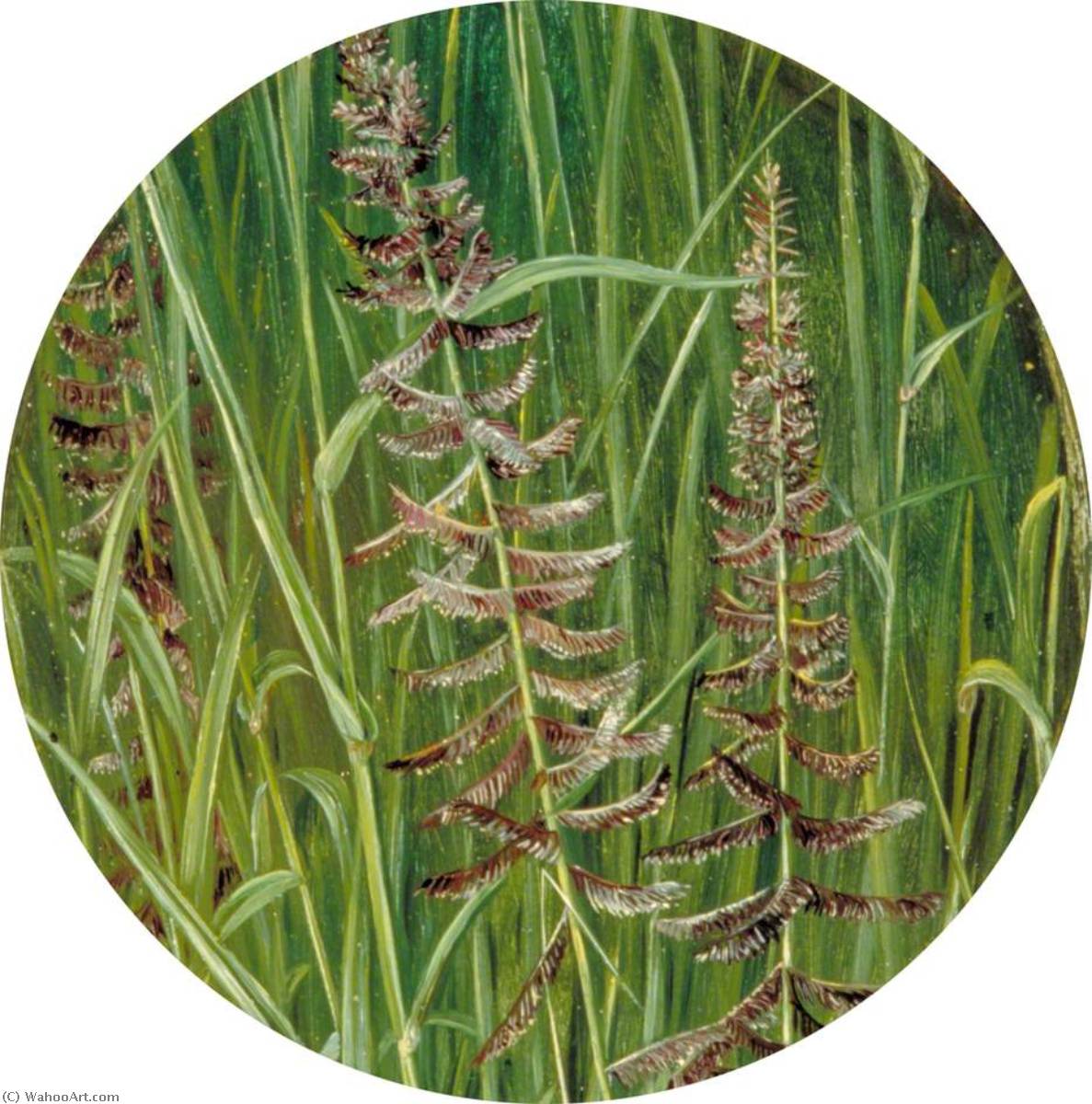
Marianne North’s “A Sacred Grass,” completed in 1878, transcends mere botanical depiction; it embodies the Victorian fascination with exotic flora and the burgeoning spirit of scientific exploration intertwined with spiritual reverence. Painted on canvas using oil paints—a technique favored by North for its ability to capture nuanced tonal variations—the artwork presents a meticulously rendered image of Kusha grass (Sanskrit: कुश), a species revered in Hinduism as symbolizing purity, fertility, and protection.
- Subject Matter: The painting focuses on a cluster of tall Kusha grass stalks adorned with vibrant green leaves. Its circular frame subtly enhances the composition, guiding the viewer’s eye across the textured surface.
- Style & Technique: North's style aligns closely with Luminism—characterized by soft, diffused light and atmospheric perspective—creating an impressionistic effect that prioritizes mood over precise detail. The artist skillfully employs brushstrokes to convey the grass’s undulating movement and the interplay of light and shadow.
- Historical Context: Created during a period of intense botanical discovery fueled by expeditions into Asia and Africa, “A Sacred Grass” reflects the Victorian era's commitment to scientific observation alongside its belief in the interconnectedness of nature and spirituality. Marianne North herself was a trailblazing figure—a woman who defied societal constraints to pursue her passion for painting and botany independently.
- Symbolism: Beyond its botanical accuracy, Kusha grass holds profound symbolic significance within Hindu tradition. It is used extensively in rituals symbolizing auspicious beginnings and safeguarding the soul. The inclusion of this element underscores North’s awareness of cultural traditions and her desire to infuse her artwork with deeper meaning.
- Emotional Impact: Viewing “A Sacred Grass” evokes a sense of tranquility and connection to the natural world—a testament to North's artistic vision and her ability to capture the essence of beauty and serenity. Its muted palette and delicate brushwork invite contemplation and inspire appreciation for the subtle wonders of botanical art.
Currently housed at the Marianne North Gallery in Richmond, United States, “A Sacred Grass” stands as a remarkable achievement—a fusion of scientific rigor and artistic sensitivity that continues to captivate audiences today. Its enduring appeal lies not only in its exquisite visual qualities but also in its ability to communicate a timeless message about reverence for nature and the transformative power of art.
- Further Research: For more information on Marianne North and her groundbreaking botanical paintings, visit Art UK or explore the Marianne North Gallery’s collection at Marianne North Gallery.
- Related Species: Learn about Kusha grass and its role in Hindu rituals on Wikipedia: Wikipedia.
The artwork’s image can be found here: