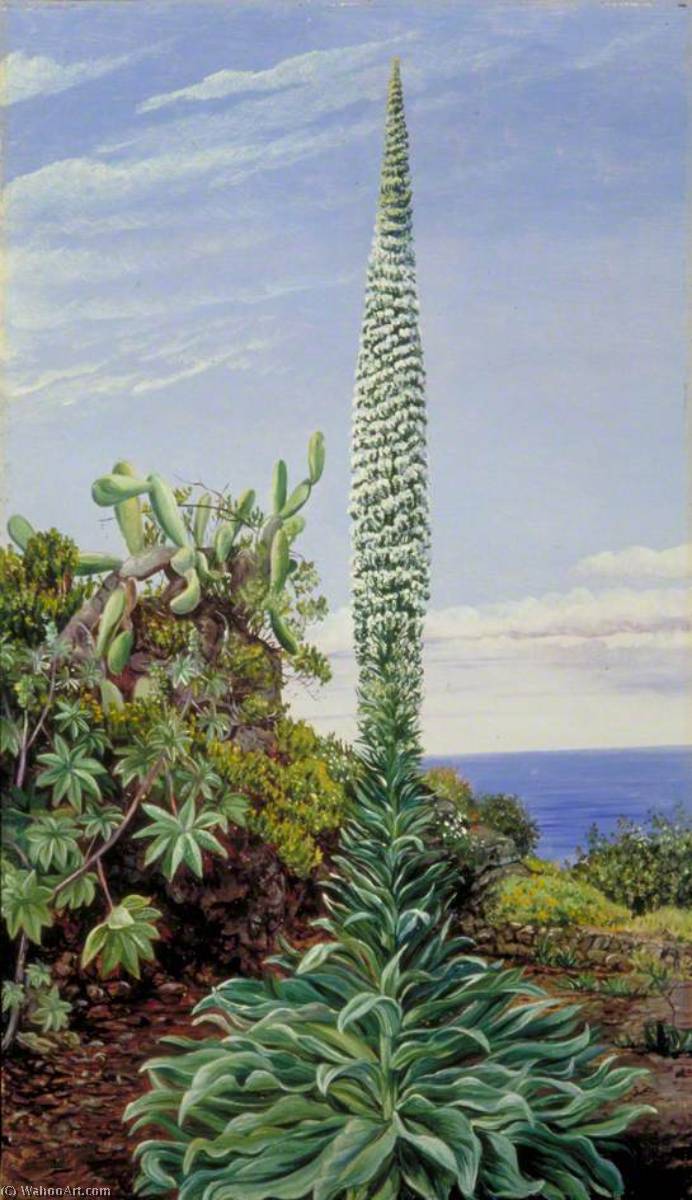
A Species of Bugloss, Teneriffe: A Victorian Explorer's Ode to Resilience
Marianne North’s “A Species of Bugloss, Teneriffe,” painted in 1875, is more than a botanical illustration; it’s a vibrant testament to the spirit of a woman who defied societal constraints and embarked on an extraordinary life dedicated to artistic observation and scientific discovery. This meticulously rendered oil painting captures a moment of serene beauty within the harsh landscape of Tenerife, showcasing a striking blue-green flower stalk amidst a tapestry of desert flora – a scene that speaks volumes about North’s unwavering passion for documenting the world's botanical wonders.
- The Explorer’s Vision: Created during the height of the Victorian era, “A Species of Bugloss, Teneriffe” reflects the growing interest in exploration and natural history fueled by advancements in travel and scientific understanding. Marianne North wasn’t simply painting a flower; she was documenting a species within its unique environment, embodying the adventurous spirit that characterized the period.
- Tenerife's Dramatic Landscape: The painting depicts Tenerife, one of Spain’s Canary Islands, known for its volcanic landscapes and diverse plant life. North’s choice of subject matter highlights the resilience of nature in challenging environments – a theme deeply resonant with Victorian sensibilities.
Technique and Artistic Detail
North's mastery is immediately apparent in the painting’s rich textures and meticulous detail. Employing a technique rooted in realism, she skillfully utilizes impasto—thickly applied paint—to build depth and create a tactile quality, particularly evident in the foliage and rocky outcrops. The layering of colors, achieved through careful blending, captures the nuances of light and shadow, lending an almost three-dimensional effect to the scene. The use of atmospheric perspective – where distant objects appear lighter and less defined – subtly enhances the sense of depth and scale, drawing the viewer into the vastness of the landscape.
- Impasto Technique: The pronounced texture created by impasto wasn't merely decorative; it served to emphasize the ruggedness of the terrain and the delicate structure of the plant itself.
- Color Palette: North’s masterful use of color – predominantly blues, greens, and browns – accurately reflects the natural hues of the Teneriffe landscape, creating a harmonious and visually arresting composition.
Symbolism and Emotional Resonance
Beyond its botanical accuracy, “A Species of Bugloss, Teneriffe” carries subtle symbolic weight. The resilient flower, thriving in an arid environment, represents strength, perseverance, and the beauty found within adversity – values highly prized during the Victorian era. The painting’s tranquil atmosphere evokes a sense of serenity and connection with nature, reflecting North's profound appreciation for the natural world and her desire to capture its essence on canvas. It is a quiet celebration of life’s tenacity.
- Resilience as a Theme: The flower’s survival in a challenging environment symbolizes resilience – a key theme within Victorian art and literature.
- Harmony with Nature: The painting conveys a sense of harmony between the natural world and the sea, reflecting North's deep connection to her subject matter.
A Legacy of Artistic Exploration
Painted in 1875, “A Species of Bugloss, Teneriffe” stands as a remarkable achievement within Marianne North’s prolific oeuvre. It exemplifies her dedication to botanical illustration and her pioneering spirit as an independent artist and explorer. Today, this exquisite reproduction offers a window into the life and work of one of Victorian Britain's most extraordinary women – a woman who dared to pursue her passions with unwavering determination and left behind a legacy of breathtaking beauty and scientific insight.