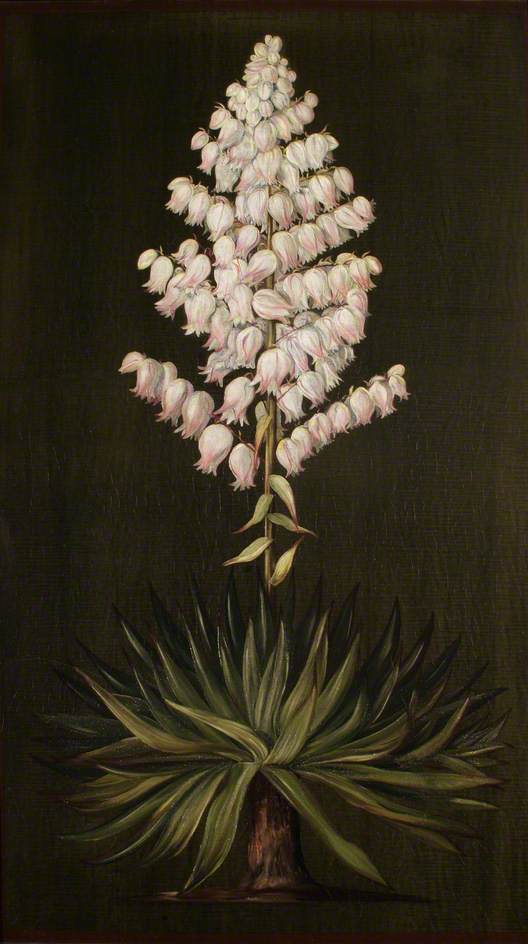
A Moment of Tranquility: Marianne North’s ‘Adam’s Needle or Yucca’
Marianne North's “Adam’s Needle or Yucca, about Half Natural Size,” painted in 1880, is more than a simple depiction of flowers; it’s a poignant encapsulation of Victorian-era fascination with the natural world and a testament to the extraordinary life of its creator. Measuring 112 x 62 cm, this intimate artwork immediately draws the viewer into a space of quiet contemplation, dominated by the elegant arrangement of white blooms within a delicate vase. The painting’s immediate appeal lies in its masterful observation – North meticulously renders the textures of the water, the petals, and the ceramic vessel itself, showcasing a level of detail rarely seen in botanical art of this period.
- Subject Matter: The central focus is undeniably the Yucca plant, a symbol of resilience and endurance, reflecting North’s own tenacious spirit.
- Composition: The artist employs a carefully considered pyramidal composition, drawing the eye upwards towards the bird perched delicately atop the vase – a subtle nod to the harmony between humanity and nature.
- Color Palette: The restrained palette of whites, creams, and muted greens evokes a sense of serenity and purity, characteristic of Victorian aesthetic sensibilities.
The Adventurous Spirit of Marianne North
Marianne North’s life story is intrinsically linked to the artwork itself. Born in Hastings in 1830, she defied societal expectations for women of her time, embarking on a remarkable journey that spanned continents and transformed her into one of the most celebrated botanical artists of the Victorian era. Following the death of her mother, North channeled her energy and passion into meticulously documenting flora from around the globe. This painting represents a pivotal moment in her career – a demonstration of her burgeoning skills and an early example of her systematic approach to botanical illustration. Her expeditions weren’t merely for scientific observation; they were driven by a profound love of beauty and a desire to capture the essence of each plant she encountered.
Historical Context: The late 19th century witnessed an unprecedented interest in exploration and natural history, fueled by advancements in transportation and communication. Victorian artists like North played a crucial role in documenting this era’s burgeoning scientific understanding of the world, often working closely with leading botanists.
Technique and Style – A Masterclass in Detail
North's technique is characterized by its remarkable precision and attention to detail. Executed in watercolor on paper, the painting demonstrates a mastery of layering and glazing—essential techniques for achieving depth and luminosity. The artist’s use of light and shadow subtly enhances the three-dimensionality of the flowers and vase, creating a sense of realism that belies the delicate medium. Her meticulous rendering of water droplets and reflections further emphasizes her commitment to accurate botanical representation. This level of detail was considered revolutionary at the time, elevating botanical illustration beyond mere documentation into a respected art form.
Symbolism and Emotional Impact
"Adam’s Needle or Yucca" transcends its subject matter to evoke a powerful sense of peace and tranquility. The bird, often interpreted as a symbol of hope and renewal, adds another layer of meaning to the composition. The painting speaks to the Victorian fascination with the beauty of nature and the desire for spiritual connection within it. It’s a reminder of the restorative power of simple things – a quiet moment spent observing the elegance of a flower arrangement. This artwork offers a window into the life and mind of a truly remarkable woman, inviting us to appreciate her artistic legacy and the enduring beauty she captured on paper.