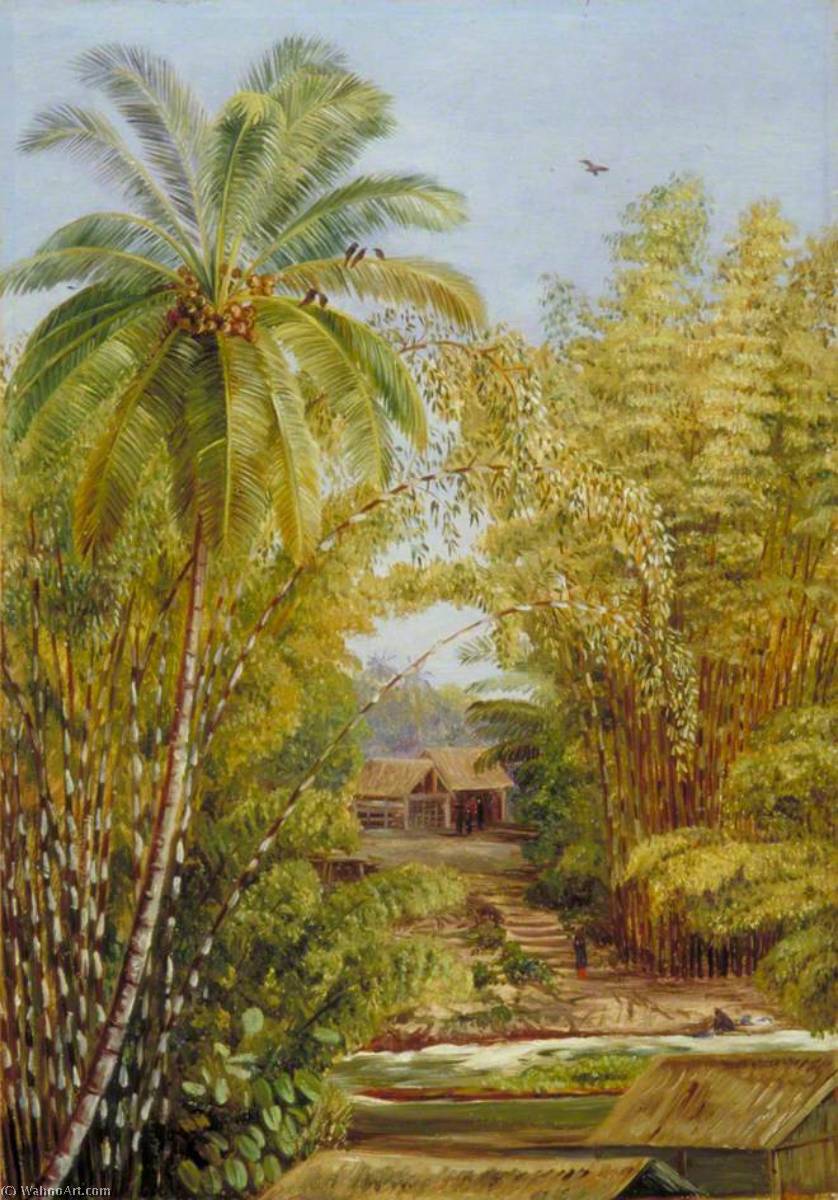
Marianne North’s Impressionistic ‘Bamboos and Cocoanut Palm,’ painted in the 1870s, captures a serene Southeast Asian grove teeming with vibrant parrots and lush foliage—a stunning testament to Victorian botanical exploration and artistic brilliance. Discover this exquisite reproduction.
Discover Marianne North (1830-1890), a Victorian explorer & botanical artist who painted exotic flora worldwide. Her gallery at Kew Gardens showcases over 800 vibrant paintings – a testament to her adventurous spirit!
Discover the captivating world of Victorian botanical artist Marianne North at Kew Gardens! Explore over 800 vibrant paintings from her global travels, showcasing exotic plants and challenging artistic conventions.
A Victorian Explorer's Ode to Tropical Blooms: Marianne North’s “Bamboos and Cocoanut Palm”
Marianne North (1830-1890) wasn’t merely an artist; she was a pioneer, charting unexplored territories of the botanical world while simultaneously crafting canvases that pulsed with vibrant life. Born into a comfortable English family, her early aspirations leaned towards music—a path deemed acceptable for women of her time—yet fate intervened, gifting her a passion for painting flowers and propelling her toward an extraordinary journey far beyond the confines of polite society. This transformative decision would define her legacy as one of audacious curiosity and artistic brilliance, culminating in a breathtaking portfolio of over 800 paintings documenting flora from across Asia, Africa, and Australasia—a testament to her unwavering dedication to scientific observation interwoven with unparalleled artistic skill.
The Painting's Subject Matter: A Snapshot of Paradise
“Bamboos and Cocoanut Palm” captures precisely that – a fleeting glimpse into the lush splendor of Southeast Asia. North meticulously rendered a tropical grove, dominated by towering bamboo stalks and swaying coconut palms laden with ripe fruit. Scattered amongst these majestic trees are birds—primarily parrots—their plumage ablaze in hues of scarlet and emerald—a deliberate choice reflecting North’s fascination with ornithology alongside her botanical pursuits. The inclusion of a humble dwelling nestled at the base of the palm trees adds an element of human presence, subtly grounding the scene within its natural context. It's not simply a depiction of plants; it’s an invitation to immerse oneself in the sensory experience of a vibrant ecosystem.
Style and Technique: Impressionistic Detail
North’s artistic style leans heavily into impressionism, prioritizing capturing fleeting moments of light and color rather than striving for photographic realism. Her brushstrokes are loose and expressive, blending pigments to create luminous washes that convey the dappled sunlight filtering through the palm fronds. The artist skillfully employs layering techniques—applying thin glazes over thicker underpaintings—to build up depth and texture, resulting in a surface that feels remarkably tactile. Careful attention is paid to tonal variations, subtly modulating hues to simulate the interplay of light and shadow within the grove. This meticulous approach elevates the painting beyond mere representation, transforming it into an emotive portrayal of nature’s beauty.
Historical Context: Challenging Victorian Conventions
Painted in 1870s London, “Bamboos and Coconut Palm” represents a significant departure from prevailing artistic trends of the era. Victorian society largely discouraged women pursuing independent careers or engaging in scientific exploration—activities deemed unsuitable for feminine sensibilities. Yet North defied these expectations with unwavering determination, funding her expeditions herself and dedicating her life to documenting botanical specimens and translating her observations into stunning artworks. Her work challenged the accepted role of women in Victorian culture and paved the way for future generations of female artists and scientists to pursue their passions without constraint. It stands as a symbol of intellectual freedom and artistic courage within a restrictive social landscape.
Symbolism: More Than Just Flowers
Beyond its visual beauty, “Bamboos and Cocoanut Palm” carries symbolic weight. Bamboo represents resilience and strength—a motif frequently employed in Asian art to convey notions of perseverance and adaptability. The coconut palm symbolizes prosperity and fertility—reflecting the abundance of resources found in tropical regions. Furthermore, the birds embody freedom and vitality—their vibrant colors symbolizing joy and optimism. Collectively, these elements contribute to a broader narrative about embracing adventure, celebrating natural splendor, and overcoming societal limitations. North’s painting isn't merely admiring nature; it's conveying profound philosophical ideas about human potential and connection with the environment.
Emotional Impact: A Balm for the Soul
Looking at “Bamboos and Cocoanut Palm” evokes a feeling of tranquility and wonder—a welcome respite from the anxieties of Victorian life. The painting’s harmonious palette—dominated by greens, yellows, and reds—creates an atmosphere of warmth and vibrancy. The artist's masterful rendering of light captures the ethereal quality of tropical sunlight, transporting viewers to a distant paradise. Ultimately, North’s masterpiece succeeds in communicating not just what she saw but how she felt—a profound appreciation for the beauty and majesty of the natural world—leaving audiences captivated by its enduring charm.