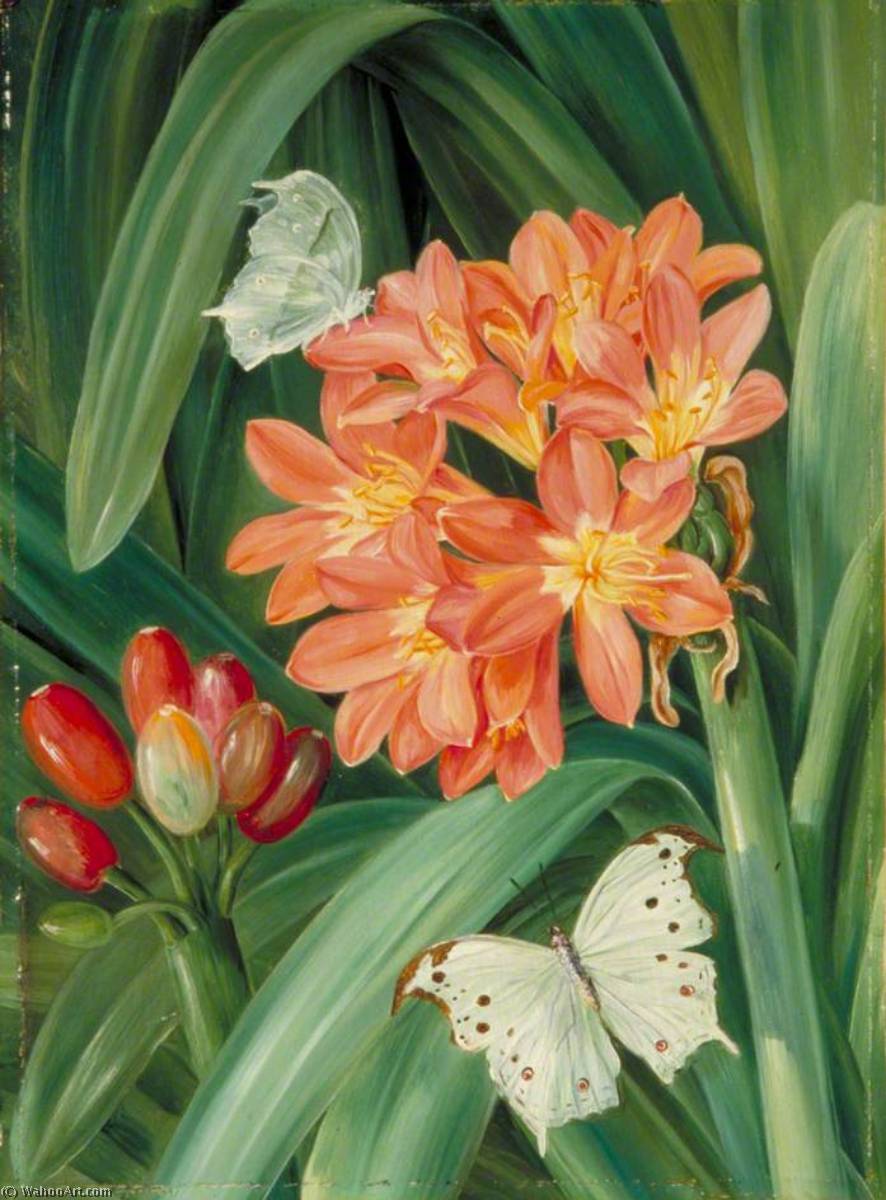
A Moment Frozen in Bloom: Marianne North’s ‘Clivia miniata and Moths, Natal’
Marianne North's “Clivia miniata and Moths, Natal,” painted in 1882, is more than a botanical illustration; it’s a vibrant snapshot of a fleeting moment captured within the humid heart of South Africa. This exquisite oil on board transports the viewer to a twilight realm where delicate blossoms share space with ethereal moths, creating an atmosphere both serene and subtly dramatic. North, a pioneering Victorian adventurer and artist, dedicated her life to documenting the world's flora through meticulous observation and breathtaking artistry, forging a unique path as a female explorer and scientific illustrator.
The painting’s subject – the Clivia miniata flower – is instantly captivating. These miniature orchids, native to South Africa, are rendered with astonishing detail; each petal delicately brushed, revealing the subtle variations in color and texture. North's skill lies not just in her accurate depiction of the plant but also in capturing its inherent beauty—the velvety blush of the petals, the intricate veining, and the way it seems to glow softly in the imagined twilight. Surrounding this focal point are several moths, their wings a study in muted browns, greys, and creams, providing a striking contrast against the vibrant floral backdrop. The artist’s choice to include these insects elevates the scene beyond a simple botanical record, hinting at the interconnectedness of life within the natural world.
A Victorian Explorer's World
Marianne North’s journey as an artist was inextricably linked to her adventurous spirit and unwavering commitment to scientific exploration. Born in Hastings, England, in 1830, she defied societal expectations by embarking on a series of expeditions across the globe – from Brazil and Japan to India and Canada – all undertaken independently and funded through the sale of her paintings. Her travels weren’t merely for artistic inspiration; they were driven by a genuine desire to document and preserve the world's botanical diversity. North meticulously recorded her findings, creating an extensive collection of over 800 watercolor and oil paintings that now reside in the Marianne North Gallery at Kew Gardens.
The painting’s context within North’s oeuvre is crucial to understanding its significance. Her work reflects the prevailing aesthetic sensibilities of the Victorian era – a fascination with nature, a commitment to realism (though often infused with romanticism), and an interest in documenting the exotic and unfamiliar. However, North's approach was remarkably progressive for her time; she actively sought out indigenous knowledge and collaborated with local communities, ensuring that her representations were both accurate and respectful.
Technique and Atmosphere
North’s technique is characterized by a remarkable level of detail and a masterful use of color. She employed a layering method, building up the image gradually through multiple thin washes of paint, creating a luminous quality and capturing the subtle nuances of light and shadow. The painting's palette is predominantly muted – earthy greens, browns, and ochres – punctuated by the vibrant hues of the Clivia flowers. This restrained color scheme contributes to the overall atmosphere of tranquility and intimacy, as if the viewer has stumbled upon this secret garden at twilight.
The inclusion of the moths adds a layer of mystery and intrigue. They are not merely decorative elements; they represent transformation, beauty in decay, and the ephemeral nature of life itself. Their delicate wings, dusted with iridescent scales, shimmer in the imagined light, creating a sense of movement and suggesting that this scene is constantly evolving.
A Legacy of Observation
“Clivia miniata and Moths, Natal” stands as a testament to Marianne North’s extraordinary life and artistic vision. It's a poignant reminder of her dedication to documenting the natural world with both scientific rigor and artistic sensitivity. The painting’s enduring appeal lies not only in its exquisite beauty but also in its ability to transport us to another time and place—a moment frozen in bloom, illuminated by the soft glow of twilight.
Today, reproductions of this captivating artwork are available through reputable art reproduction services, allowing enthusiasts worldwide to experience North’s remarkable talent and appreciate the beauty of her botanical observations. Consider adding a vibrant touch of South African flora to your home or office – a tangible connection to a pioneering artist and a celebration of the natural world.