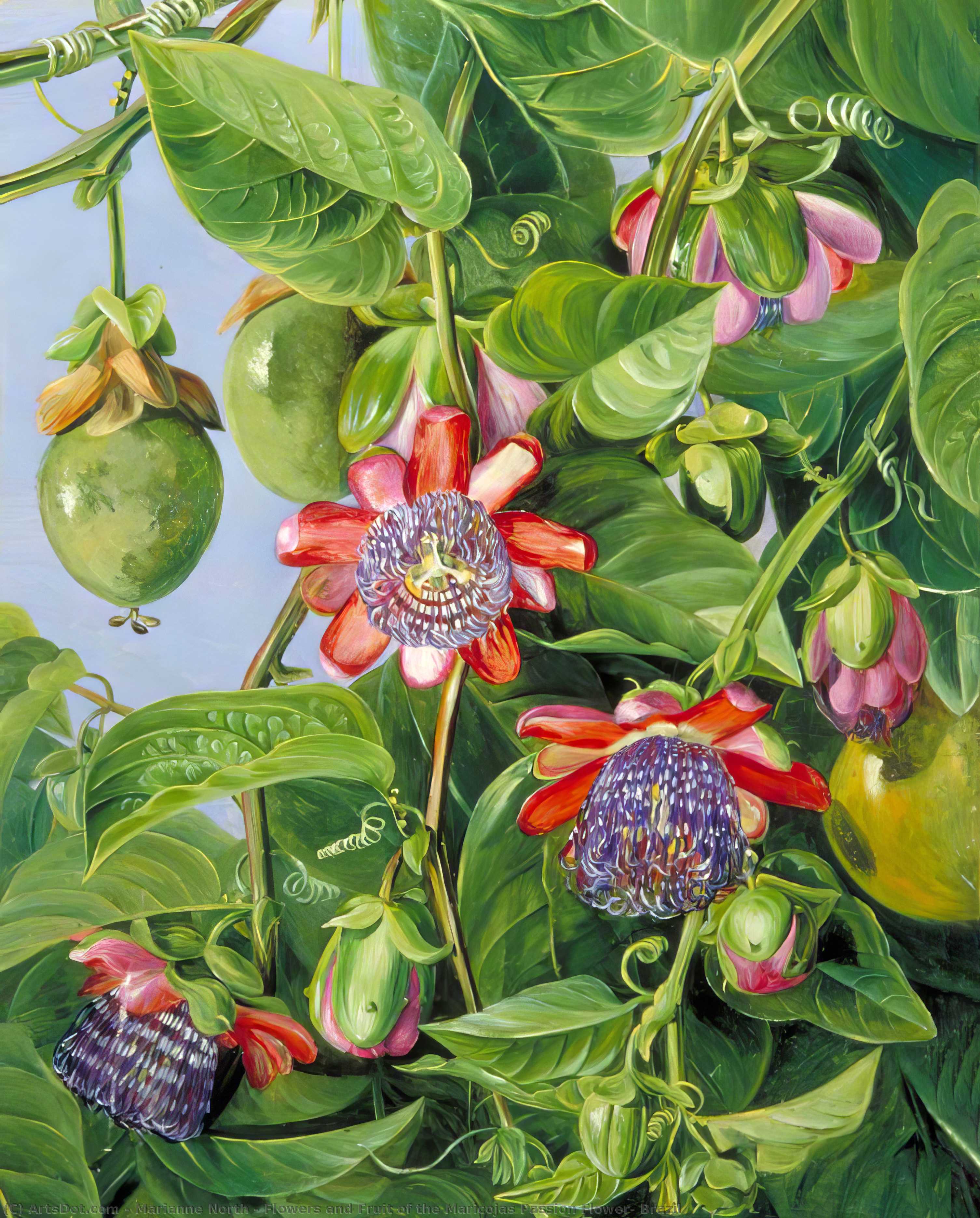
A Symphony of Color: Marianne North’s ‘Flowers and Fruit of the Maricojas Passion Flower’
Marianne North's “Flowers and Fruit of the Maricojas Passion Flower, Brazil” is more than a botanical illustration; it’s a vibrant testament to Victorian-era exploration, artistic passion, and a profound connection with the natural world. Painted in 1873, this oil on panel artwork measures 44 x 35 cm and immediately draws the viewer into a realm of rich color and meticulous detail – a hallmark of North's distinctive style. The painting’s enduring appeal lies not just in its exquisite depiction of the Maricojas Passion Flower itself, but also in the artist’s ability to capture the very essence of tropical abundance, transporting us to the heart of Brazil.
- Subject Matter: The central focus is undeniably the Maricojas Passion Flower (Passiflora mariconis), a species native to Brazil. North's dedication to accurately representing this rare flower underscores her commitment as both an artist and a pioneering botanist.
- Composition: The arrangement of flowers, fruits – notably bananas and apples – and lush greenery creates a dynamic composition that feels remarkably natural, almost overflowing with life. This isn’t simply a static study; it's a carefully orchestrated tableau.
Technique and Artistic Vision
North’s mastery of oil on panel is immediately apparent. The technique allows for an incredible depth of color and texture, capturing the velvety petals of the passion flower with astonishing realism. Notice how she builds up layers of paint to create a sense of volume and light – particularly evident in the delicate folds of the leaves and the vibrant hues of the fruit. Her brushwork is precise yet fluid, conveying both scientific observation and artistic sensitivity. The balance between the floral elements and the still life arrangement speaks to her understanding of composition and her ability to create harmony within a complex scene.
The pale blue background isn't merely a neutral backdrop; it strategically amplifies the intensity of the foreground colors, directing the viewer’s eye directly to the captivating central flower. This subtle yet effective use of color demonstrates North’s keen awareness of artistic principles and her ability to manipulate light and shadow for maximum impact.
Historical Context and Marianne North's Legacy
Created during the Victorian era, “Flowers and Fruit…” reflects a period of intense scientific exploration and a growing fascination with exotic flora. Marianne North herself was a remarkable figure – an independent woman who defied societal expectations to pursue her passion for art and botany. Her extensive travels throughout South America, undertaken largely at her own expense, resulted in over 300 botanical paintings, documenting plant life across diverse climates and ecosystems. Her work contributed significantly to the scientific understanding of these species while simultaneously establishing her as one of the most celebrated Victorian flower painters.
Symbolism and Emotional Impact
The Maricojas Passion Flower itself carries symbolic weight – often associated with resurrection, fertility, and divine love due to its intricate structure resembling a crown of thorns. North’s portrayal elevates this symbolism through her meticulous rendering, transforming the flower into an object of beauty and wonder. The painting evokes a sense of tranquility and appreciation for the natural world, inviting contemplation on themes of life, growth, and the interconnectedness of all things. It's a piece that resonates with a timeless quality, reminding us of the enduring power of art to capture both scientific accuracy and profound emotional resonance.