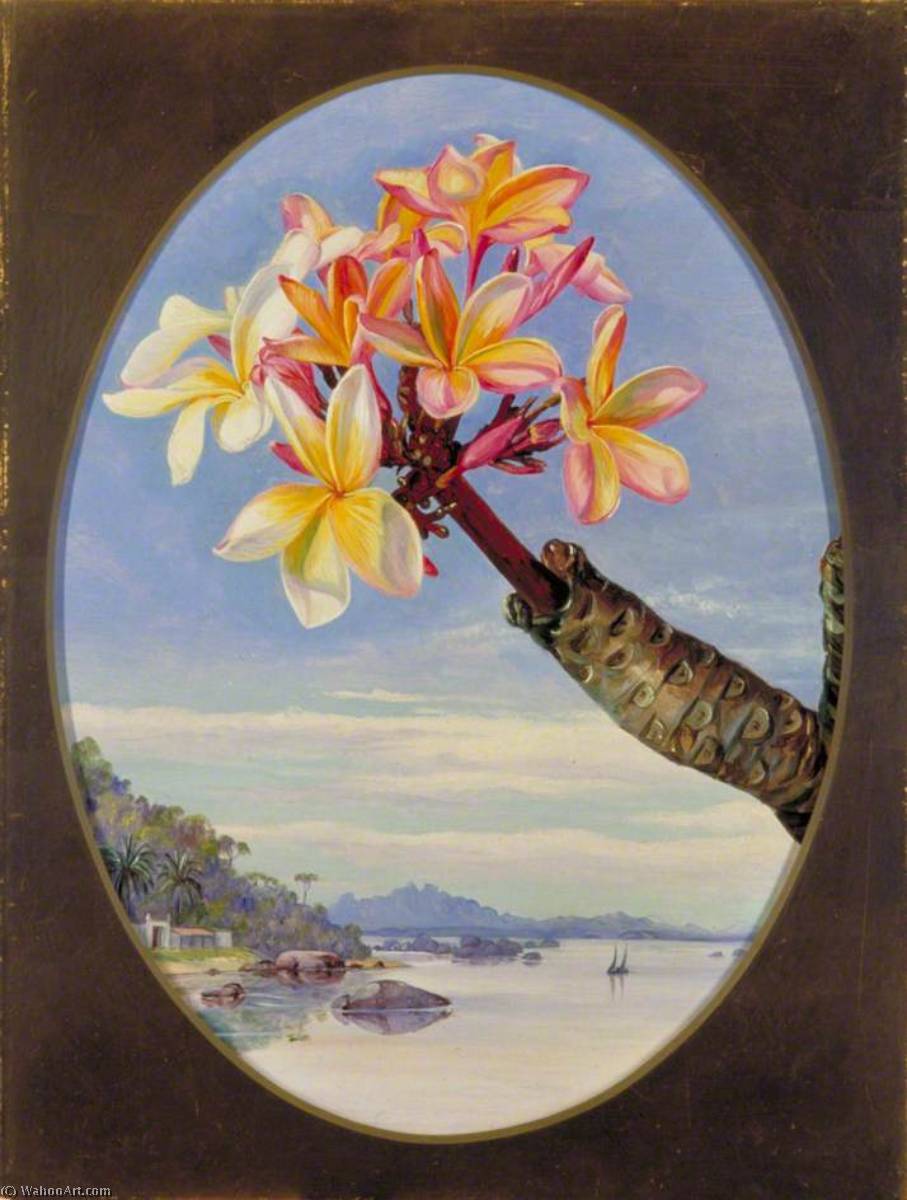
Marianne North’s ‘Flowers of Jasmine Mango or Frangipani, Brazil,’ painted in 1873, showcases her mastery of botanical illustration and captures the beauty of Brazilian wildflowers against a serene landscape backdrop. This piece exemplifies Victorian scientific observation blended with artistic expression.
A Symphony of Tropical Blooms: Marianne North’s ‘Flowers of Jasmine Mango or Frangipani, Brazil’
Marianne North's 1873 painting, “Flowers of Jasmine Mango or Frangipani, Brazil,” is more than a simple depiction of exquisite blossoms; it’s a vibrant testament to a remarkable life and an extraordinary artistic journey. This intimate scene, rendered in meticulous detail, captures the intoxicating beauty of Brazilian flora – jasmine mangoes and frangipanis – within a composition that speaks volumes about Victorian-era exploration and the burgeoning field of botanical art. Measuring 45 x 35 cm, this piece offers a captivating glimpse into the world of Marianne North herself, a woman who defied societal expectations to become one of the most celebrated artists of her time.
The Adventurous Spirit of Marianne North
- A Victorian Pioneer: Born in Hastings, England, in 1830, Marianne North’s early life was marked by musical aspirations. However, a debilitating illness steered her towards the burgeoning world of flower painting – a pursuit she embraced with unwavering dedication and an adventurous spirit.
- Global Expeditions: Rejecting the confines of Victorian domesticity, North embarked on a series of daring expeditions across the globe, from the Amazon rainforest to the highlands of East Africa. These journeys weren’t merely for artistic inspiration; they were driven by a genuine passion for botany and a desire to document the world's most exotic plant life.
- Self-Taught Botanist: Remarkably, North became a self-taught botanist, meticulously studying and sketching plants she encountered during her travels. Her detailed observations informed her artistic practice, resulting in incredibly accurate and scientifically valuable paintings.
Artistic Technique and Composition – A Masterclass in Detail
North’s technique is characterized by a remarkable level of detail and realism, hallmarks of the Victorian flower painting movement. Executed with oil paints on canvas, the artwork showcases her mastery of color mixing and layering, creating a luminous effect that captures the delicate textures and vibrant hues of the flowers. The composition itself is carefully balanced, drawing the viewer’s eye through the arrangement of the blossoms in the vase, while the inclusion of a figure holding the vase adds a human element and a sense of scale. The background landscape, likely representing the Brazilian environment, serves not as mere backdrop but as an integral part of the overall narrative, grounding the flowers within their natural context.
Symbolism and Emotional Resonance
Beyond its technical brilliance, “Flowers of Jasmine Mango or Frangipani, Brazil” carries significant symbolic weight. The choice of these specific flowers – jasmine mangoes and frangipanis – evokes images of tropical paradise, exotic beauty, and the allure of the unknown. The painting’s serene atmosphere and harmonious composition evoke a sense of tranquility and wonder, reflecting North's deep appreciation for the natural world. It is a poignant reminder of her dedication to documenting and celebrating the beauty of biodiversity in an era when such efforts were largely unprecedented.
A Timeless Treasure – A Hand-Painted Reproduction
ArtsDot offers a meticulously crafted hand-painted reproduction of Marianne North’s “Flowers of Jasmine Mango or Frangipani, Brazil,” ensuring that you possess an authentic piece of art history. This reproduction captures the original artwork's vibrant colors and intricate details, bringing this stunning botanical masterpiece into your home or office. Perfect for collectors, interior designers seeking a touch of Victorian elegance, or anyone captivated by the beauty of nature, this reproduction is more than just a print – it’s an investment in art and a celebration of Marianne North’s extraordinary legacy.