Discover Marianne North (1830-1890), a Victorian explorer & botanical artist who painted exotic flora worldwide. Her gallery at Kew Gardens showcases over 800 vibrant paintings – a testament to her adventurous spirit!
Explore ~20,000 dried plant specimens at the URV Herbarium in Richmond! Discover algae, lichens & vascular plants used for research & teaching, including local flora and historical collections dating back to the early 1900s.
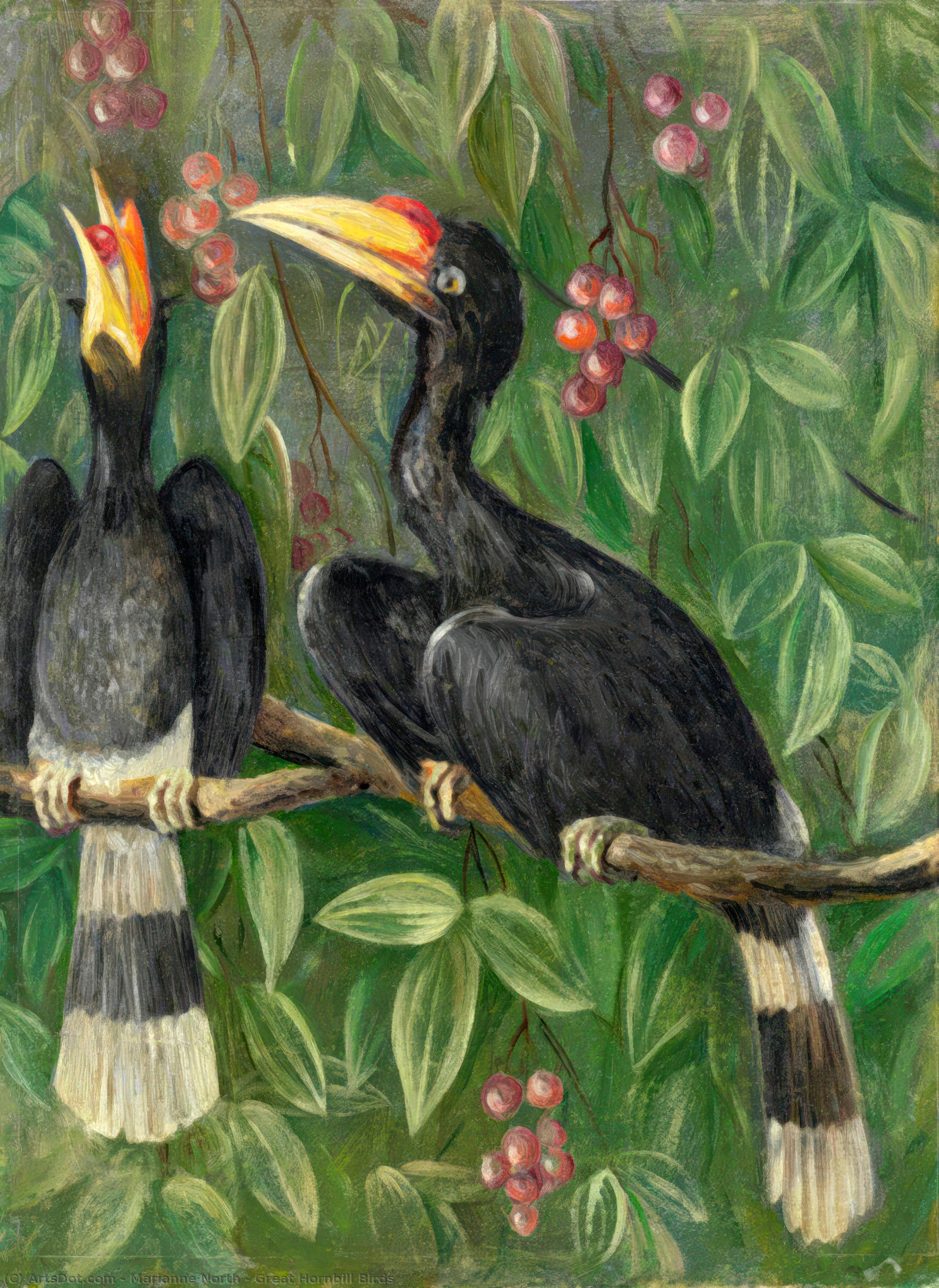
A Moment of Serenity: Marianne North’s Great Hornbill Birds
This exquisite hand-painted reproduction captures a fleeting yet profound moment in the life's work of Marianne North, one of the Victorian era’s most remarkable female explorers and botanical artists. Executed in 1870, this intimate depiction of two Great Hornbills perched upon a branch offers a glimpse into North’s meticulous observation and her unwavering dedication to documenting the world’s natural wonders. Measuring 25 x 18 cm, the scale invites a personal connection with these magnificent birds, fostering a sense of quiet contemplation reminiscent of North's own solitary expeditions.
- Subject Matter: The central focus is undeniably the Great Hornbill (Buceros bicornis), iconic birds native to Southeast Asia. North’s keen eye captures their distinctive features – the prominent casque atop their heads, a crucial tool for foraging and communication, and their striking plumage.
- Composition: The placement of the two hornbills in close proximity suggests a gentle companionship, perhaps reflecting North's own spirit of independence and her ability to forge connections with the natural world.
- Setting: The branch, adorned with berries, provides a rich, textured backdrop, while the inclusion of leaves adds depth and reinforces the painting’s connection to the vibrant ecosystems North so passionately sought to portray.
The Victorian Explorer's Vision
Marianne North’s artistic journey is inextricably linked to the spirit of exploration that defined the Victorian era. Driven by a desire to document the world’s flora and fauna, she embarked on an extraordinary series of journeys across Africa, Asia, and South America – often traveling alone and enduring considerable hardship. This painting represents a pivotal moment in her career, showcasing her evolving artistic style and her increasingly sophisticated botanical knowledge. North's expeditions were not merely acts of scientific discovery; they were deeply personal quests fueled by a profound love for the natural world and a determination to capture its beauty with unwavering accuracy.
Her work stands as a testament to a woman’s ability to challenge societal expectations and pursue her passions with relentless dedication. Unlike many artists of her time, North was largely self-taught, developing her skills through tireless observation and experimentation. This reproduction allows us to appreciate the culmination of her years of dedicated study and travel.
Technique and Style: A Masterclass in Detail
North’s artistic technique is characterized by a remarkable level of detail and realism – hallmarks of her approach to botanical illustration. Executed with meticulous brushwork, the painting demonstrates a deep understanding of light and shadow, creating a sense of three-dimensionality that brings the hornbills to life. The use of layering and glazing techniques allows for subtle variations in tone and color, enhancing the richness and vibrancy of the scene. Her style reflects the influence of both academic art training and her direct observation of nature, resulting in an image that is both scientifically accurate and aesthetically captivating.
- Color Palette: The artist employs a rich, earthy palette dominated by greens, browns, and ochres, reflecting the natural environment of the hornbills’ habitat.
- Brushwork: Noticeable attention to detail in feather textures and branch structure demonstrates North's dedication to realism.
Symbolism and Emotional Resonance
Beyond its technical brilliance, this painting resonates with deeper symbolic meanings. The Great Hornbill, revered in many Southeast Asian cultures as a symbol of wisdom and good fortune, adds an element of spiritual significance to the work. North’s dedication to capturing these creatures in their natural habitat speaks to a broader appreciation for biodiversity and the importance of conservation – themes that remain profoundly relevant today. The painting evokes a sense of tranquility and wonder, inviting viewers to contemplate the beauty and fragility of the natural world. It is a poignant reminder of Marianne North's legacy as a pioneering artist and explorer.