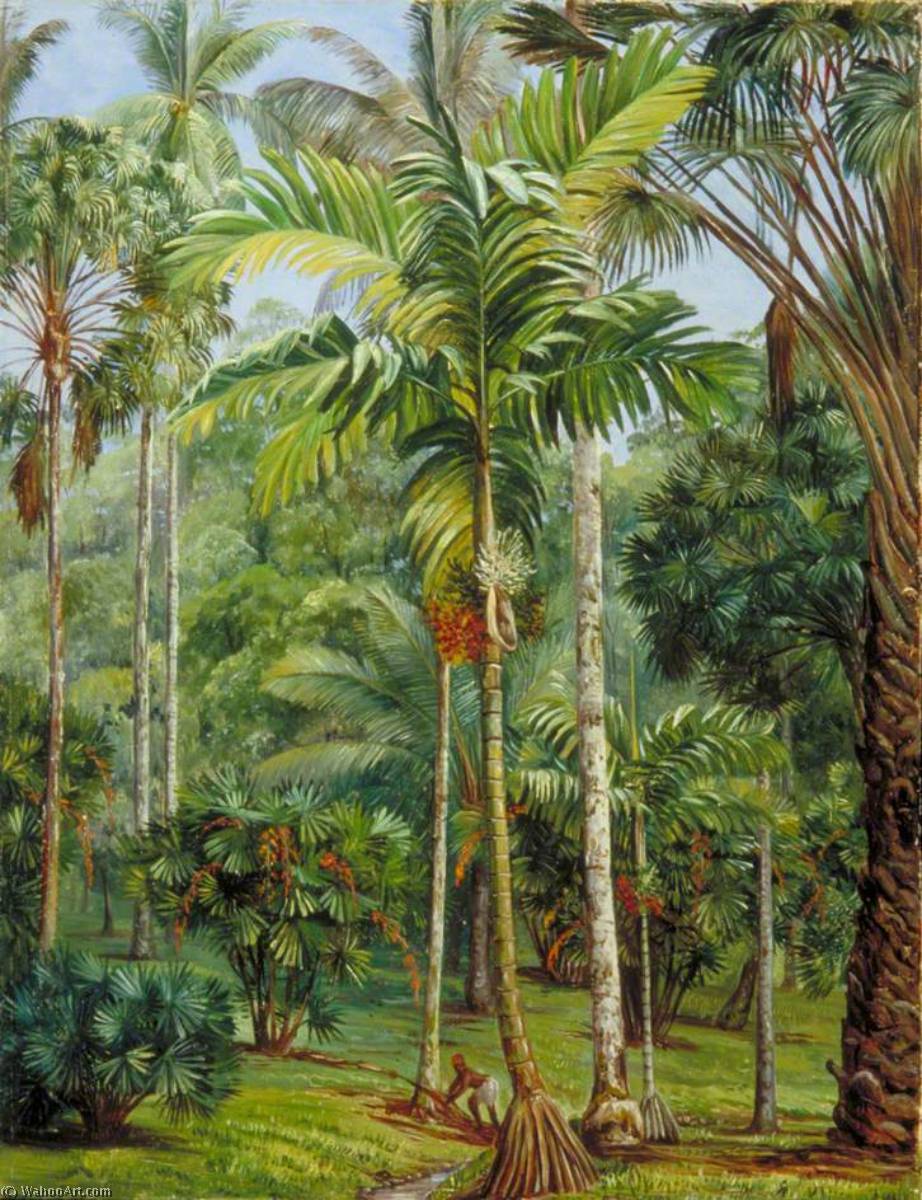
A Victorian Explorer's Vision: Unveiling "Group of Palms"
Marianne North’s “Group of Palms,” painted in 1876, isn’t merely a depiction of a tropical forest; it’s a vibrant testament to a woman’s audacious spirit and her profound connection with the natural world. Created during a period when female artists were largely confined to domestic pursuits, North embarked on an extraordinary journey – one that took her across continents, documenting flora and fauna with unparalleled dedication and artistic flair. This painting, housed within the Marianne North Gallery at Kew Gardens, offers a captivating glimpse into her adventurous life and her unique approach to botanical art.
The scene unfolds beneath a canopy of towering palms, their fronds reaching skyward in a symphony of green. North masterfully captures the dappled sunlight filtering through the leaves, creating an atmosphere of serene tranquility. A single, brilliantly colored bird – likely a parrot or macaw – perches on one of the larger trees, adding a touch of life and movement to the composition. The background reveals a lush, verdant landscape, hinting at the teeming biodiversity of this remote corner of Java. It’s a scene brimming with warmth, vitality, and an almost palpable sense of exotic beauty.
The Artistry of an Independent Spirit
North's artistic style diverges significantly from the prevailing conventions of Victorian botanical illustration. Rather than adhering to the muted palette and meticulous detail favored by her contemporaries, she embraced a bolder approach, utilizing oil paints on board to achieve rich, saturated colors and a dynamic sense of depth. Her brushstrokes are loose and expressive, conveying not just the appearance of the plants but also their essence – their vitality, their texture, and their place within the larger ecosystem. The inclusion of the bird is particularly noteworthy; it’s a deliberate choice that elevates the painting beyond a simple botanical study, imbuing it with a narrative quality.
Crucially, North didn't simply paint what she saw; she painted what she felt. Her travels were driven by an insatiable curiosity and a desire to understand the interconnectedness of all living things. She meticulously documented her findings in detailed journals and accompanied each painting with insightful observations about the plants’ habitats, medicinal properties, and cultural significance. This commitment to scientific accuracy, combined with her artistic vision, cemented her reputation as both a pioneering botanist and a celebrated artist.
Symbolism of Place and Perseverance
“Group of Palms” resonates deeply with the spirit of exploration and discovery that defined North’s life. The palm trees themselves are potent symbols – representing resilience, longevity, and connection to tropical climates. Their towering presence speaks to the power and majesty of nature, while their fronds evoke a sense of movement and renewal. The bird, often associated with freedom and intelligence, further reinforces this theme. The painting can be interpreted as an allegory for North’s own journey – her unwavering determination to overcome societal expectations and pursue her passions against all odds.
Furthermore, the choice of Java itself holds symbolic weight. As a region steeped in ancient history and rich cultural traditions, it represents a world far removed from the familiar comforts of Victorian England. North’s exploration of this exotic locale underscores her willingness to venture beyond established boundaries and embrace the unknown.
A Legacy of Beauty and Inspiration
“Group of Palms” is more than just a beautiful painting; it's a window into the life and mind of a remarkable woman. It’s a testament to her courage, her curiosity, and her artistic vision. Today, its vibrant colors and evocative imagery continue to captivate viewers, inspiring a sense of wonder and appreciation for the beauty and diversity of the natural world. Reproductions of this masterpiece offer an accessible way to bring North's extraordinary journey into your home, transforming any space into a sanctuary of tropical tranquility.