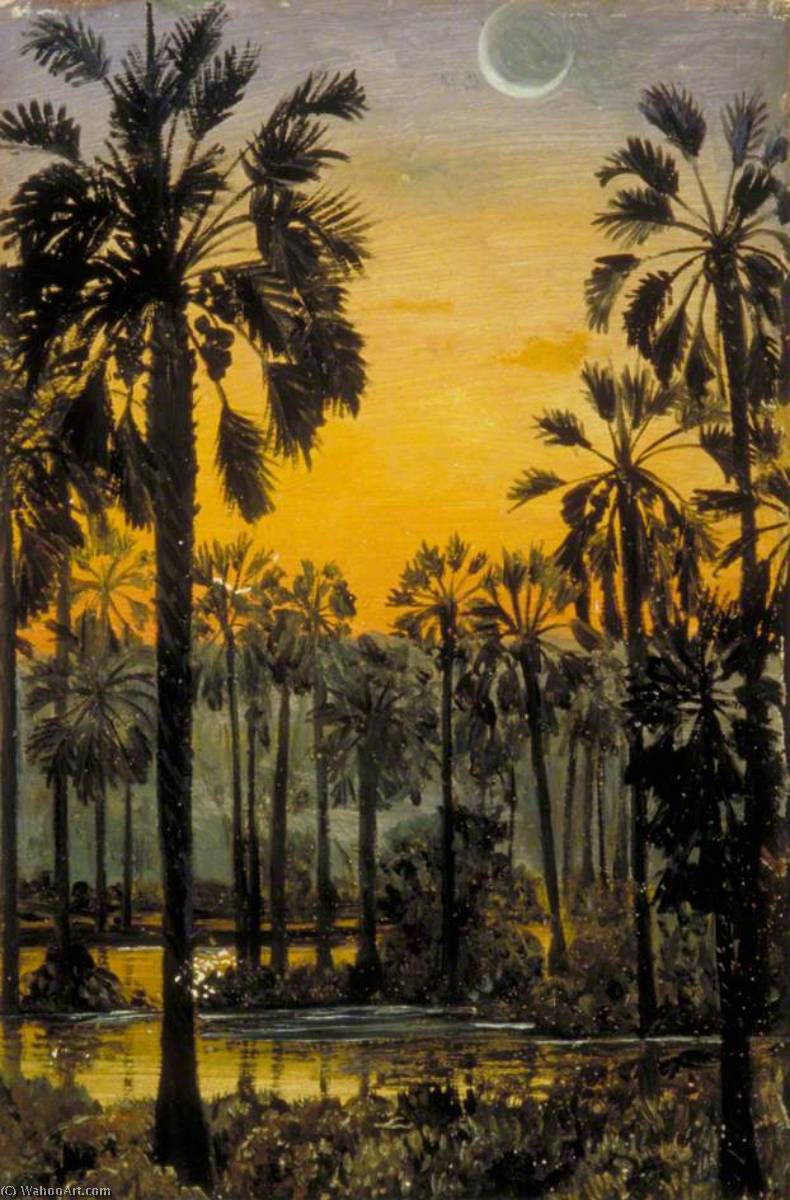
A Moment Frozen in Time: The Majesty of Marianne North’s “Palmyra Palms in Flood Time”
Marianne North's "Palmyra Palms in Flood Time," painted in 1870, is more than just a depiction of a dramatic landscape; it’s a poignant encapsulation of Victorian exploration, scientific curiosity, and the artist’s profound connection to the natural world. This oil on canvas transports us to the heart of Java, capturing a scene both turbulent and serene – a submerged grove of palm trees bathed in the ethereal glow of sunset. The painting isn't merely a record of a geographical location; it’s an emotional response to the power and beauty of nature at its most elemental.
North, a remarkably independent figure for her time, defied societal expectations by embarking on a decades-long journey dedicated to documenting flora across the globe. Unlike many artists who confined themselves to studio work, North actively sought out remote locations, often venturing into uncharted territories with remarkable courage and determination. Her travels weren’t driven by commercial gain but by an unwavering passion for botanical observation and artistic expression. This painting is a testament to that dedication – a meticulously rendered scene born from firsthand experience.
The Language of Light and Water: Technique and Composition
North's technical skill is immediately apparent in the masterful handling of light and color. The sunset’s fiery hues—deep oranges, vibrant reds, and soft pinks—bleed across the canvas, casting dramatic shadows and illuminating the submerged palms with an almost otherworldly radiance. Notice how she uses a broken brushstroke technique to create texture and movement within the water, suggesting the relentless flow of the floodwaters while simultaneously conveying a sense of stillness. The composition itself is carefully balanced: the towering palm trees anchor the scene on the right, drawing the eye upwards, while the receding water creates a strong diagonal line that leads the viewer’s gaze into the distance.
The artist's use of color is particularly noteworthy. She doesn’t shy away from depicting the darker tones of the flooded landscape – deep blues and greens—which contrast beautifully with the vibrant colors of the sunset. This juxtaposition creates a sense of drama and emphasizes the vulnerability of the palm trees against the overwhelming power of nature. The subtle gradations in tone, achieved through careful layering of paint, add depth and realism to the scene.
Symbolism and Victorian Context
“Palmyra Palms in Flood Time” resonates deeply within the context of 19th-century Victorian England. The era was marked by a burgeoning interest in science, exploration, and the natural world – fueled by figures like Charles Darwin and Joseph Hooker. North’s work reflects this intellectual climate, embodying the Victorian spirit of adventure and scientific inquiry. The flooded palm trees can be interpreted as symbols of resilience and endurance—a reminder that even in the face of adversity, life persists. The scene also evokes a sense of melancholy and loss, perhaps reflecting the anxieties of an era grappling with rapid industrialization and the perceived decline of traditional ways of life.
Furthermore, the painting’s subject matter – the ancient palm trees of Java—connects to broader themes of cultural heritage and the impact of environmental change. Java was a region of immense historical and cultural significance during the Victorian period, and North's depiction highlights its beauty and vulnerability. The image serves as a poignant reminder of the importance of preserving natural landscapes for future generations.
A Timeless Masterpiece: Bringing “Palmyra Palms in Flood Time” into Your Space
Reproductions of Marianne North’s "Palmyra Palms in Flood Time" offer a captivating way to bring this extraordinary artwork into your home or office. The painting's rich colors, dramatic composition, and evocative symbolism create a focal point that will undoubtedly spark conversation and admiration. Whether you are an art collector, an interior designer seeking to add a touch of Victorian elegance, or simply someone who appreciates the beauty of nature, this masterpiece is sure to inspire and delight.