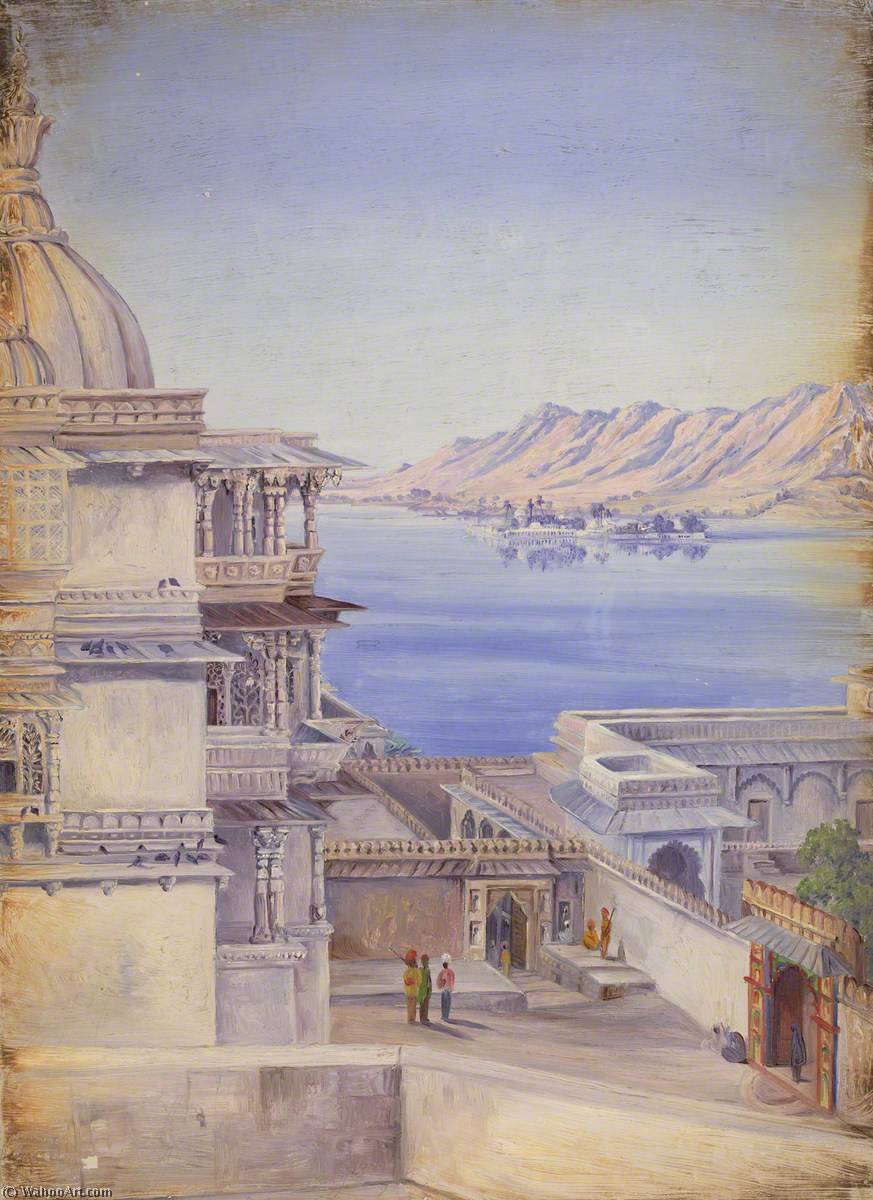
A Glimpse of Royal Tranquility: Marianne North’s ‘Pichola Lake and Island of Jagmandir, Udaipur.’
Marianne North's watercolor painting, “Pichola Lake and Island of Jagmandir, Udaipur. ‘Decr. 1878,’” offers a captivating window into the opulent world of nineteenth-century Rajasthan. More than just a picturesque landscape, this work embodies North’s unique approach to art – a fusion of botanical observation, adventurous exploration, and a deeply considered aesthetic sensibility. The scene unfolds before us: the shimmering expanse of Pichola Lake reflecting the grandeur of Jagmandir Palace, an island fortress rising majestically from its waters. The muted palette—a symphony of blues, greys, and beiges—evokes a sense of serene melancholy, hinting at both the beauty and the isolation inherent in this royal setting.
Echoes of Mughal Miniature Painting
North’s artistic lineage is clearly visible in her masterful execution. The composition immediately recalls the intricate detail and flattened perspective characteristic of Mughal miniature painting, a style she deeply admired and meticulously studied during her extensive travels throughout India. Notice how the architecture is rendered with painstaking precision – each arch, each intricately carved pillar, each delicate windowpane—a testament to the artist’s dedication to capturing the essence of her subject. The use of geometric forms within the palace structure, alongside the organic shapes of foliage and water reflections, creates a harmonious balance between structure and nature, a recurring theme in North's work.
- Linear Perspective: While adhering to the conventions of miniature painting, North subtly employs atmospheric perspective, creating a sense of depth through the gradual lightening and reduction of detail in the distant mountains.
- Color Harmony: The cool, muted tones contribute to the overall atmosphere of tranquility and timelessness.
- Decorative Detail: The sheer volume of decorative elements—floral motifs, architectural embellishments—reflects the lavish aesthetic prevalent in Rajputana at the time.
A Victorian Explorer’s Vision – Marianne North's Journey
It’s crucial to understand that this painting wasn’t created in a studio; it was born from North’s extraordinary life as an independent explorer and artist. Born in 1830, she defied societal expectations by embarking on a series of solo expeditions across the globe, primarily documenting flora and fauna. Her travels took her through India, Africa, South America, and Southeast Asia, each journey resulting in numerous watercolor paintings and botanical illustrations. “Pichola Lake” is a product of her 1878 visit to Udaipur, where she meticulously observed and recorded the region’s natural beauty and architectural wonders. Her commitment to self-sufficiency—she funded her expeditions herself—is remarkable for a woman of her era.
Symbolism and Emotional Resonance
Beyond its technical brilliance, “Pichola Lake” resonates with subtle symbolic meaning. The island palace, Jagmandir, was once a summer retreat for the Maharajas of Mewar, representing power, wealth, and a connection to the divine. The lake itself, reflecting the sky and surrounding mountains, symbolizes eternity and the cyclical nature of life. The pathway leading down towards the viewer invites us into this world, creating a sense of intimacy and drawing us closer to the scene’s quiet grandeur. There's an undeniable feeling of solitude within the painting—a poignant reminder of the beauty found in stillness and the enduring legacy of a bygone era. This piece isn’t simply a depiction of a landscape; it’s a meditation on power, nature, and the artist’s own journey of discovery.
ArtsDot offers exquisite hand-painted reproductions of Marianne North's “Pichola Lake and Island of Jagmandir, Udaipur. ‘Decr. 1878,’” allowing you to bring this captivating artwork into your home or office with unparalleled detail and authenticity. Each reproduction is created by skilled artists using traditional techniques, ensuring a faithful representation of North’s original vision.