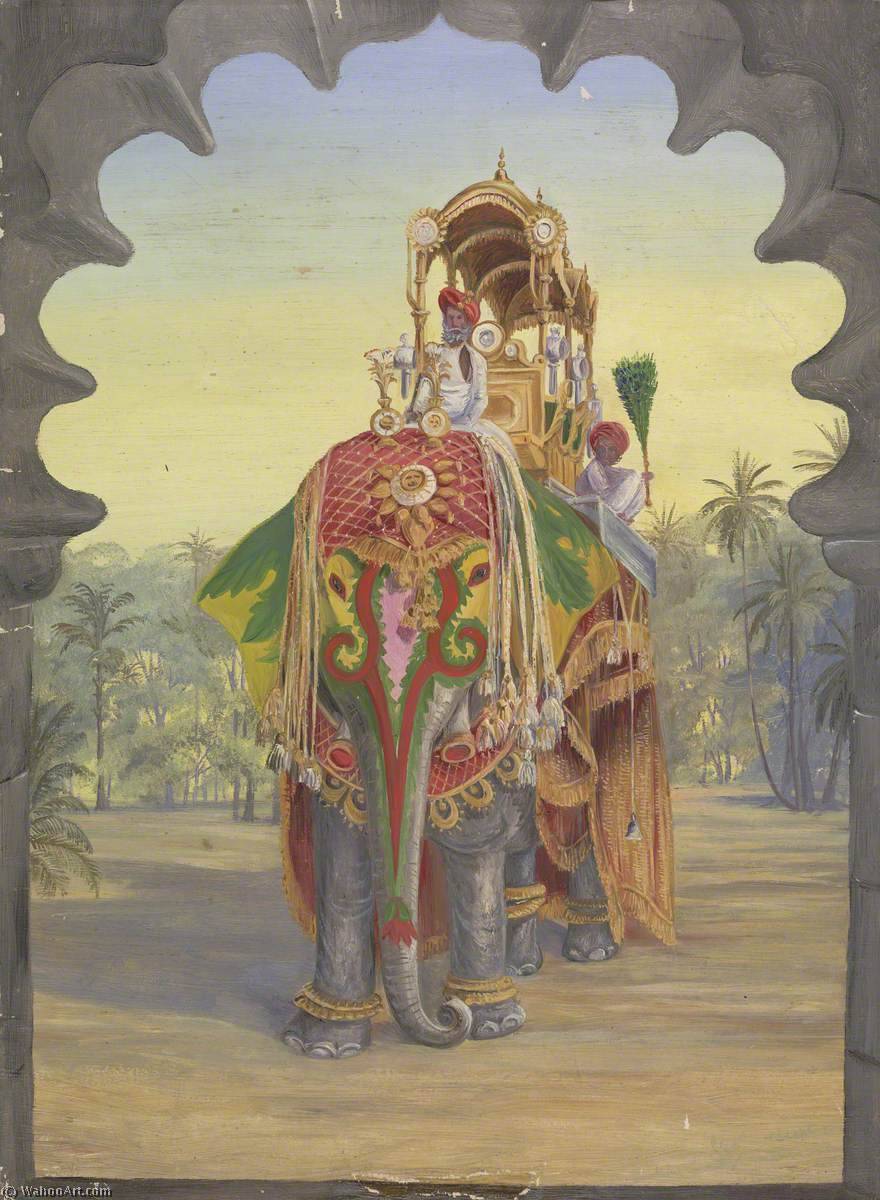
A Victorian Expedition in Color: Marianne North’s “State Elephant, Baroda”
Marianne North's "State Elephant, Baroda," painted in 1879, is more than just a charming depiction of an elephant parade; it’s a vibrant snapshot of a remarkable woman forging her own path through the constraints of Victorian society. This exquisite watercolor captures a moment of exuberant celebration within the royal court of Baroda, Gujarat, India – a region then brimming with exotic sights and sounds that profoundly influenced North's artistic journey. The painting immediately draws the eye to the magnificent elephant at its center, adorned in elaborate decorations—a testament to the wealth and power of the Gaekwad rulers. These vibrant hues, meticulously layered and blended by North’s hand, speak to her dedication to capturing not just the appearance but also the *feeling* of this extraordinary event.
The Artist's Unconventional Path
Marianne North’s life defies easy categorization. Born in 1830 into a comfortable English family, she initially pursued a career as a musician. However, a debilitating illness steered her towards the quieter world of botanical illustration – an unexpected turn that ultimately became her defining legacy. Driven by an insatiable curiosity and a desire to document the flora of the globe, North embarked on a series of astonishing expeditions throughout Africa, Asia, and South America. She traveled extensively, often alone and unsupported, meticulously sketching and painting plants in their natural habitats. This wasn’t simply scientific observation; it was a deeply personal quest fueled by an unwavering spirit of adventure and a profound love for the natural world. “State Elephant, Baroda” is a tangible manifestation of this adventurous spirit – a record of her immersive experience within a foreign culture.
Technique and Detail: A Masterclass in Watercolor
North’s watercolor technique is remarkably sophisticated for the period. She employed a layering approach, building up color gradually to achieve incredible depth and luminosity. Notice how she uses washes of turquoise and emerald green to evoke the lushness of the surrounding landscape, contrasting sharply with the rich reds and golds of the elephant's ornamentation. The artist’s attention to detail is astonishing; from the intricate patterns on the elephant’s saddle to the expressions on the faces of the onlookers, every element feels carefully considered. The loose, expressive brushstrokes contribute to a sense of movement and immediacy, capturing not just a static scene but the *energy* of the procession. The use of dry-brush techniques adds texture and definition, particularly in depicting the elephant’s skin and the folds of its decorations.
- Color Palette: Dominated by vibrant blues, greens, reds, and golds – reflecting the richness of Indian culture and the natural environment.
- Brushwork: A blend of smooth washes and expressive dry-brush techniques creates a dynamic and layered effect.
- Composition: The elephant is centrally positioned, drawing the viewer’s eye while the surrounding figures provide context and scale.
Symbolism and Cultural Context
The “State Elephant” held immense significance in Baroda's royal processions. These elaborate parades were a display of power, wealth, and cultural heritage, showcasing the ruler’s authority and celebrating important events. The elephant itself is a potent symbol – representing strength, wisdom, and auspiciousness in Hindu culture. The decorations adorning the animal are not merely decorative; they are laden with symbolic meaning, reflecting the values and beliefs of the Gaekwad dynasty. Observing this scene through North's eyes offers a glimpse into the intricate social fabric and cultural traditions of 19th-century India – a world vastly different from her own Victorian England.
ArtsDot’s hand-painted reproduction faithfully captures the vibrancy and detail of North’s original work, allowing you to bring this captivating scene into your home or office. Its rich colors and intricate details will serve as a beautiful reminder of an extraordinary woman's journey and a window into a fascinating era.