Discover Marianne North (1830-1890), a Victorian explorer & botanical artist who painted exotic flora worldwide. Her gallery at Kew Gardens showcases over 800 vibrant paintings – a testament to her adventurous spirit!
Explore ~20,000 dried plant specimens at the URV Herbarium in Richmond! Discover algae, lichens & vascular plants used for research & teaching, including local flora and historical collections dating back to the early 1900s.
Marianne North’s Vision of Tropical Blooms: A Victorian Explorer's Legacy
Marianne North (1830–1890) wasn’t merely an artist; she was a pioneer, charting unexplored territories and documenting the breathtaking beauty of the natural world with unparalleled dedication. Born into a comfortable English upbringing, her life took an extraordinary turn when illness steered her away from conventional pursuits toward the captivating realm of botanical painting—a path that would forever transform her identity and solidify her place in art history. Her story resonates with resilience, independence, and a profound reverence for flora, offering a glimpse into Victorian sensibilities blended with scientific curiosity.
- Early Life & Artistic Awakening: Despite initial aspirations for musical performance, North’s health necessitated a redirection toward visual arts. Encouraged by her family, she began honing her drawing skills and quickly discovered an irresistible passion for capturing the essence of plant life—a fascination that would propel her on a remarkable journey across continents.
- A Singular Expedition: Unlike many women of her era confined to domestic roles, North embarked upon a solo expedition to Java in 1876. Driven by an unwavering desire to observe and record the region’s botanical diversity, she meticulously documented specimens—a feat considered audacious for a woman traveling alone at that time.
- The Style of Observation: North's artistic approach distinguished itself from prevailing conventions. Rejecting idealized representations favored by academic painters, she prioritized accuracy and detail, striving to convey the true character of her subjects. Her canvases aren’t mere decorative embellishments; they are windows into ecosystems—revealing textures, colors, and forms with remarkable realism.
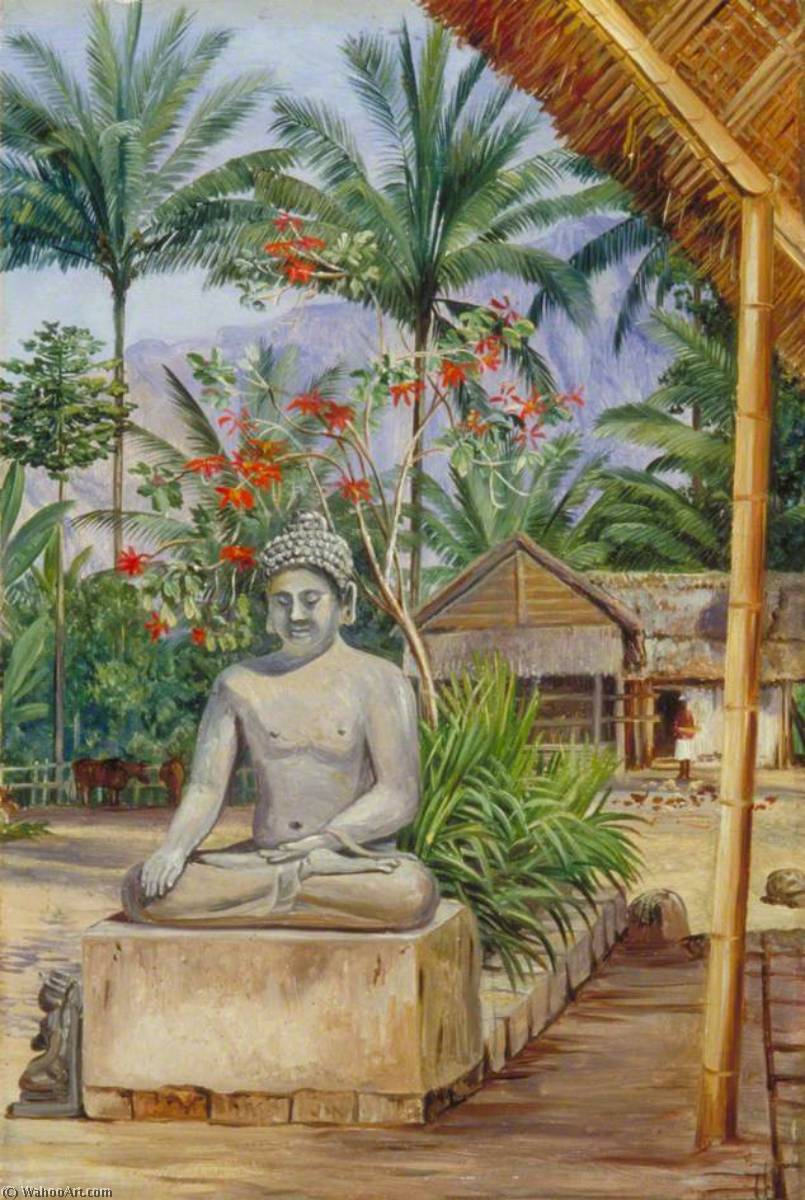
The Artwork: Statue of Buddha
The image depicts a tranquil scene featuring a statue of Buddha seated in the center. The Buddha is depicted with a serene expression, hands resting on his knees in a meditative pose. He is surrounded by lush greenery, including palm trees and other tropical plants that add to the peaceful atmosphere. In the background, there are traditional-style buildings with thatched roofs, suggesting an Asian setting, possibly a temple complex or a monastery. The architecture is simple yet elegant, blending harmoniously with the natural environment. The sky above is painted in soft hues of blue, indicating either dawn or dusk, which adds to the calm and serene mood of the painting. There are no visible clouds, suggesting clear weather conditions.
Technique & Color Palette
North employed oil paints—a medium favored by artists seeking depth and luminosity—to achieve her distinctive style. Her meticulous brushwork captures subtle nuances of light and shadow, creating a palpable sense of atmosphere. The color palette is dominated by greens from the foliage, browns from the earth tones, and blues from the sky. The artist skillfully utilized these hues to generate visual richness and contrast, enhancing the emotional impact of the artwork. Vibrant yet subdued, the colors convey tranquility and reverence—reflecting North’s profound connection with the natural world.
Symbolism & Emotional Resonance
More than just a botanical record, Marianne North's "Statue of Buddha" embodies Victorian ideals of spirituality and contemplation. The statue itself symbolizes enlightenment and inner peace—values championed during the era’s fascination with Eastern philosophy. Its placement amidst verdant vegetation underscores the importance of harmony between humanity and nature—a theme that resonates powerfully today. Viewing this artwork evokes feelings of serenity, wonder, and appreciation for the beauty of the natural world—a testament to North's artistic vision and her enduring legacy.