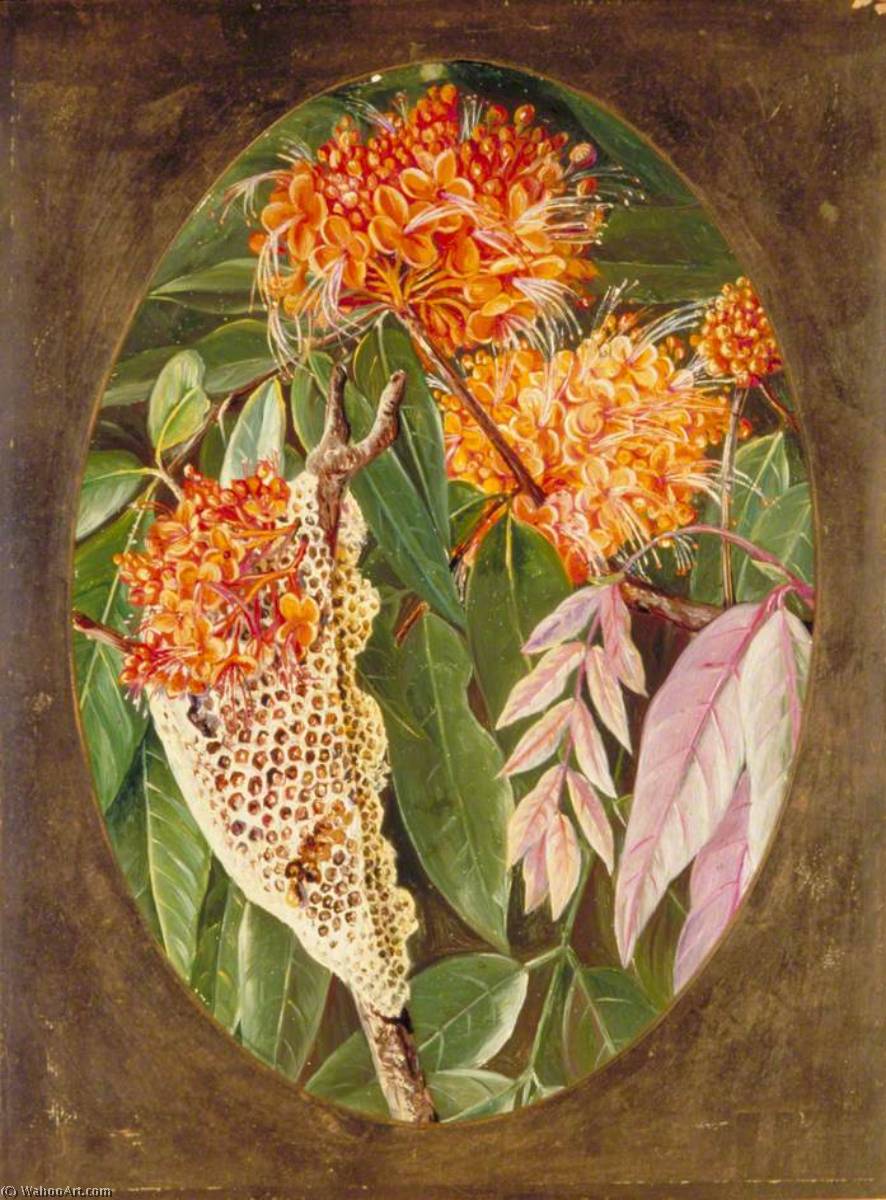
Marianne North’s ‘The Asoka’ is a captivating depiction of flowers in a vase, showcasing vibrant reds and long stems. Created circa 1878, this oil on board artwork exemplifies Victorian naturalism and celebrates the beauty of nature's diversity.
Marianne North’s “The Asoka”: A Victorian Vision of Tropical Majesty
Marianne North (1830-1890) stands as an extraordinary figure in the annals of Victorian art—a woman who defied societal expectations and embarked upon a singular journey fueled by unwavering passion for botany and artistic expression. Born into privilege in Hastings, England, her early life seemed destined for musical pursuits; however, fate intervened gently, redirecting her affections toward the delicate craft of flower painting – a transformative shift that blossomed into an unparalleled existence lived entirely on her own terms.
“The Asoka,” completed around 1878, exemplifies North’s distinctive style and unwavering commitment to capturing the sublime beauty of the natural world. Executed in oil on board, this monumental canvas depicts a vibrant assemblage of tropical flora—primarily red hibiscus blossoms—arranged within an ornate vase. More than just a botanical illustration, it represents a profound meditation on color, form, and texture, reflecting North’s meticulous observation skills and her ability to translate visual impressions into evocative artistic representations.
The painting's historical context is inextricably linked to the Victorian fascination with exotic landscapes and scientific exploration. During this era, botanists like John Tyndall and Edward Sabine championed expeditions to distant lands—seeking specimens and documenting new discoveries—as a means of advancing knowledge and bolstering Britain’s imperial ambitions. North herself participated in several such ventures, meticulously recording her observations and transforming them into breathtaking artworks.
Symbolically, “The Asoka” speaks volumes about Victorian ideals of femininity and artistic accomplishment. Unlike many women of her time confined to domestic roles, North pursued a path of intellectual curiosity and creative independence—challenging conventional norms and asserting her own voice within the artistic landscape. The vase itself serves as a visual metaphor for containment and beauty—representing not only the flowers’ delicate form but also the artist's disciplined dedication to capturing their essence.
North’s masterful technique is evident in every brushstroke, demonstrating an unparalleled command of color mixing and tonal gradation. She skillfully renders the velvety texture of the hibiscus petals and the luminous sheen of the vase—creating a visual experience that transcends mere representation. The composition's careful arrangement—with the largest flower positioned prominently on the left—further enhances its aesthetic impact.
“The Asoka” continues to inspire admiration for its artistic merit and its embodiment of Victorian botanical idealism. Its enduring legacy resides in North’s unwavering devotion to documenting the splendor of the natural world—a testament to a woman who dared to forge her own path—leaving behind an unforgettable contribution to art history.