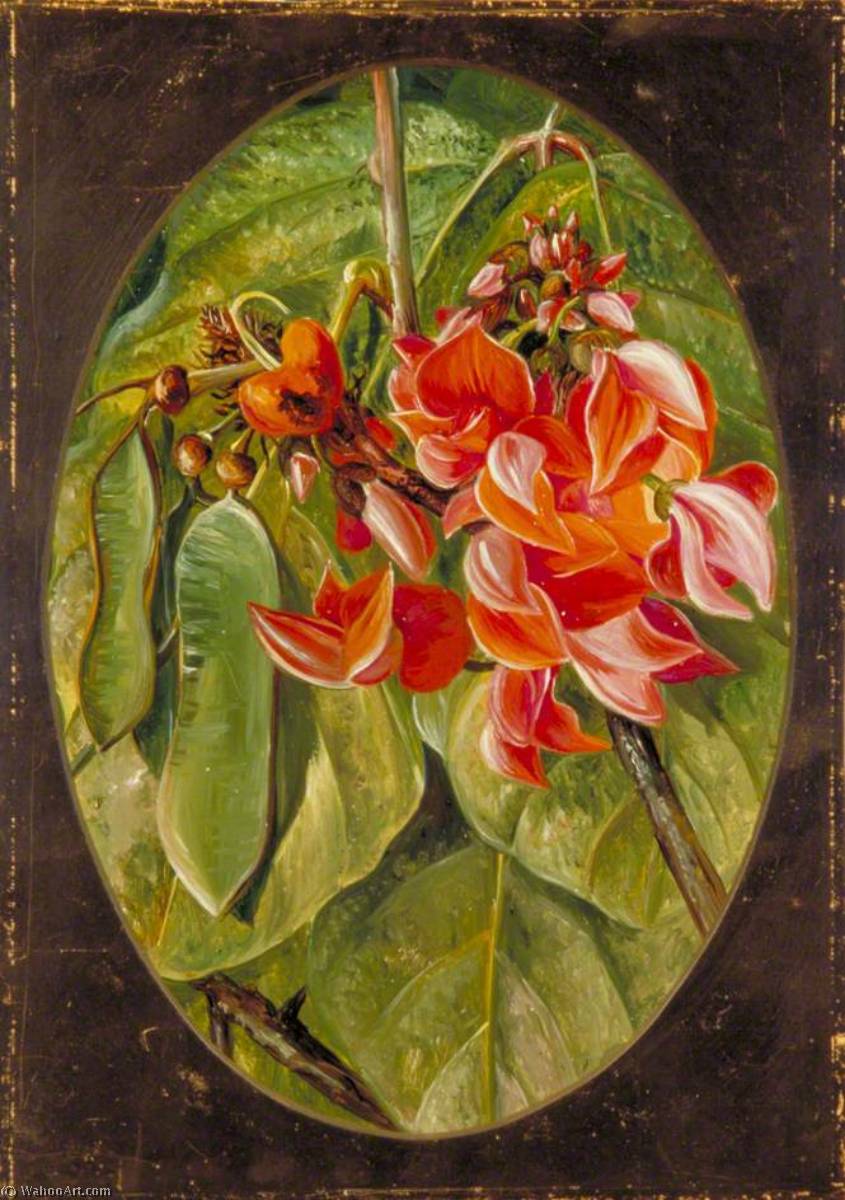
The Dhak or Bastard Teak – A Victorian Botanist’s Bold Vision
Marianne North (1830–1890) wasn't merely painting flowers; she was embarking on a crusade to capture the vibrant pulse of unexplored territories. Born into privilege in Hastings, England, her early life seemed destined for musical pursuits—a path swiftly diverted by illness towards a passion that would redefine her existence: botanical illustration. This decision wasn’t simply pragmatic; it represented an audacious rejection of societal expectations and a fervent embrace of scientific curiosity combined with artistic fervor. Her story resonates as one of unwavering determination and a profound connection to the natural world, cementing her legacy as a pioneer in both fields.
- Subject Matter: North’s canvases explode with color—primarily depicting exotic flora from across Asia and Africa. She meticulously documented species rarely seen by European botanists, transforming scientific observation into breathtaking visual narratives.
- Style: Her style is distinctly Victorian Romanticism, characterized by luminous watercolors executed with unparalleled precision. Unlike many of her contemporaries who favored pastel shades, North championed bold hues—deep reds, vibrant greens, and dazzling yellows—creating canvases that pulsate with life.
- Technique: The artist’s technique involved layering watercolor washes to build up tonal depth and texture, followed by delicate detailing using pen and ink. This meticulous approach ensured accuracy while simultaneously elevating the artwork's aesthetic quality.
A Journey Across Continents – North’s Explorations Fuel Her Artistry
North’s artistic pursuits weren’t disconnected from her adventurous spirit. Driven by a desire to expand scientific knowledge and inspire awe at the beauty of nature, she undertook solo expeditions to locations like Borneo, Sumatra, Egypt, Morocco, and Japan—a remarkable feat for a woman in Victorian England. These journeys provided invaluable material for her paintings, allowing her to observe plants firsthand and translate their essence onto canvas with unparalleled sensitivity. Her travels weren’t just about collecting specimens; they were about immersing herself in unfamiliar environments and capturing the spirit of discovery.
- Borneo & Sumatra: In Borneo and Sumatra, North meticulously documented towering rainforest trees adorned with orchids and bromeliads—scenes rendered with breathtaking detail and luminosity.
- Egypt & Morocco: Her depictions of Egyptian cacti and Moroccan wildflowers showcased her ability to convey the subtle nuances of color and form, reflecting the arid landscapes she traversed.
- Japan: North’s fascination with Japanese flora culminated in a series of paintings capturing cherry blossoms and ferns—works imbued with an ethereal beauty that embodies the tranquility of the East.
Symbolism Beyond Beauty – Capturing Essence Through Watercolor
Beyond mere representation, North's watercolors served as conduits for conveying deeper meanings. The bold color palettes weren’t merely decorative; they symbolized vitality and resilience—mirroring North’s own unwavering commitment to her artistic vision. Furthermore, the meticulous layering of watercolor washes reflected a belief in capturing not just what was seen but also what felt—a profound appreciation for the emotional impact of nature on the human spirit. Her canvases invite contemplation, prompting viewers to consider the interconnectedness of life and the importance of preserving biodiversity.
Legacy & Influence – Marianne North’s Enduring Impact
Marianne North's contribution to botanical illustration transcends its artistic merit; it represents a pivotal moment in scientific communication. Her paintings served as invaluable visual aids for botanists studying plant species, furthering understanding and inspiring future generations of artists and scientists alike. Today, her gallery at Kew Gardens remains a testament to her extraordinary life’s work—a vibrant celebration of Victorian exploration and the transformative power of artistic dedication. The Dhak or Bastard Teak stands as an emblem of this legacy – a stunning reminder that beauty can be found in scientific rigor and that art can illuminate the wonders of our planet.