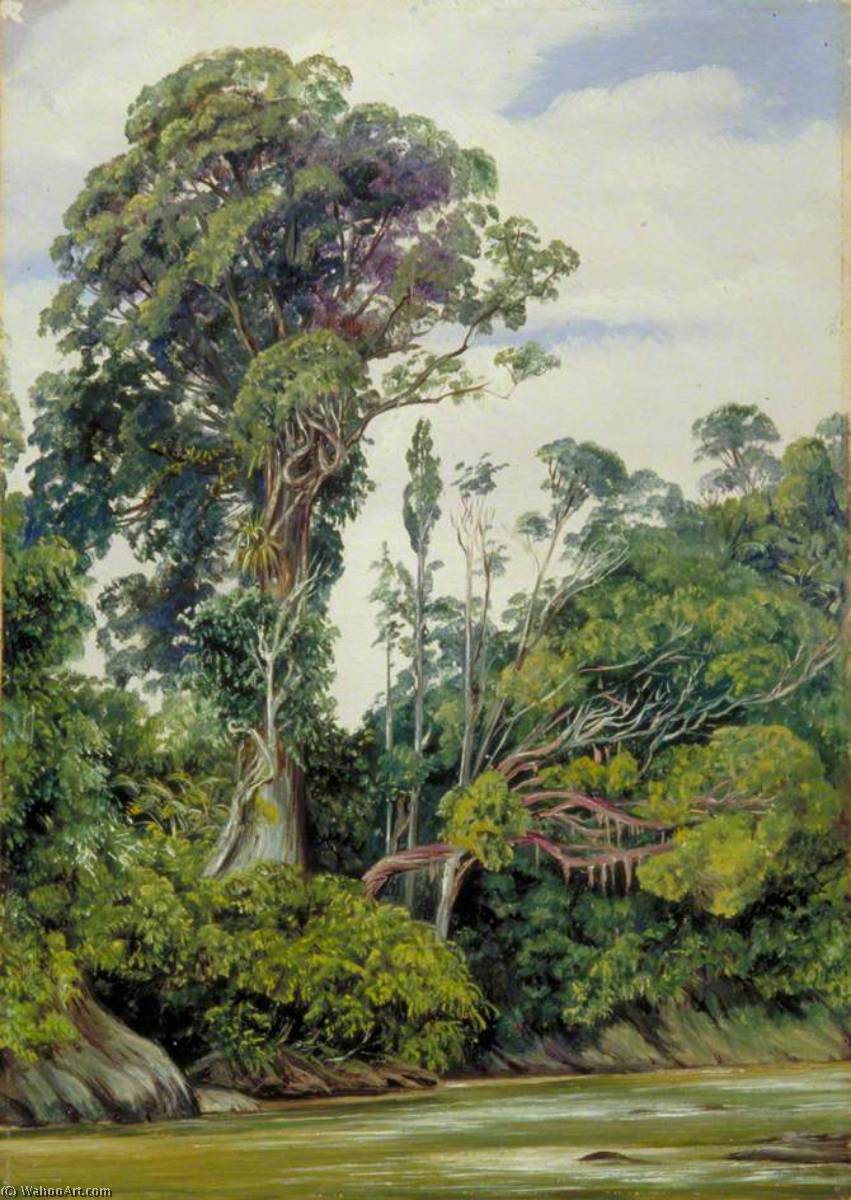
Tree Covered with Epiphytes and a Palawan Tree, Sarawak, Borneo

Magnificent oil painting by Marianne North depicting a lush Borneo rainforest & ancient tree. Explore intricate details, vibrant colors, & naturalist's style of 1876.


Marianne North (1830 - 1890)

Discover Marianne North (1830-1890), a Victorian explorer & botanical artist who painted exotic flora worldwide. Her gallery at Kew Gardens showcases over 800 vibrant paintings – a testament to her adventurous spirit!

Marianne North Gallery (Richmond, United States of America)

Discover the captivating world of Victorian botanical artist Marianne North at Kew Gardens! Explore over 800 vibrant paintings from her global travels, showcasing exotic plants and challenging artistic conventions.

A Window Into Borneo’s Ancient Heart

  • Subject Matter & Observation The painting captures a breathtaking glimpse into the Sarawak rainforest of Borneo, focusing on an imposing ancient tree draped with epiphytes—plants that grow on other plants without harming them. Marianne North's meticulous attention to detail reveals not just botanical accuracy but also a deep appreciation for the complexity and beauty of this ecosystem. It’s more than simply depicting trees; it’s portraying a thriving habitat teeming with life.
  • Style & Technique: Realism Enhanced North’s artistic style leans heavily toward realism, prioritizing faithful representation of textures and forms. However, she elevates realism through masterful brushwork—visible strokes that imbue the canvas with palpable energy and convey the dynamism of the forest environment. The flattened perspective contributes to a sense of immersive depth, guiding the viewer's eye into the layered tapestry of foliage.
  • Historical Context: Victorian Exploration Created in 1876 during the height of the Victorian era, this artwork reflects the burgeoning interest in scientific exploration and botanical illustration. Marianne North was driven by a passion for documenting the natural world—a pursuit championed by intellectuals and artists alike who sought to expand knowledge and capture sublime beauty. Her expeditions were undertaken with considerable courage and determination, marking a pivotal moment in the history of botanical art.
  • Symbolism: Resilience & Connection The dominant tree serves as a powerful symbol – representing strength, longevity, and an unwavering connection to the natural world. Epiphytes themselves symbolize interdependence and adaptation; they thrive on the support of larger trees, mirroring humanity’s role in fostering biodiversity. North's work speaks to a broader humanist concern for preserving fragile ecosystems.
  • Emotional Impact & Aesthetic Appeal Viewing “Tree Covered with Epiphytes and a Palawan Tree” evokes feelings of tranquility and wonder. The soft lighting and rich color palette—greens, browns, blues—transport the viewer to the heart of Borneo’s rainforest, fostering contemplation on the grandeur of nature and the importance of scientific observation. Its meticulous detail and textured surface offer an unparalleled opportunity for collectors and interior designers alike to experience a timeless masterpiece.