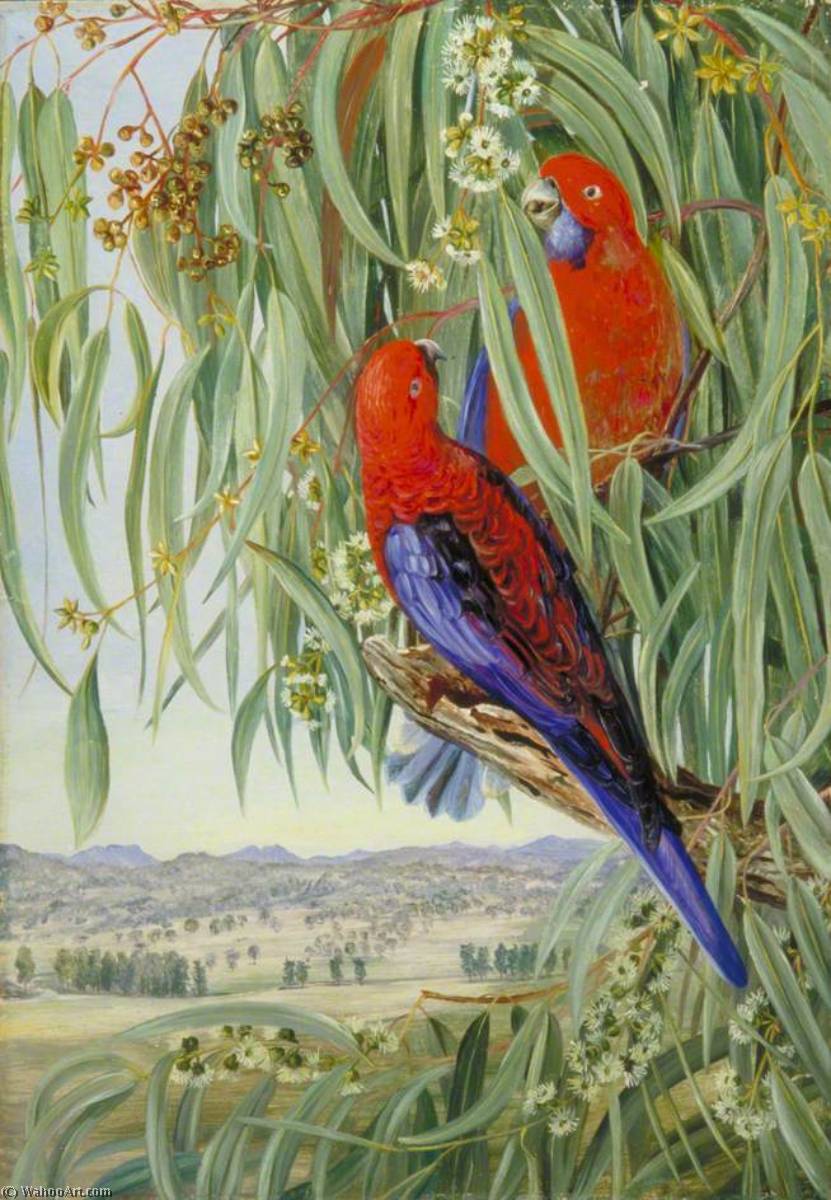
A Window Into Australasia: Marianne North’s ‘View from Collaroy’
Marianne North (1830 – 1890), born in Hastings, England, defied the societal constraints of her time to forge a singular path—one defined by unwavering curiosity and an unparalleled devotion to documenting the botanical wonders of the Victorian era. While musical aspirations initially beckoned, illness steered her towards a more tangible pursuit: the meticulous art of flower painting, transforming what might have been a quiet domestic life into an extraordinary adventure across continents.
‘View from Collaroy,’ painted in 1880, stands as a testament to North’s pioneering spirit and her profound connection with the Australian landscape. It's more than just a depiction of birds perched on branches; it’s a carefully crafted tableau brimming with symbolism and reflecting the burgeoning scientific interest in ornithology during the late nineteenth century.
Subject Matter & Composition
The painting captures a breathtaking panorama of Collaroy Beach, New South Wales, Australia. Dominating the scene are two vibrant birds—a scarlet macaw and a sapphire kingfisher—positioned prominently on branches against a backdrop of rugged mountains draped in emerald foliage. North’s masterful composition draws the eye upwards, emphasizing the grandeur of the natural environment and subtly guiding the viewer's gaze towards the apex of visual interest.
Technique & Style
North employed a distinctive watercolor technique characterized by layering translucent washes to achieve luminous color palettes and remarkable textural detail. Her meticulous observation of nature—a cornerstone of her scientific endeavors—translated seamlessly into artistic execution. The delicate brushstrokes capture the subtle nuances of light and shadow, conveying an impressionistic quality that prioritizes capturing the essence of the scene rather than striving for photographic realism.
Historical Context & Victorian Scientific Exploration
‘View from Collaroy’ emerged during a period of fervent scientific exploration driven by advancements in microscopy and botanical illustration. Marianne North herself was actively involved in expeditions to Southeast Asia and Africa, documenting flora and fauna with unwavering dedication. This painting embodies the spirit of the era—a fascination with unraveling the mysteries of the natural world through careful observation and artistic representation.
Symbolism & Emotional Impact
The scarlet macaw and sapphire kingfisher are not merely decorative elements; they carry symbolic weight, representing vibrancy and intelligence respectively. Their presence underscores North’s belief in the transformative power of art to inspire awe and appreciation for the beauty of the natural world. The painting evokes a feeling of serenity and wonder—a reminder that even amidst the bustle of Victorian society, there existed individuals committed to preserving and celebrating the wonders of the Australian bush.
Conclusion
‘View from Collaroy’ remains an enduring masterpiece, showcasing Marianne North's exceptional artistic talent alongside her unwavering passion for botanical science. Its luminous watercolors, balanced composition, and evocative symbolism continue to captivate audiences today, cementing its place as a pivotal work within the canon of Victorian landscape painting.