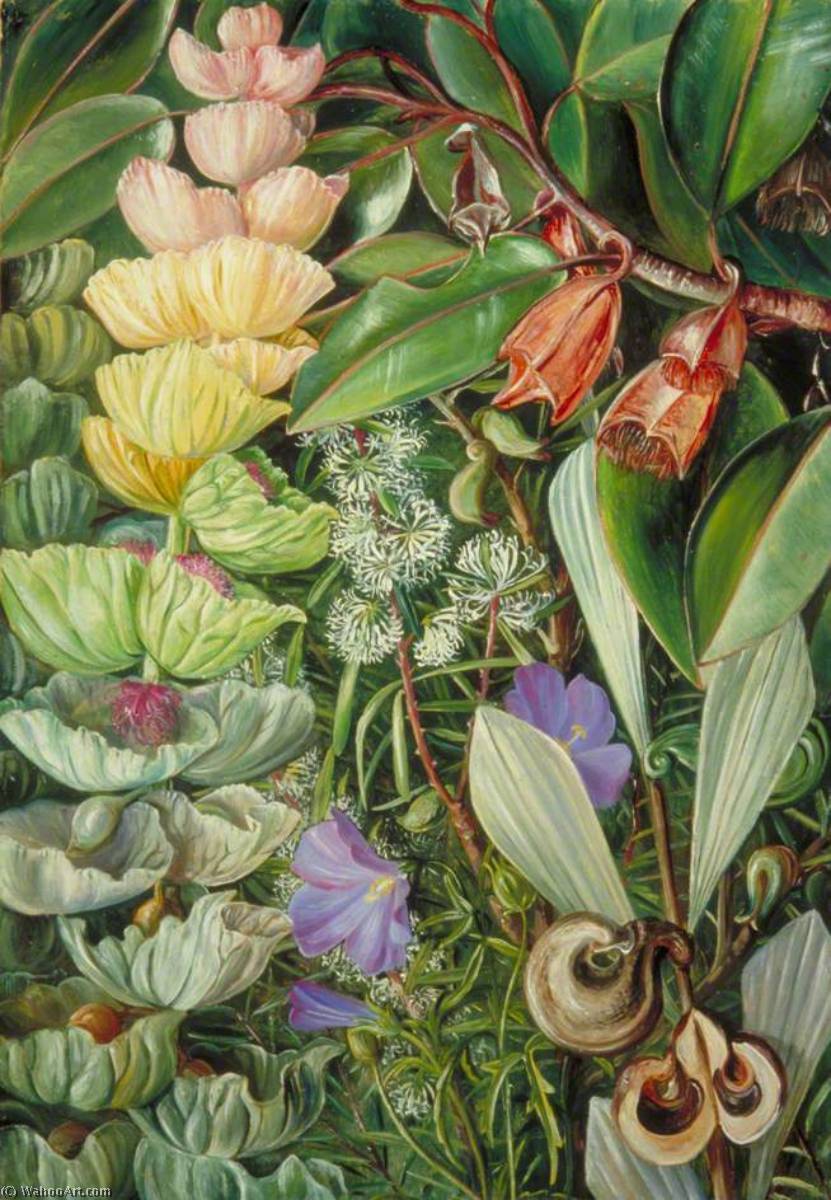
Discover Marianne North’s exquisite ‘West Australian Shrubby Vegetation,’ a detailed oil painting showcasing native flora & rich textures. Victorian botanical art, 1880.
Discover Marianne North (1830-1890), a Victorian explorer & botanical artist who painted exotic flora worldwide. Her gallery at Kew Gardens showcases over 800 vibrant paintings – a testament to her adventurous spirit!
Discover the captivating world of Victorian botanical artist Marianne North at Kew Gardens! Explore over 800 vibrant paintings from her global travels, showcasing exotic plants and challenging artistic conventions.
A Victorian Explorer's Reverie: Marianne North’s Botanical Masterpiece
Marianne North wasn’t merely an artist; she was a pioneer—a woman who defied societal expectations and charted her own course toward a life brimming with adventure and artistic fervor. Born in 1830 into a comfortable English family, her initial inclinations leaned towards music, yet fate intervened gently, steering her passion toward the meticulous art of flower painting – a transformative decision that blossomed into an extraordinary existence lived entirely on her own volition. Unlike many women of her era confined to domestic roles and prescribed futures, North embarked upon a daring expedition across continents, elevating herself not only as a celebrated botanist but also as a visionary artist who captured the sublime beauty of the natural world with unparalleled dedication. Her story resonates with resilience, independence, and an unwavering appreciation for the wonders hidden within plant life—a poignant reminder that true fulfillment lies in pursuing one’s deepest passions regardless of convention.
The Subject Matter: A Symphony of Australian Flora
North's “West Australian Shrubby Vegetation” isn’t simply a depiction of wildflowers; it’s an immersive experience rendered on canvas. Executed around 1880, the painting showcases a breathtaking assemblage of native Australian flora—specifically flowering shrubs and grasses—captured with astonishing detail. These aren’t merely plants presented as subjects; they are imbued with palpable vibrancy, reflecting North's profound fascination for botanical observation and her unwavering commitment to documenting the extraordinary biodiversity of Australia during its burgeoning colonial era. The artist meticulously recreated the textures and hues of these plants, striving to convey not just their appearance but also their essence—a testament to her belief that art could illuminate the grandeur of the natural world.
Style and Technique: Botanical Illustration Elevated
The painting’s style transcends conventional botanical illustration; it achieves a remarkable balance between scientific accuracy and artistic expression. North skillfully blended meticulous observation with a painterly approach, prioritizing realism while simultaneously imbuing her work with an undeniable sense of romanticism. Her technique is characterized by delicate brushstrokes—primarily organic lines mirroring the contours of leaves, petals, and stems—that build up layers of color to create depth and luminosity. The artist’s masterful use of tonal variation subtly enhances the three-dimensional quality of the subjects, guiding the viewer's eye through a landscape teeming with life. Furthermore, North employed glazing techniques – applying thin washes of translucent pigment over underlying layers – to achieve subtle shifts in hue and tone, resulting in an ethereal glow that captures the fleeting beauty of sunlight filtering through foliage.
Historical Context: Victorian Curiosity Meets Scientific Advancement
“West Australian Shrubby Vegetation” emerged during a period marked by significant scientific advancements alongside burgeoning imperial ambitions. The Victorian era witnessed an explosion of botanical exploration driven by curiosity and fueled by the desire to catalog and classify new species—a trend exemplified by North’s own expeditions into Western Australia. Her work reflects this intellectual fervor, embodying the Victorian fascination with natural history and demonstrating a commitment to documenting the wonders of distant lands for posterity. Moreover, it speaks to the broader societal shift toward valuing scientific knowledge alongside aesthetic appreciation – a duality that continues to inspire artists and collectors alike.
Symbolism Beyond Beauty: An Ode to Resilience
While undeniably captivating aesthetically, “West Australian Shrubby Vegetation” carries deeper symbolic resonance. The painting serves as an emblem of perseverance—a celebration of North’s unwavering determination to pursue her artistic vision despite societal constraints. More broadly, it embodies the Victorian belief in the transformative power of nature – portraying flora not merely as decorative elements but as symbols of vitality, growth, and enduring beauty. The artist's meticulous rendering underscores the importance of attentive observation and appreciation for the intricate complexities of the natural world—a message that resonates powerfully with contemporary audiences seeking inspiration and connection to our planet’s heritage.
Emotional Impact: Capturing Transient Splendor
Ultimately, Marianne North’s “West Australian Shrubby Vegetation” transcends mere visual representation; it evokes a profound emotional response. The painting's soft lighting and subtle color palette convey an atmosphere of tranquility and wonder—drawing viewers into the artist’s immersive experience of observing these vibrant blossoms in their natural habitat. It invites contemplation on the ephemeral nature of beauty, reminding us to savor fleeting moments of splendor and to cherish the enduring legacy of scientific exploration combined with artistic sensitivity. This artwork remains a timeless testament to Marianne North's extraordinary spirit—a beacon of creativity and passion that continues to inspire admiration and appreciation across generations.