A Victorian Explorer's Ode to Indian Flora: Marianne North’s *Wild Flowers of Mussooree*
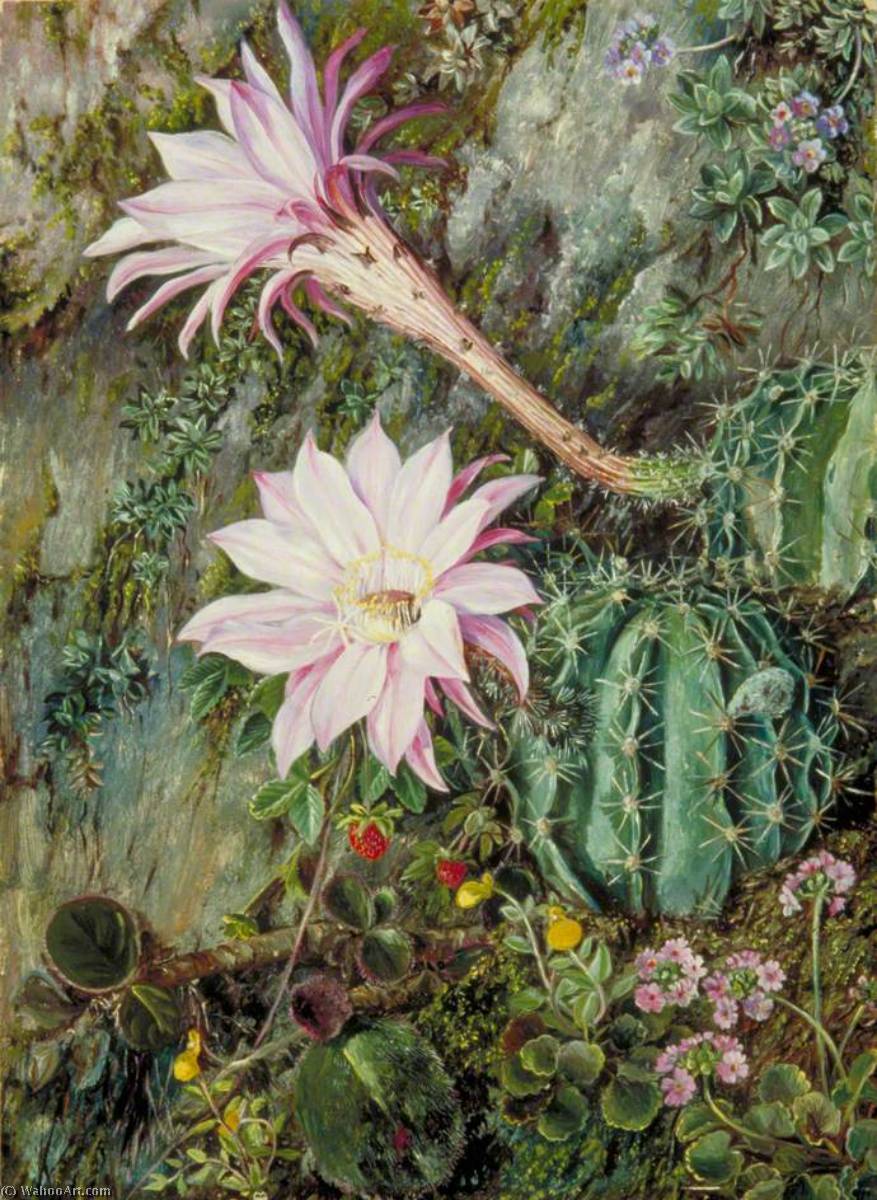
Marianne North’s 1878 painting, *Wild Flowers of Mussooree*, is more than a botanical illustration; it’s a vibrant testament to the spirit of a Victorian woman who dared to defy convention and immerse herself in the wonders of the natural world. Painted during a period when women were largely confined to domestic roles, North embarked on an extraordinary solo expedition across India, meticulously documenting its flora with a dedication that would earn her international acclaim. This intimate scene, rendered in exquisite detail, captures the essence of the Mussooree hills – a region renowned for its diverse and breathtaking botanical landscape – offering a glimpse into a world brimming with color and life.
Subject Matter and Composition
The painting’s subject is undeniably captivating: a collection of cacti bursting forth with vibrant pink blooms, set against the backdrop of lush Indian vegetation. North's keen eye for detail isn't merely focused on accurate representation; she skillfully arranges these elements to create a dynamic composition. The placement of the cacti, particularly those laden with flowers, draws the viewer’s gaze immediately, while the surrounding foliage – a tapestry of greens and subtle hues – adds depth and richness to the scene. Two birds, strategically positioned near the top left corner and along the right side, introduce a sense of movement and vitality, further enhancing the painting's naturalistic feel.
Technique and Style: A Masterclass in Watercolor
North’s artistic skill is immediately apparent in her masterful use of watercolor. The technique employed here showcases a remarkable level of control – delicate washes build up layers of color, creating subtle gradations and textures that bring the flowers to life. Her approach was revolutionary for its time; she meticulously observed and recorded plants directly from nature, translating her observations onto paper with astonishing accuracy. This direct observation is key to understanding North's style: it’s rooted in scientific precision yet infused with a deep appreciation for beauty. The painting demonstrates a detailed rendering of form and texture, characteristic of the Victorian interest in naturalism.
Symbolism and Historical Context
*Wild Flowers of Mussooree* reflects the broader trends of the late 19th century. The Victorian era witnessed an increased fascination with botany and exploration, fueled by advancements in scientific knowledge and a growing desire to document the world’s biodiversity. North's journey aligns perfectly with this trend, representing a bold assertion of female intellectual curiosity and adventurous spirit. The cacti themselves hold symbolic weight – often associated with resilience, endurance, and even immortality. Painted in 1878, it represents a moment of transition between traditional artistic styles and the burgeoning naturalism that would dominate the late Victorian period.
Emotional Impact and Artistic Value
Beyond its technical brilliance, *Wild Flowers of Mussooree* evokes a profound sense of tranquility and wonder. The vibrant colors and intricate details transport the viewer to the heart of India’s botanical paradise. This painting is not simply a representation of flowers; it's an embodiment of Marianne North’s passion for exploration, her dedication to scientific observation, and her unwavering belief in the beauty of the natural world. A hand-painted reproduction offers a unique opportunity to own a piece of art history – a tangible connection to the remarkable life and work of one of Victorian England’s most intrepid artists.