Mariano Fortuny (1871-1949) was a Spanish fashion designer & artist renowned for innovative textiles, Delphos gowns, and theatrical lighting designs. Explore his Orientalist influences, inventions, & lasting legacy in art history.
Mariano Fortuny (1871-1949) was a Spanish artist & designer celebrated for innovative textiles, dresses inspired by history, and pioneering stage lighting. Explore his legacy!
A Fragment of Ancient Echoes: Mariano Fortuny’s Ceramic Block
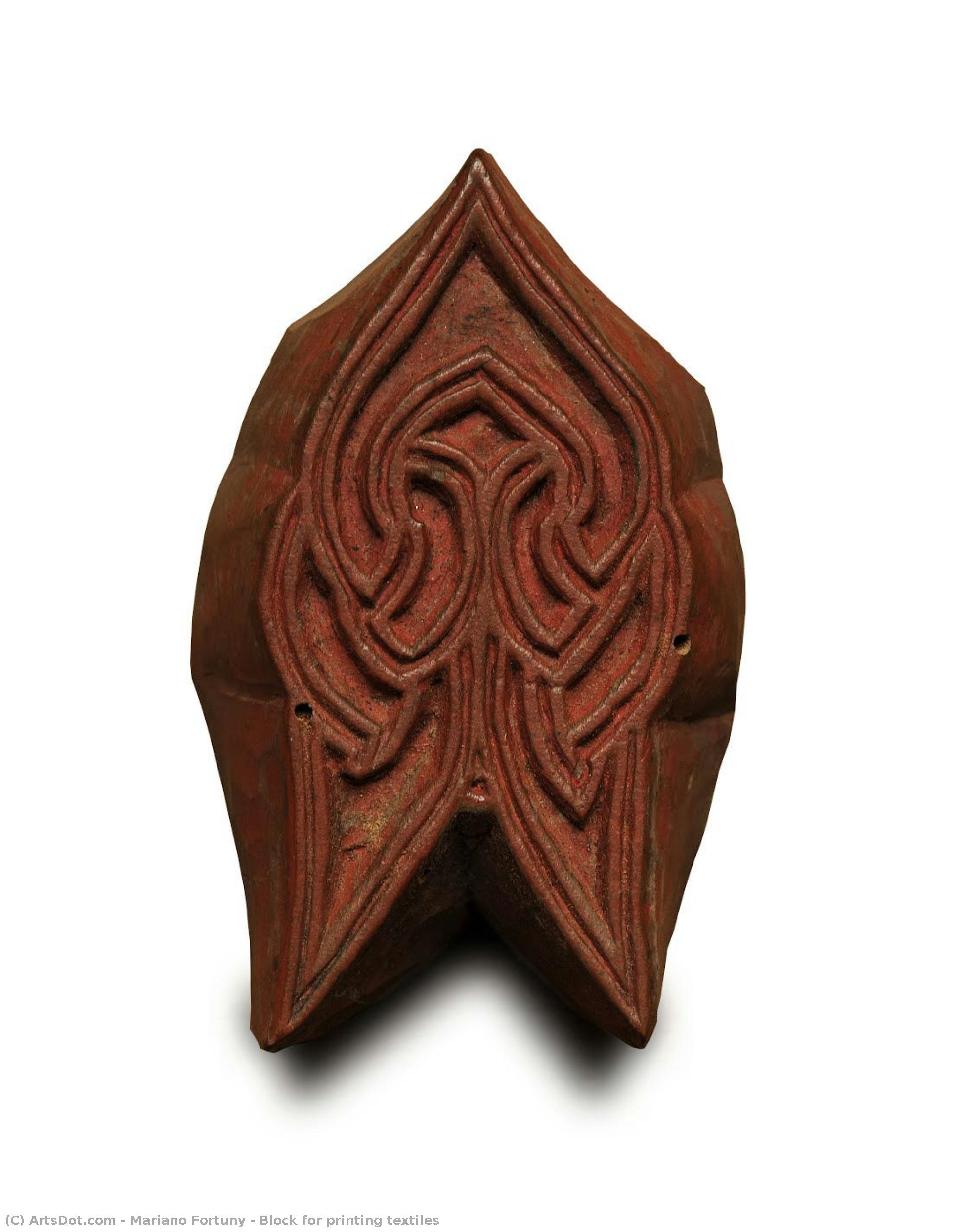
Mariano Fortuny’s “Block for Printing Textiles,” created in 1905, stands as a testament to the confluence of artistic innovation and meticulous craftsmanship. Measuring just 5 x 6 cm, this unassuming ceramic object belies its profound significance within the broader context of early twentieth-century decorative arts.
- Subject Matter & Form: The piece eschews representational imagery entirely, opting instead for a stylized arrowhead or helmet crest form. Its geometric simplicity is punctuated by an intricate network of carved patterns—knot-like motifs reminiscent of Celtic and Nordic traditions—that dominate its surface.
- Style & Technique – Subtlety Defined: Fortuny’s approach aligns with the burgeoning movement toward geometric abstraction, yet avoids overt stylistic pronouncements. The technique employed is subtractive sculpting; skilled artisans meticulously carved away material from a solid block of clay to reveal the desired design. This process underscores the dedication to precision and textural richness.
- Historical Context – Parisian Influence: Produced during Fortuny’s formative years in Paris, “Block for Printing Textiles” reflects the intellectual ferment of the era—a period marked by experimentation with new materials and methods within decorative arts. The influence of theatrical stage lighting innovations, documented in his treatise "Eclairage Scenique," is palpable in the careful consideration of light and surface reflectivity.
- Material & Texture – Tactile Resonance: Crafted from ceramic—specifically clay—the block’s rough and uneven texture speaks to its handmade origin. A glaze was applied to create a smooth, protective finish that enhances the visual impact of the carvings while preserving their tactile quality.
More than just an aesthetically pleasing object, “Block for Printing Textiles” embodies Fortuny's fascination with exploring new artistic possibilities. Its understated elegance and symbolic references—drawing upon ancient decorative motifs—invite contemplation on themes of heritage and stylized beauty. A reproduction offers a captivating glimpse into the creative spirit of a pivotal moment in art history.