A Glimpse into Early 20th Century Fashion: Mariano Fortuny's "Dress"
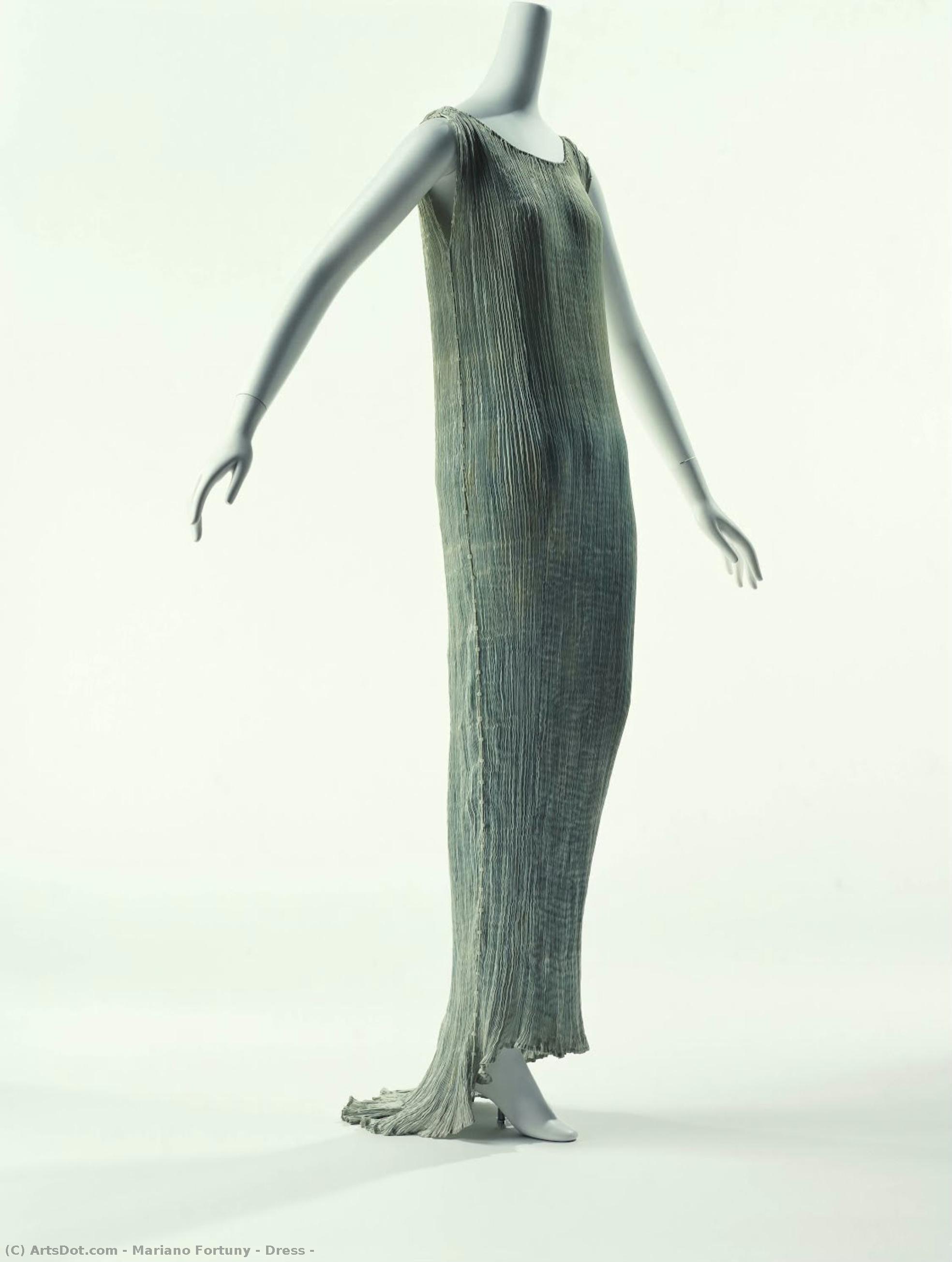
This captivating black and white photograph presents a meticulously rendered reproduction of Mariano Fortuny’s iconic “Dress,” created around 1910. It offers a unique window into the elegance and innovation that defined early 20th-century fashion, showcasing the designer's revolutionary approach to textile design and garment construction.
The Dress: Design & Technique
At the heart of this image is the dress itself – a prime example of Fortuny’s signature “Delphos” style. The photograph captures the flowing lines and graceful curve of the fabric as it drapes around the mannequin, highlighting its fluidity and movement. The technique employed to create this reproduction mimics the original photographic process, emphasizing the intricate details of the dress's texture. It appears as if painted onto glass, lending a delicate, almost translucent quality to the fabric. The vertical lines inherent in the mannequin’s form provide a striking contrast to the flowing curves of the dress, creating visual interest and balance within the composition.
Historical Context & Fortuny's Vision
Mariano Fortuny (1871-1949), born in Reus, Spain, was a true polymath – an artist, inventor, and fashion designer whose work transcended traditional boundaries. Inspired by ancient Greek drapery and influenced by his mother’s introduction to diverse textiles during his childhood in Paris, Fortuny sought to recreate the ethereal beauty of classical garments using innovative techniques. The “Delphos” dress, with its permanently pleated silk and flowing silhouette, was a radical departure from the restrictive fashions of the Belle Époque. It embodied a new ideal of feminine freedom and elegance, reflecting the changing social landscape of the early 20th century. Fortuny’s inventions in theater lighting further demonstrate his commitment to innovation and artistic expression.
Symbolism & Emotional Resonance
The black and white format of this photograph enhances its timeless quality, evoking a sense of nostalgia and historical significance. The image transcends mere documentation; it captures the essence of an era defined by refined aesthetics and burgeoning modernity. The dress itself symbolizes elegance, sophistication, and a departure from convention. Viewing this reproduction allows one to appreciate not only the artistry of Fortuny’s design but also the cultural shifts that shaped early 20th-century fashion. The mannequin, while functional in displaying the garment, adds a layer of detachment, inviting viewers to contemplate the dress as an object of art and historical significance.
A Timeless Masterpiece for Your Collection
This hand-painted reproduction of Mariano Fortuny’s “Dress” is more than just a decorative piece; it's a tangible connection to a pivotal moment in fashion history. Whether you are an avid collector, an art enthusiast, or an interior designer seeking a statement piece with historical depth, this artwork offers a unique opportunity to own a fragment of artistic brilliance and timeless elegance.