A Symphony of Sorrow and Light
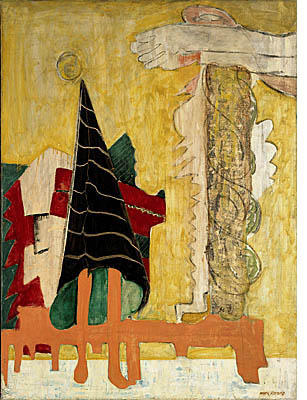
To stand before Mark Rothko’s Sacrifice of Iphigenia is to step away from the clamor of the modern world and enter a sanctuary of profound, silent dialogue. Created in 1963, during one of the most prolific eras of his career, this monumental canvas serves as much more than a mere painting; it is a visceral experience designed to evoke deep contemplation regarding the human condition. While the title alludes to the tragic Greek myth of Iphigenia—the daughter of Agamemnon destined for sacrifice to appease the goddess Artemis—Rothko eschews literal storytelling. He was not interested in the theatricality of the event, but rather in translating its emotional marrow—the agonizing weight of loss and the transcendence of grief—into a pure, luminous language of color.
The artwork embodies the pinnacle of Abstract Expressionism and the Color Field movement. Rather than relying on recognizable figures or landscapes, Rothko utilizes large-scale rectangles of pigment that seem to hover and breathe upon the canvas. Through a meticulous technique of applying thin, translucent washes of paint, he layered colors so seamlessly that they appear to possess an internal light. This method creates an illusionistic depth that defies conventional perspective, drawing the viewer’s gaze inward toward a spiritual horizon. The edges of these color blocks are soft and blurred, allowing the hues to merge in a way that suggests a state of constant, subtle movement, much like the rhythmic breathing of a living entity.
The Emotional Palette of Myth
The color palette of Sacrifice of Iphultigenia is a masterclass in emotional nuance. Dominant shades of crimson, orange, and yellow—colors traditionally synonymous with vitality, warmth, and passion—are present, yet Rothko deliberately mutes them. By applying these tones sparsely and layering them with darker, more somber undertones, he achieves a melancholic effect that mirrors the gravity of the mythological sacrifice. The interplay between the glowing warmth of the center and the receding shadows at the periphery creates a palpable sense of stillness, inviting a meditative state in anyone fortunate enough to encounter it.
For the discerning collector or interior designer, this piece offers an unparalleled opportunity to introduce a focal point of intellectual and emotional depth into a space. A high-quality reproduction of this masterpiece does not merely decorate a wall; it transforms an environment into a gallery of reflection. Whether placed in a quiet study, a sophisticated living area, or a contemporary professional suite, the painting acts as a window into the infinite. It provides a sense of monumental scale and atmospheric gravity, making it an ideal selection for those who seek art that resonates with the timeless themes of human struggle, spiritual liberation, and the sublime beauty found within the shadows of existence.