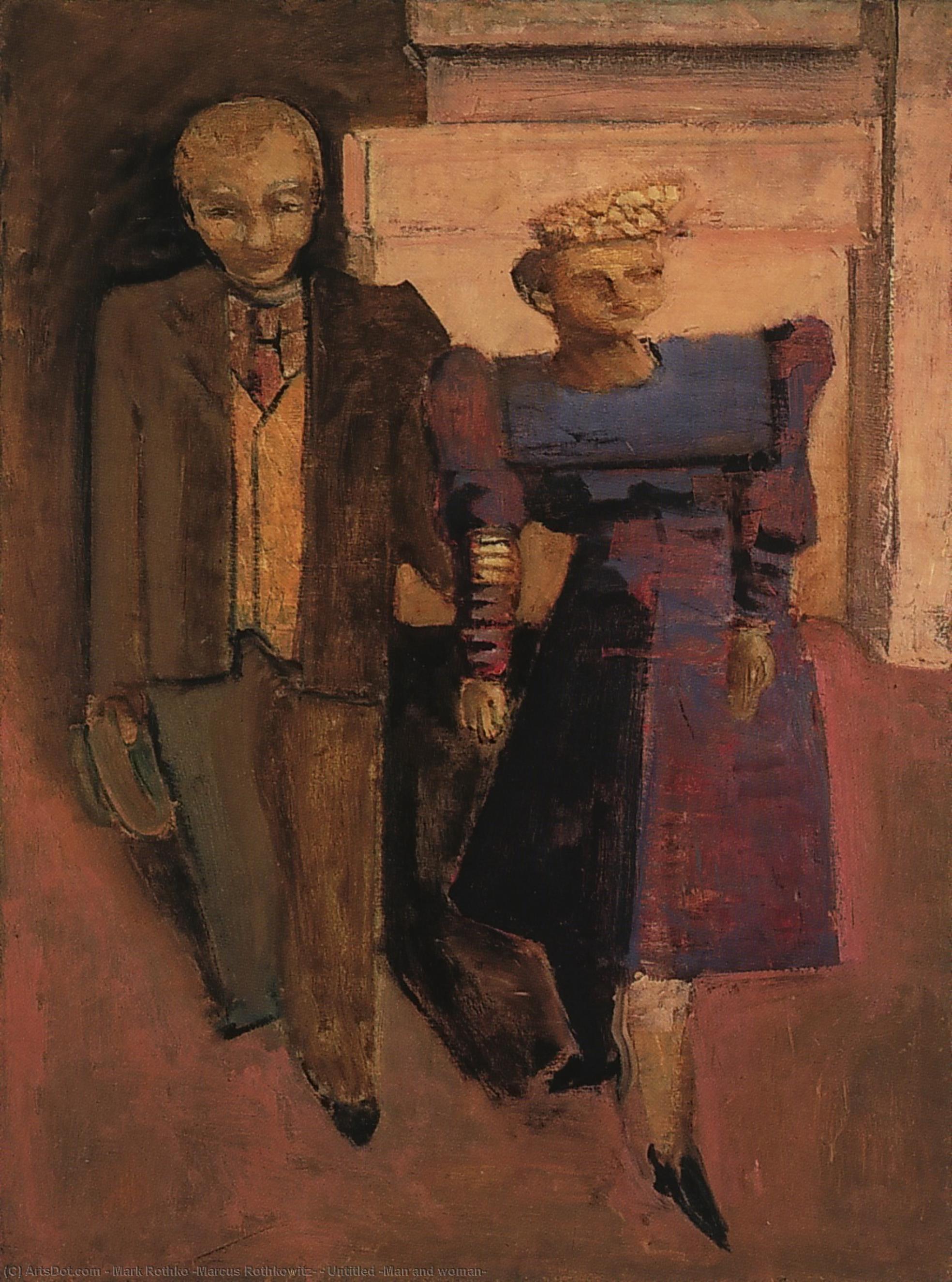
Experience Mark Rothko’s iconic Untitled (Man and Woman), a poignant depiction of human connection through layered blocks of color, reflecting the artist's exploration of existential themes and capturing a lively street scene. Discover this captivating artwork and bring its timeless beauty into your space.
Mark Rothko’s ‘Untitled (Man and Woman)’ – A Meditation on Human Connection
Mark Rothko's 'Untitled (Man and Woman)' is not merely a depiction of two figures strolling down a city street; it’s an intensely felt exploration of human connection, loneliness, and the quiet drama of everyday existence. Painted by the Latvian-born American artist during his pivotal period of development – from 1960 to 1965 – this work embodies Rothko's signature style: large, rectangular blocks of color layered with a luminous depth that invites contemplation rather than immediate interpretation. The painting’s power resides in its ability to evoke a profound sense of atmosphere and emotional resonance, drawing the viewer into a space where time seems to slow and the weight of human experience becomes palpable.
- Subject Matter: The scene captures a man and woman engaged in a simple act – walking together. Their attire—the man’s suit and tie, the woman's blue dress—suggests a certain formality, yet their relaxed posture hints at an intimacy and shared experience.
- Composition: Rothko masterfully employs horizontal bands of color to create a sense of stability and grounding. The figures are integrated into this chromatic landscape, becoming part of its emotional fabric rather than dominating the composition.
- Color Palette: The dominant hues – blues, reds, and yellows – are carefully chosen not for their representational accuracy but for their evocative power. Rothko’s use of color is deeply psychological, reflecting moods, emotions, and spiritual states.
The Legacy of Existentialism and the Rosenquist Influence
Rothko's artistic journey was profoundly shaped by his early life experiences – the displacement caused by immigration, the loss of his father, and a deep sensitivity to human suffering. These themes resonate powerfully within ‘Untitled (Man and Woman)’. The painting’s quiet intensity echoes the existentialist concerns prevalent in mid-20th century art, exploring questions of mortality, meaninglessness, and the individual's place in the universe. Interestingly, Rothko was influenced by the work of Kenneth Noland, particularly Noland's use of color field paintings, which paved the way for Rothko’s own approach to abstraction. The painting also subtly references the Pop Art movement through its depiction of everyday life, albeit filtered through Rothko’s intensely personal and emotional lens.
Technique and Layering – Building Depth
Rothko's technique was characterized by meticulous layering of thin washes of oil paint, applied in a process he termed ‘allagraft.’ This involved building up the color gradually, creating multiple translucent layers that interacted with one another to produce an astonishing depth and luminosity. The surface of the painting is not smooth; it’s textured with subtle variations in tone and color, adding to its tactile quality and enhancing the sense of atmosphere. The seemingly simple blocks of color are the result of countless hours of painstaking work, a testament to Rothko's dedication to his craft.
Symbolism and Emotional Impact
'Untitled (Man and Woman)' transcends a literal representation of a street scene; it becomes a powerful meditation on the human condition. The figures’ anonymity allows viewers to project their own emotions and experiences onto the canvas, fostering a deeply personal connection. The painting's evocative power lies in its ability to tap into universal themes of loneliness, connection, and the search for meaning – themes that continue to resonate with audiences today. The inclusion of the handbag adds a subtle layer of narrative, perhaps suggesting a fleeting moment of distraction or a shared experience within this otherwise solitary encounter.