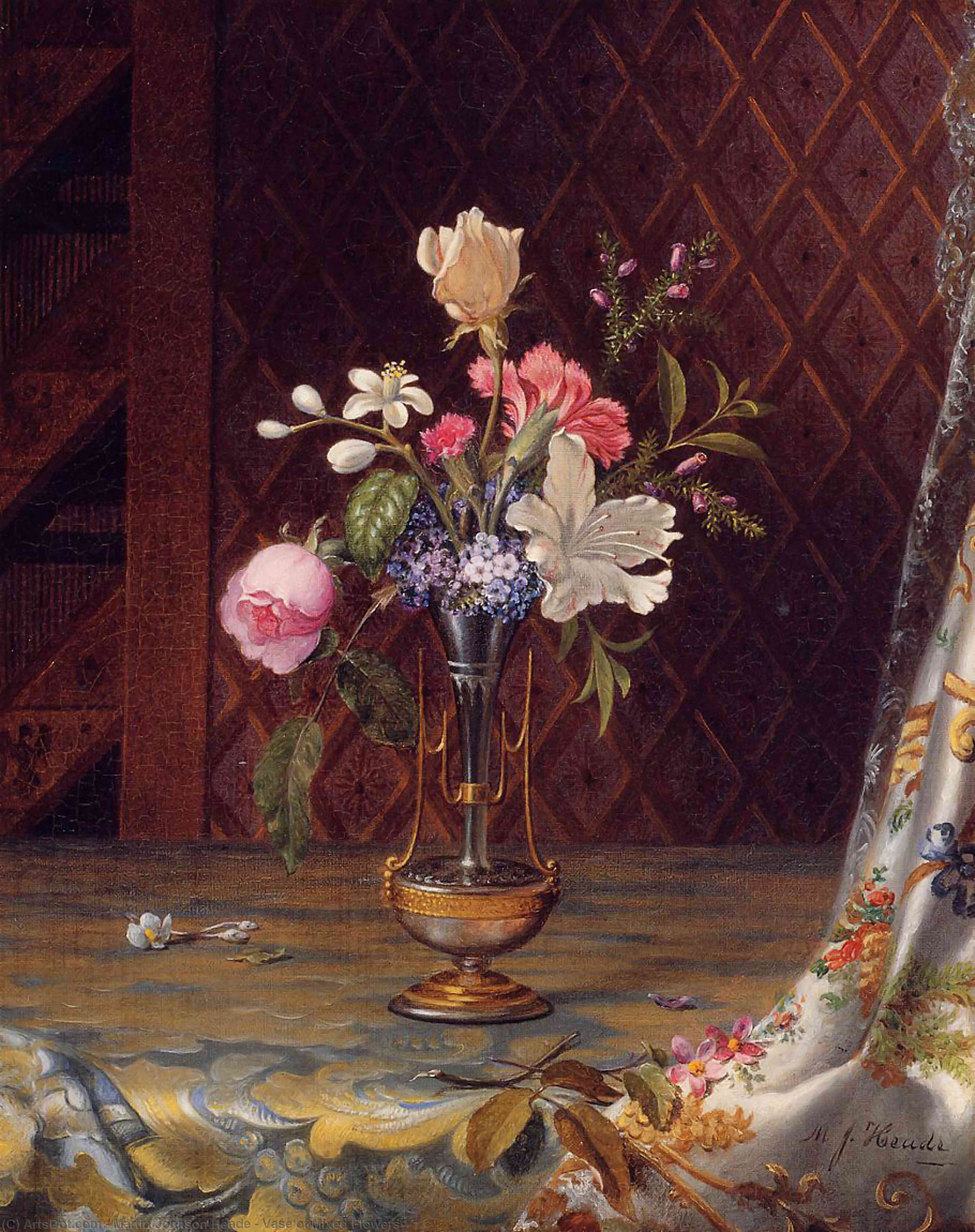
A Luminist’s Quiet Reverie: Unveiling “Vase of Mixed Flowers”
Martin Johnson Heade's "Vase of Mixed Flowers" isn't merely a still life; it’s a distilled moment of serene contemplation, a testament to the Luminist movement’s profound connection with nature. Painted in 1872, this exquisite work captures a fleeting intimacy—a quiet exchange between artist and subject—within the confines of a simple table setting. The scene unfolds with an almost unnerving stillness; a vase overflowing with roses, carnations, and other blooms dominates the composition, its delicate forms bathed in soft, diffused light. Yet, beyond the immediate beauty of the flowers themselves, there’s a palpable sense of quiet observation, inviting the viewer to share in Heade's mindful appreciation.
Heade, born in rural Pennsylvania and deeply influenced by the natural world from an early age, was a master of capturing light and atmosphere. His style, distinct from the grander narratives of the Hudson River School, focused instead on subtle shifts in color, texture, and illumination—a deliberate choice to evoke mood rather than dramatic spectacle. “Vase of Mixed Flowers” exemplifies this approach perfectly; it’s not about showcasing a riot of color, but about conveying the delicate interplay of light upon petals, the velvety textures of leaves, and the quiet dignity of the arrangement itself.
Decoding Symbolism: Flowers as Language
Beyond its aesthetic qualities, “Vase of Mixed Flowers” is rich in symbolic meaning. Heade wasn’t simply depicting flowers; he was engaging with a long-standing tradition of floral symbolism, a practice deeply rooted in European culture and increasingly popular in America during the 19th century. Each bloom carries a carefully considered weight – the rose, traditionally representing love and beauty, stands alongside the carnation, often associated with disdain or rejection, creating an intriguing tension within the composition. The heliotrope, symbolizing devotion, and the orange blossom, signifying purity, further contribute to this layered narrative.
Interestingly, Heade’s selection of flowers wasn't arbitrary. Contemporary viewers would have readily understood these floral codes, interpreting the arrangement as a subtle commentary on human relationships and emotions. The artist’s deliberate choice suggests a deeper engagement with the cultural context of his time, inviting us to consider the unspoken language embedded within this seemingly simple still life.
The Luminist Vision: Light, Atmosphere, and the American Landscape
“Vase of Mixed Flowers” is firmly rooted in the Luminist movement—a group of American painters who emerged in the mid-19th century. Luminists sought to capture the fleeting effects of light and atmosphere, prioritizing observation over dramatic subject matter. They were deeply influenced by the Dutch masters of the Golden Age, particularly their meticulous depictions of landscapes and interiors. Heade’s work embodies this aesthetic perfectly—the soft, diffused light, the subtle gradations of color, and the emphasis on atmospheric perspective all contribute to a sense of quiet contemplation and profound connection with nature.
Unlike the grand vistas favored by some of his contemporaries, Heade focused on intimate scenes – marshes, fields, and interiors—where he could explore the delicate nuances of light and shadow. “Vase of Mixed Flowers” is a prime example of this approach, offering a glimpse into a world of quiet beauty and understated elegance.
A Timeless Masterpiece: Reproduction and Beyond
Today, "Vase of Mixed Flowers" stands as a testament to Martin Johnson Heade’s artistic vision. Reproductions offer an accessible way to experience the profound beauty and subtle symbolism of this remarkable painting. When selecting a reproduction, consider the quality of materials – a hand-painted oil on canvas will capture the nuances of light and color far more effectively than a digital print. Whether displayed in a formal living room or a serene bedroom, “Vase of Mixed Flowers” continues to evoke a sense of tranquility and invite us to pause, reflect, and appreciate the simple beauty of the natural world.