A Divine Interlude: The Serenity of Altomonte’s Vision
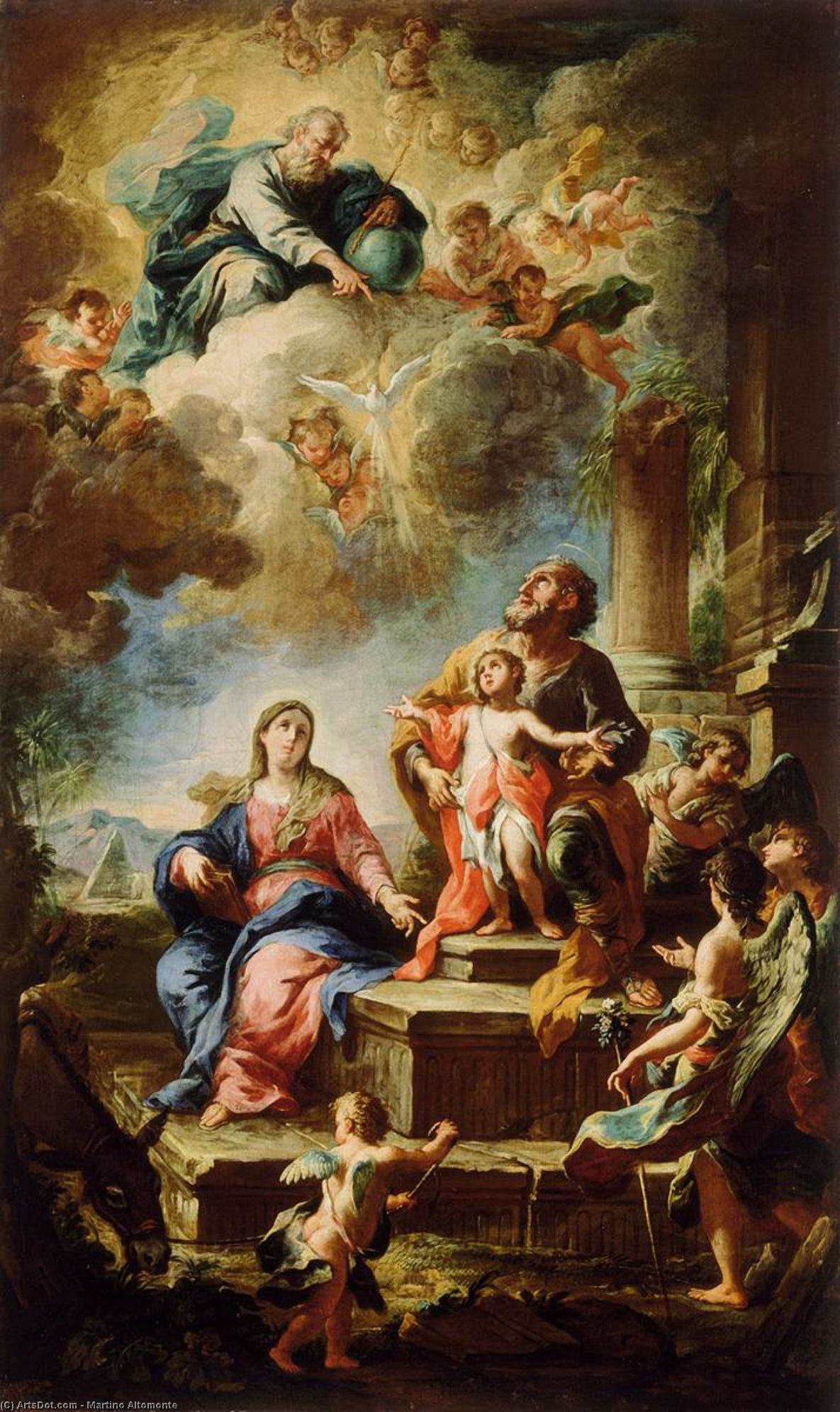
In the grand tapestry of the late Baroque era, few moments capture the delicate balance between earthly exhaustion and celestial protection as poignantly as Martino Altomonte’s Rest on the Flight to Egypt. Painted in 1737, this masterpiece invites the viewer into a sacred sanctuary amidst a perilous journey. The scene depicts the Holy Family—Mary, Joseph, and the infant Jesus—finding a fleeting moment of repose. There is an undeniable tenderness in the way the figures are clustered, a quiet intimacy that stands in stark contrast to the sweeping, dramatic heavens above. As they rest, the weight of their flight from tyranny is momentarily lifted, replaced by a profound sense of peace that radiates from the canvas.
Altomonte, a painter whose lineage traces back to the vibrant traditions of Naples and the refined academies of Rome, utilizes his mastery of light to elevate this biblical narrative. The composition is anchored by the earthly presence of the family, yet it is pulled upward by a celestial host. Angels descend from the clouds, some hovering with ethereal grace and others standing as silent sentinels around the weary travelers. This interplay between the terrestrial and the divine creates a sense of depth that is both physically immersive and spiritually uplifting, making the painting feel less like a static image and more like a window into a miraculous event.
Mastery of Baroque Light and Composition
Technically, the work is a triumph of the Baroque style, showcasing Altomonte’s ability to blend Neapolitan chiaroscuro with the luminous, airy tones reminiscent of Venetian masters. The artist employs a sophisticated use of light to direct the eye; a soft, divine glow illuminates the faces of the Holy Family, highlighting their expressions of quiet contemplation and fatigue. This light does not merely illuminate the scene but serves as a symbolic presence, representing the grace that accompanies them on their flight. The backdrop of billowing, dramatic clouds adds a layer of theatricality, a hallmark of the era, which lends a sense of movement and cosmic importance to this humble rest stop.
For the discerning collector or interior designer, this painting offers more than just historical significance; it provides a profound emotional anchor for any space. The subtle textures of the drapery, the soft skin tones of the infant, and the atmospheric depth of the sky are all rendered with a precision that makes a high-quality reproduction feel truly alive. Whether placed in a formal gallery setting or as a focal point in a sophisticated living space, the artwork commands attention through its ability to evoke nostalgia, reverence, and a sense of timeless tranquility.
A Legacy of Devotion and Artistry
To understand this work is to understand the journey of Martino Altomonte himself. Having trained under legends like Giovanni Battista Gaulli and Carlo Maratti, Altomonte brought a sophisticated academic rigor to his compositions. His ability to weave together the dramatic tension of battle scenes with the soulful intimacy of religious subjects allowed him to become a preferred painter for European royalty. In Rest on the Flight to Egypt, we see the culmination of this training—a painting that is as much about the human condition of seeking refuge as it is about the divine promise of protection.
Owning or displaying a reproduction of such a significant piece allows one to bring a fragment of 18th-century spiritual grandeur into the modern home. It serves as a reminder of the beauty found in moments of stillness and the enduring power of art to bridge the gap between the mortal and the eternal. This painting remains a breathtaking testament to Altomonte’s ability to capture the sublime, making it an essential acquisition for those who appreciate the profound emotional resonance of the Baroque tradition.