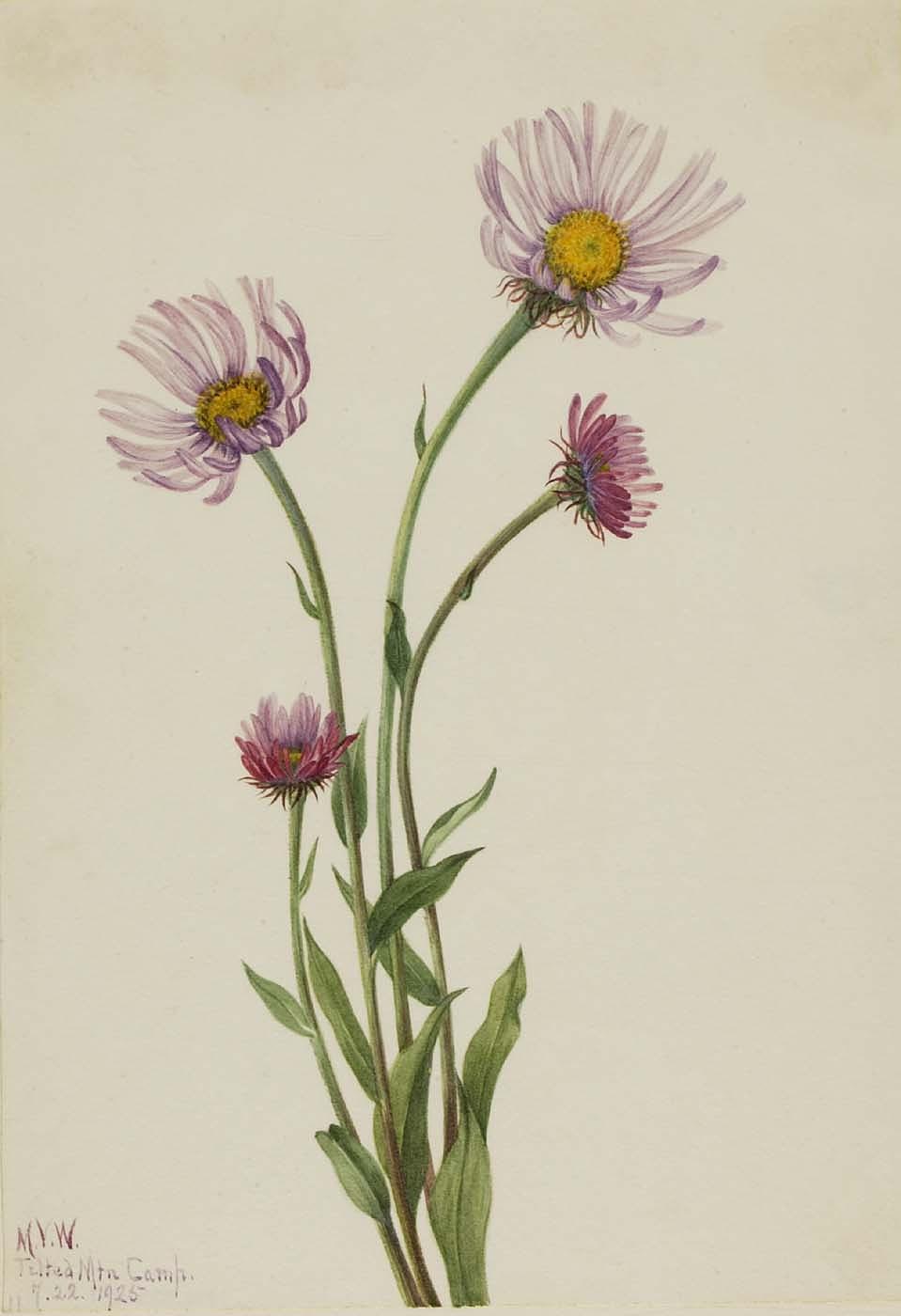
The
Mary Morris Vaux Walcott painting,
Alaska Fleabane (Erigeron salsuginosus), is a stunning example of botanical art. Created in 1925, this watercolor piece measures 25 x 18 cm and is currently housed at the
Hirshhorn Museum and Sculpture Garden in the United States.
The Artist's Background
Mary Morris Vaux Walcott was an American artist and naturalist known for her exceptional watercolor paintings of wildflowers. She is often referred to as the "Audubon of Botany" due to her remarkable talent in capturing the beauty and detail of botanical specimens. Born into a wealthy Quaker family,
Mary Morris Vaux Walcott developed an interest in watercolor painting at a young age.
The Painting's Significance
The
Alaska Fleabane (Erigeron salsuginosus) painting showcases
Mary Morris Vaux Walcott's exceptional skill in botanical illustration. The piece features three purple flowers with yellow centers, arranged in a naturalistic setting. The level of detail and accuracy in the painting is a testament to the artist's dedication to her craft. As seen on
ArtsDot.com, this painting is a prime example of
American Realism in botanical art.
Other Notable Works
Some of
Mary Morris Vaux Walcott's other notable works include:
These paintings, like
Alaska Fleabane (Erigeron salsuginosus), demonstrate the artist's mastery of botanical illustration and her contribution to the world of American Realism. For more information on
American Realism, visit
ArtsDot.com's article on the subject.
The
Alaska Fleabane (Erigeron salsuginosus) painting is a remarkable example of botanical art, showcasing the beauty and detail of the natural world. As a masterpiece of American Realism, it continues to inspire and educate audiences today.