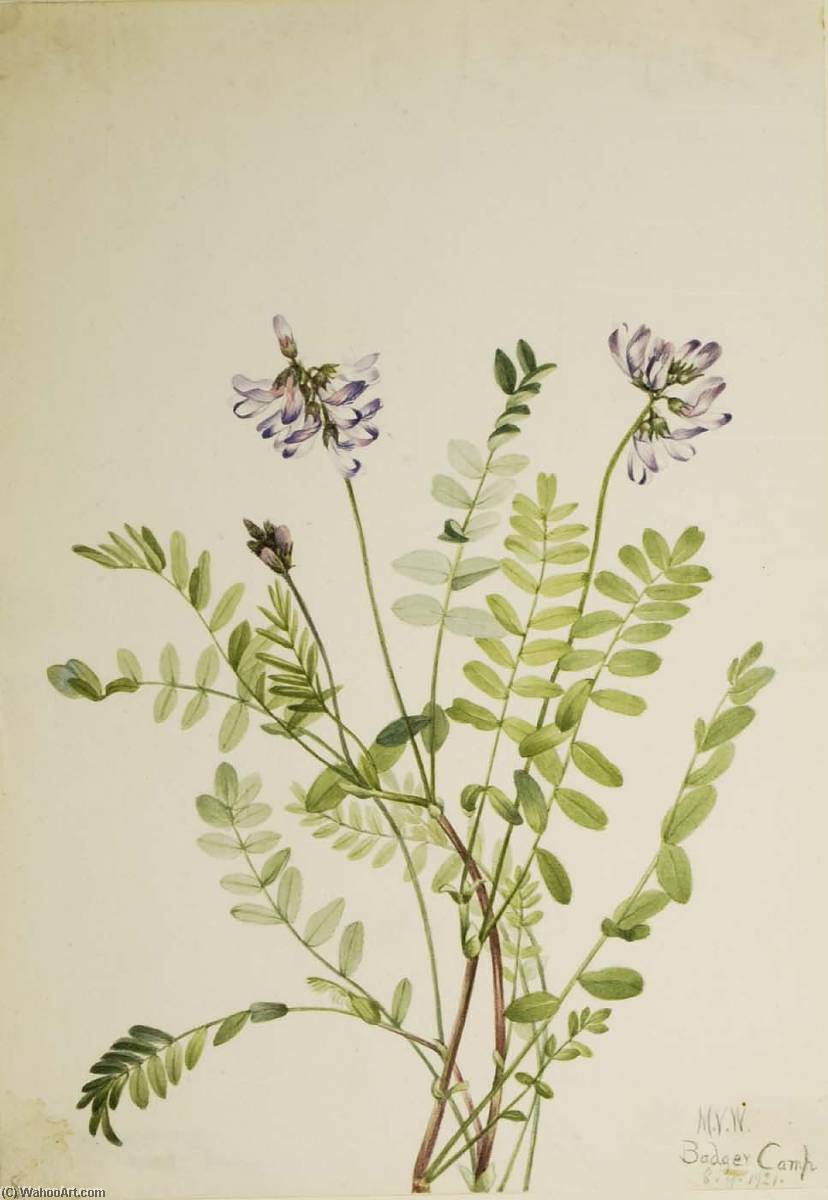
The
Mary Morris Vaux Walcott painting,
Alpine Milkvetch (Astragalus alpinus), is a stunning example of botanical art. Created in 1921, this watercolor piece measures 26 x 18 cm and is currently housed at the
Hirshhorn Museum and Sculpture Garden in the United States. The painting showcases the artist's exceptional skill in capturing the delicate details of the Alpine Milkvetch plant.
Artistic Technique and Style
Mary Morris Vaux Walcott's technique is characterized by precision and realism, making her work a valuable contribution to the field of botanical illustration. The soft, diffused light and pale cream background in
Alpine Milkvetch (Astragalus alpinus) enhance the plant's delicate features, allowing it to stand out with remarkable clarity. This style is reminiscent of other notable botanical artists, whose works can be found on
ArtsDot.com, such as
Mary Vaux Walcott's Phlox and
Bog Kalmia (Kalmia polifolia).
Historical and Cultural Significance
Botanical illustration, particularly during the early 20th century, played a vital role in scientific documentation and the dissemination of knowledge about the natural world.
Mary Morris Vaux Walcott's work, including
Alpine Milkvetch (Astragalus alpinus), contributes to this rich legacy of artistic and scientific endeavor. The painting is not only a beautiful representation of the plant but also a testament to the artist's dedication to accuracy and her ability to transform a scientific subject into a work of art.
Handmade oil painting reproductions of
Alpine Milkvetch (Astragalus alpinus) can be found on
ArtsDot.com, allowing art enthusiasts to appreciate and own a piece of this beautiful botanical art.
The
Smithsonian American Art Museum also features works by
Mary Vaux Walcott, showcasing her contribution to the world of botanical illustration.
For those interested in learning more about the artist and her work,
ArtsDot.com provides a comprehensive overview of
Mary Morris Vaux Walcott's life and art.